14 February 2006

The Emerging Lower Class

Colorado Public Radio's fundraising campaign is on again, and they frequently have touted the statistic that 30,000 people donate an average of $120 to the station, and that about 300,000 people listen. There are other public radio stations in Colorado, but CPR is the dominant player in terms of listenership.

David Milstead at the Rocky recently reminded us of the subscription numbers for the Rocky Mountain News and the Denver Post (with a number of caveats):

In the six months ended Sept. 30, 2005, The Post's circulation was 264,301, with the News reporting 263,425. One year earlier, The Post reported 275,292, with the News at 275,136.


There are, of course, other papers in the state, but within the Denver metro area, the only other daily paper most people would subscribe to instead of the two big papers, is the Boulder Daily Camera (which has a circulation of about 41,000).

Thus, there are fewer than 569,000 households with daily paper subscriptions in the Denver metro area (the Denver Post is a paper with statewide circulation, some people subscribe to more than one paper, and some subscriptions are to businesses, although a small number of people subscribe to out of state papers like the New York Times, Wall Street Journal or USA Today to the exclusion of the local papers). This works out to about fewer 1.4 million people in those households. Thus, significantly less than two-thirds of households in the Denver metropolitan area take a newspaper.

There were 2,130,325 people who voted for a candidate in the 2004 Presidential elections. In the 2005 off year elections (in which the most notable matter was the vote on Referrendums C and D), votes were cast by 1,161,924 people.

There are about 4.3 million people in Colorado, about half of whom live in the Denver metropolitan area.

The figures don't overlap neatly, but perhaps 40% of the people in Colorado neither take a daily paper, nor listen to public radio, nor vote. Their access to news comes largely through brief snippets on commercial radio and television. Only about a quarter of the people in Colorado vote in off year elections, and this is also the group from which the people who listen to public radio and actually read their daily newspapers at some length is largely drawn.

This politically uninvolved and largely unaware demographic is a huge part of Colorado's population.

This lack of awareness and involvement isn't meaningfully due to economic barriers. The coupons that come with a daily paper for items like groceries each week pretty much pay for the subscription. Aside from a one time ten dollar purchase of a radio (and I have yet to see a car that doesn't have a radio included), listening to the news on public radio is free. Registering to vote is a major barrier to voting in real life, but this illustrates just how marginally involved many voters are, as this is also free and the voter registration form is not a difficult one to complete. Everyone has a legal right to time off to vote, and it doesn't take that long, and at most, you vote only a couple of days each year.

The far bigger factors are education and a sense of civic responsibility and involvement. Few members of the uninvolved class have graduated from college, most have never even attended college, and many have not even graduated from high school. Few members of the uninvolved class work in managerial, professional, technical or higher end sales jobs (like real estate sales, stock brokers, commodity brokers and insurance sales). I suspect that more members of this class rent than own their homes. The members of this class tend to be younger than average. The vast majority of pawn shop, payday loan and rent-to-own customers are members of this class, as are the vast majority of people who don't have bank accounts. When they have to show up at court, they usually do so without lawyers (other than the public defender), if they show up at all. They disproportionately lack health insurance, and their children are rarely the ones earning "advanced" ratings on the CSAPs.

I don't have any grand plans for involving more of these people in politics or civic life, although ideas like election day voter registration, shorter ballots, better notification of election place locations, and ending prohibitions on parolees voting would be a start. Sponsoring news programs on commercial radio and television programs that meet them half way, offering more substance than the nightly news, but less heft than public radio and television, in short doses, also comes to mind. Even the BBC has more plebian oriented newscasts than NPR. Grass roots economic education is needed as well - getting just one paycheck ahead, instead of one paycheck behind, in their finances would make a tremendous difference to this group of people for whom a moderately serious illness, several traffic fines, broken down car, brief period of unemployment, burglary or other minor life trauma can send their lives spinning out of control.

But, most of all, it is important, in the rush of political analysis and policy making, simply to remember that they exist. The uninvolved class, because they don't participate in politics, aren't well taken care of by it.

In the 1980s, the big worry was a developing "underclass", comprised mostly of ghettoized minorities in jobless neighborhoods with few businesses and dismal schools who relied on welfare and crime survive. Some of that was myth, but it was a widely influential myth. In this first decade of the 21st century, we are seeing a different phenomena. The working class and lower middle class (which are themselves increasingly synonomous) are increasingly becoming a genuine and growing "lower class", excluded from most of the benefits of living in our nation and detached from its affairs.

Democrats have spent several decades not fighting class warfare. And, the emerging lower class in America has paid the price for this inaction. The minimum wage is at a record low in real terms, the ranks of the uninsured are growing, and almost all of the economic growth since the 1970s has accrued to the college educated, managerial-professional class that makes up about a quarter to a fifth of the population, leaving everyone else little better off than they were a generation ago, if not worse. Maybe, if Democrats did more to serve their interests, like spending the $80 billion a year it would take to make health care universal, or coming up with credible educational options for students who are not college bound, the members of this class would take a greater interest in politics and in turn help Democrats win more elections. It is an opportunity we can count on the Republicans not taking up. The opportunity is ours to seize.


What Is Big and Small In The World?


The Gall-Peters Projection shown above, courtesy Wikipedia, accurately shows the relative area of different parts of the world. In contrast, the more common Mercator projection distorts areas, making places like the U.S., Greenland and Europe look overly large, and making Africa look about thirteen times smaller than it really is in relation to other land areas.

Via Daily Kos diarist Devilstower.

Valentine's Day Cat Blogging


Goyangi, my cat (his name means "cat" in Korean), and I, wish you and yours a Happy Valentine's Day!

13 February 2006

Feds Ignore Precedent Again Over Gitmo

One of the relatively clear rulings in the first round of enemy combatant cases (particularly in the Rasul case) was that Guantanamo Bay was not a location beyond U.S. law, and was, instead, basically like the United States for constitutional rights purposes. But, the U.S. is ignoring that holding arguing once again before the U.S. Supreme Court (with Alito and Roberts now replacing Rehnquist and O'Connor), that Guantanamo Bay detainees have no rights, a claim that the U.S. Supreme Court also rejected notably stating that the administration did not have a "blank check" even in times of war in the Hamdi case.

I hope that the administration gets the rude awakening it needs this time around. The Court is supposed to act like a body composed of adults, even when the administration adopts the toddler mentality. Also, surely, it cannot escape the notice of the Court that the U.N. is now denouncing Guatanamo Bay as a place where the U.S. practices torture.

If you believe in fighting terrorism, step one is to stop doing what doesn't work. Guantanmo Bay, which has housed relatively few real terrorists, destroyed our relationships with the U.N. and our allies, undermined support for the U.S. anti-terrorism effort at home, and produced little in the way of useful intelligence, is an approach that does not work.

Defense Updates.

QDR

Reacting to the Defense Department's Quadrennial Defense Review:

9/11 should have educated even the more learning-disabled parts of the Pentagon that we face determined networks of 12th-century fanatics who don't intend to play by our rules. As Winston Churchill was unkind enough to point out, it is occasionally necessary in war to suspend one's preferences and actually consider the enemy. The QDR has not done that for one simple reason: It says little or nothing about the need for soldiers. And how they can best be provided, trained, protected, and sustained to meet an enemy that thinks in generational rather than technological timelines--which is why that enemy thinks he can win and why he may be right.


- Col. Ken Allard, (U.S. Army, Ret.), former dean of students of the National War College, current NBC News military analyst.

Long Range Strike

The U.S. Air Force has set a goal of increasing its long-range strike (LRS) capabilities by 50% and the penetrating component of long-range strike by a factor of five by 2025, according to QDR documents. It also calls for a new land-based, penetrating LRS capability to be fielded by 2018. About 45% of the future LRS force is to be unmanned. . . . But top-level planning is still murky.


As explained in considerable detail by Aviation Week, nobody really knows what "Long Range Strike" means.

Some people think it means "a fleet of 100-105 unmanned, stealthy aircraft" based on the now cancelled X-45 unmanned combat aircraft program. Others put the figure closer to 50. Others, think that the new aircraft will look more like the Predator UAV's which now carry attack helicopter class missiles in support of ground troops in Iraq.

Another official speaking on background says:

One school wants long persistence [a day or more] as the primary feature. They're looking at an unmanned aircraft with limited payload and some level of stealth.

The other is looking at a manned bomber with the range for 4-5 hr. of loiter, but with a heavier payload, Mach 2 speed and very low observability so it can penetrate deep and strike heavily defended targets. They also believe it must be nuclear-capable to replace the B-2, and that means a crew. They want each bomber to be capable of hitting 100 individual targets.

Hypersonics and space launch are not players.


Furthermore:

A parallel program will involve a small number of ICBMs with conventional warheads developed for the Precision Global Strike program. The policy issues involved with using ICBMs for conventional strike are still not resolved. There also would be a shrinking core of manned bombers including 56 B-52s, 67 B-1s and 21 B-2s.


The virtue of conventional ICBMs is that they deliver a big bomb to a fairly precise target, very far away, faster than any human pilot on the flight could survive, without putting any U.S. military personnel in harm's way. The big problem with conventional ICBMs is that some nuclear armed nation, like Russia or Pakistan or China (at least one of which is reasonably close to any plausible ICBM target), might mistakenly think that they were facing a nuclear attack and try to strike back at the U.S. with their own ICBMs before they discover that the attack is aimed at someone else, or that it involves only conventional weapons. One ICBM looks pretty much like another until it hits, and the decision making time frame is on the order of half an hour to an hour and a half. Moreover, even if we tell the Russians or other nuclear powers that our ICBMs aren't nuclear and aren't aimed at them, why should some nation who we might be somewhat crosswise with believe our statements.

Also, as background, the B-52 is a 1950s era bombering with a decent payload, able to carry nuclear weapons and cruise missiles, as well a ordinary bombs. The B-1 is a 1980s era supersonic, very large payload bomber currently restricted to ordinary bombs (whose early history was plagued with technical problems that have been largely worked out now). The B-2 is a 1980s era superexpensive, stealth bomber, with a payload comparable to the B-52 and an ability to carry nuclear weapons, as well as a smaller crew. All three bombers have a very long range. But, the Air Force is dying to shed it aging B-52s, while recognizing that they have played an important part in all of the recent conflicts which have involved sustained periods of massive bombardment prior to moving troops into the field. Congress has so far resisted cuts in these forces, in part, because no alternative has been presented.

Meanwhile, the Navy thinks it can do the LRS job with cruise missile carrying submarines and carrier based aircraft and drones.

Creating a hugely expensive new program like LRS wouldn't be so frightening, if it weren't force the fact that it isn't tied to any clear plan or any clearly defined cuts in anything else. While a hundred new unmanned bombers might make sense, if they replaced much of the existing bomber fleet and a good share of the Navy's cruise missile capabilities, based on a careful analysis that showed that they could accomplished the missions of the systems they replace better, this level of careful analysis and planning, indeed, any serious analysis or comprehensive planning, seems to be missing at the highest levels of the Pentagon in the case of this ill defined program.

Limits To The Power To Appoint A Guardian

Colorado's guardianship statutes were substantially revised effective in 2001. One result of that revision is that reduced deference is given to a parental designation of a guardian in a Will.

Under the new law, confirmed by the Colorado Supreme Court today, a parental designation in a will which is not contested is honored, but, if one of the people entitled to contest a guardianship designation, including anyone who has had the custody and control of a child in the two months prior to the filing of a guardianship petitioner, regardless of the reason that this happened, then a judge will appoint a guardian strictly based upon a "best interest of the child standard."

The Colorado Supreme Court hedges just slightly saying (citations and textual references to statutes omitted, emphasis in the original):

Parental interests as to who should care for their minor children may nonetheless be a relevant factor to be considered in appointing a guardian under the best interest standard. A court may consider all relevant facts and circumstances to determine the best interests of the child. Hence, the best interest of the child standard does not preclude a court from considering the desires of the pertinent parties, including the wishes of the minor's parent as expressed through a testamentary appointment. Thus, a court may weigh such wishes keeping in mind the fluid and changing nature of interpersonal relationships and the frequency with which the will was reviewed after its election. However, the paramount consideration of the best interest of the child and a testamentary appointment must yield to this overriding concern when the court resolves a guardianship dispute subsequent to an objection by a person with care and custody of a minor. Accordingly, to appoint a guardian for a minor when a person with the care or custody of child objects to the testamentary appointment, the court shall appoint a guardian pursuant to the best interest of the child standard.


Let me be clear, the Colorado Supreme Court was not being activist in this decision and made it unanimously. It followed the text of the statute, although it does seem to miss the subtlety of a difference between making a decision in accordance with the best interests of the child, and making a decision unless it is contrary to the best interests of the child, viewing the two as essentially identical.

This is generally consistent with the philosophy of the child custody statute in Colorado, which also gives great deference to "possession" of a child, for example, giving a baby sitter who happens to have a child at the time a custody proceeding is commenced equal standing to a parent in a best interests of the child analysis. See Section 14-10-123(b) and 14-10-124, Colorado Revised Statutes. Indeed, it is well established in Colorado that legal paternity does not require blood ties, even in the absence of a formal adoption.

But, there is reason to wonder if a little more deference to paternal ties, and to parental wishes, rather than a pure best interests analysis in all cases, wouldn't be appropriate.

Bad Texas Judges

A Texas paper took on the task of finding the worst judges in Texas. The list, for future reference, as they are all, no doubt, likely future Bush administration judicial appointees (that is, those who aren't already), is as follows:

* Jan Krocker, Houston, 184th District Judge
* Sally Montgomery, Dallas, County Court at Law No. 3
* Scott Brister, Texas Supreme Court
* Edith Jones, U.S. 5th Circuit Court of Appeals
* Fidencio Guerra, Jr., Edinburg, Visiting State District Judge
* Ed Self, Tulia, District Judge
* Oscar Tullos, Brownsville, Justice of the Peace
* Tim Wright, Williamson County, County Court at Law
* Suzanne Brooks, Williamson County, County Court at Law
* Betty Brock Bell, Houston, Justice of the Peace

Will Women Pave The Way For Compassion?

The earliest overtime and worker's safety laws were limited to women. Now, California is considering more community based and less harsh punishments for women in its prisons, who now typically serve prison sentences for relatively minor non-violent crimes. Perhaps, as in the case of labor law, policy makers will learn from this experience that what is good for the goose is also good for the gander, and use it as a basis for wider ranging reform of sentencing practices for minor non-violent felonys in general.

The Myth Of Urban Inefficiency

Cities are more energy efficient than rural areas, and run schools with far fewer administrative costs than rural areas as well.

Consider this bit of information gathered in an effort to point out the problems with the "65% solution" initiative being pushed right now in Colorado that would call for 65% of school district spending to be spent on the classroom:

Only 32 of Colorado's 178 school districts currently spend 65% of their budget "in the classroom" and those are the larger school districts. Small rural school districts have greater transportation costs especially with the rising cost of gasoline. A rural school district with only a couple hundred students simply can't offer transportation to school, provide a warm safe learning environment with a hot lunch program, a custodian, a secretary, a principal with 65% of the budget being required to be spent "in the classroom". I suppose we could require parents to drive their kids to school, pack a cold lunch, or we could require teachers to clean the school building after school hours. Considering the fact that 143 of our 178 school districts are classified as small or rural, this 65% initiative will harm, not help, most of our school districts.


People sometimes get the idea that because urban school districts have huge administrative office buildings that they devote more of their budgets to administrative costs, but this simply isn't so.

I also recently compared the ranking of states in terms of energy use per capita, with the percentage of the population that lives in urban areas (Table 27). Almost every state that is at least 80% urban is at the bottom of the per capita energy consumption (82.5% urban Texas, which is #5, and 80.1% Delaware, which is #17, are the outliers). Almost every state that is less than 60% urban is at the top of the list (59.3% urban New Hampshire, which is #43, 38.2% urban Vermont, which is #42, and 51.9% urban South Dakota, which is #30 and uses only about two-thirds of the energy per capita of North Dakota, are outliers).

Obviously weather also has some impact, as does proximity of oil supplies, apparently, but it is worth comparing the top ten states with the highest per capita energy use:

50. Hawaii
49. Arizona
48. Rhode Island
47. New York
46. Florida
45. California
44. Connecticut
43. New Hampshire
42. Vermont
41. Massachusetts

(Colorado is number 40).

to the ten states with the highest per capita energy use:

10. Maine
9. Alabama
8. Indiana
7. Kentucky
6. Texas
5. North Dakota
4. Montana
3. Wyoming
2. Lousiana
1. Alaska

Of course, high energy use and high administrative costs associated with rural living are hardly the only examples of this phenomena. Rural America would collapse without urban subsidies that make living there affordable (despite the low housing prices found in rural America). For example, rural landline phone service is subsidized, as are grain, soybean and cotton farming (which has very little impact on consumer prices as so little of the cost of the products we purchase at grocery stores and in clothing shops goes to the farmer). In Colorado, at least, urban and rural residents alike pay equally for law enforcement protection from the Sheriff who serves principally unincorporated areas (even though residents of cities must also pay for their own police protection). Postal service, provided at a flat rate, is more expensive to provide to rural areas, which generally receive door to door delivery which is largely unavailable in new high density urban develpoments. And, state highway funds, on average, also subisdize rural areas, which have many more miles of it per capita, used mostly by the locals, than urban areas.

There are legitimate reasons to subsidize rural living, and in particular farming. Food security is a worthwhile thing (although subsidizing a capacity that allows us to export food is a less obvious benefit), as is controlling urban sprawl. I am, however, far more sanguine about the benefits of subsizing exurban living. But, those who adhere to the myth that rural America is more self-reliant than urban America are simply incorrect, at least, when it comes to the balance sheet. Urban American grossly subsidizes rural life economically. If this is the policy choice that Americans choose to make, fine. But, everyone should know who is supporting whom.

Useful and Useless Baby Gear


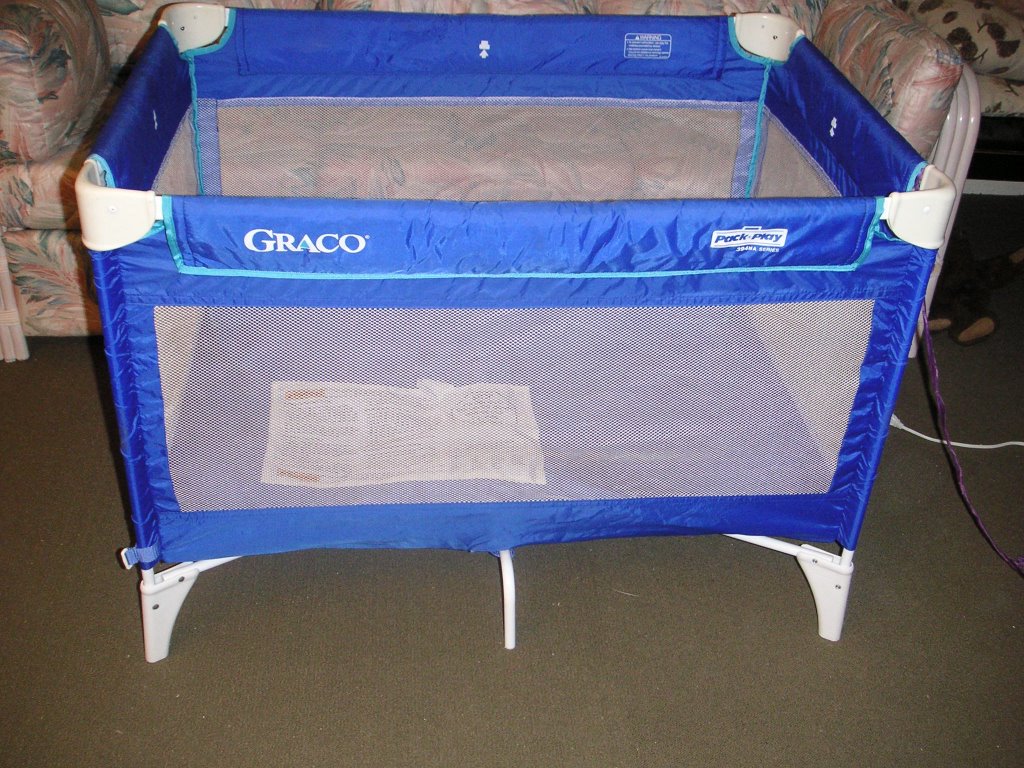
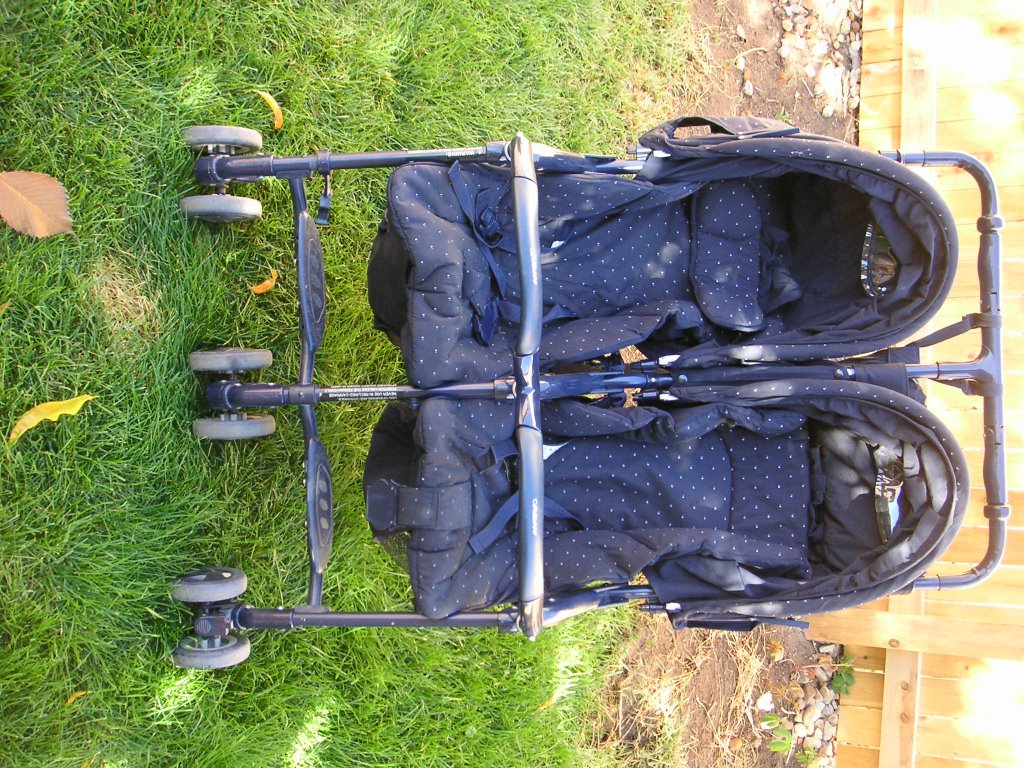
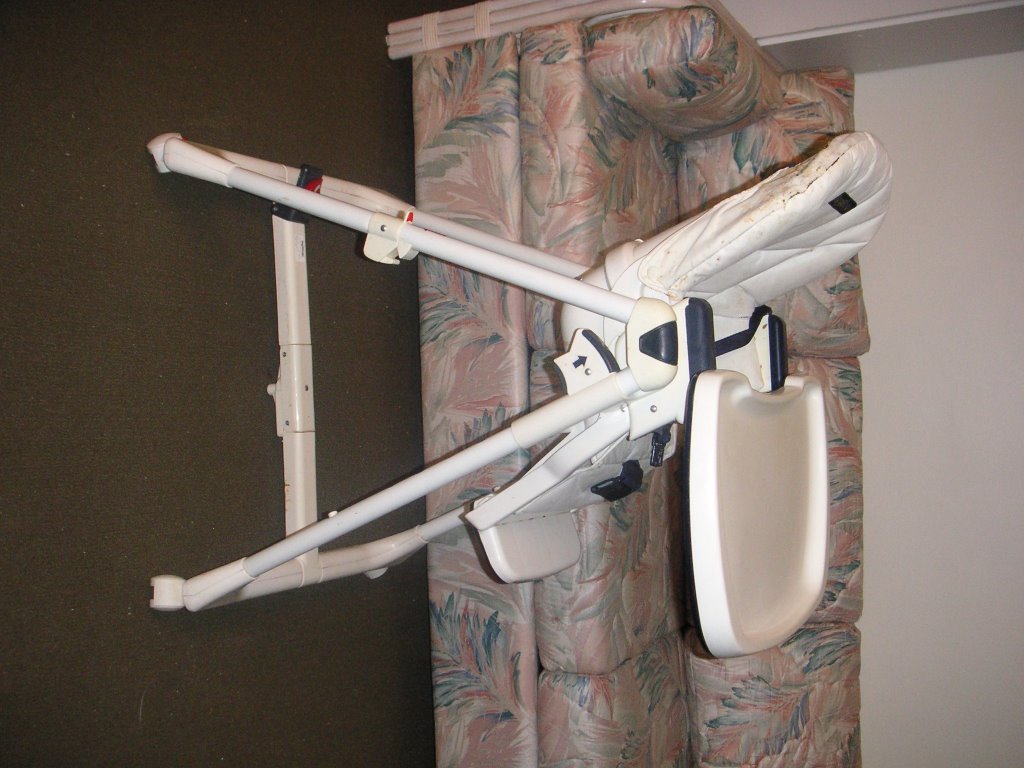
I sent in the application to sign my youngest child up for kindergarden last month. My dealings with baby gear are now confined to trying to sell the stuff too heavy to ship to friends and family, via a classified ad or e-Bay (an effort on Craig's List proved a failure). [Anyone interested in an almost new crib with mattress, portable play pen, high chair, or battery powered swing for a reasonable price is urged to send me an e-mail. FOB Wash Park Prophet's garage.] But, the recent birth of a nephew, a two year old's birthday party, and a vertiable baby boom among friends and more distant family, as well as a response to my recent post on WIC and breast feeding have conspired to make me to reflect and what purchases were and were not necessary in our baby years.

We were a family that had the luxury of allowing my wife to stay home with the children for both of our children for an extended period, whihc permitted her to breast feed for not just the six months recommended by the pediatricians, but in fact, the full time necessary until they could subsist on solid food. This also allowed her to make the overcooked vegetables and spend time to cut up larger bites of food.

As a result, we used maybe two or three cans of baby food for the two children combined and could have done without them. We also made essentially no use of bottles or breast pumps (and I don't feel any lack for not "participating" in feeding the babies in the middle of the night). We skipped pacifiers, because they can encourage unpleasantly firm biting in breast feeding. And, while we had perhaps a dozen little packets of the lotion (all free samples) that advertises itself as being useful for soothing a breast feeding mother's skin from chapping, we used perhaps a third of a packet.

We got a baby bath, but we didn't use it more than once or twice, if at all. By the time they were too big for the sink, they were big enough for the regular bath.

The wireless intercom proved useless. Our homes have always been "not too big" and our babies always had an ample ability to make a racket that could be heard throughout the house when they needed attention. The little gate we bought to seal off doors or hallways never proved strong enough to stop our babies, and so also ended up not being used.


We did use fine wooden crib we bought briefy for our first child. But, we never used the cushions that padded the sides, out of fear that our baby might get tangled in them and suffocate, and the babies never seemed very interested in the mobiles we got to adorn it either (although they loved the music that one of them could be wound up to make). Our second child preferred the portable play pen to the crib for some reason, so it wasn't used at that point.


The rocking horse only got light use, although they did play with it. But, the automated swing was indispensible for a while.


This isn't to say that we bought nothing, or that everything we bought was useless. Children have all sorts of clothes and toys and books and other gear, even if you keep it simple, and the armoire that we bought to hold all of that stuff has never been empty and is still heavily used now. Disposable diapers, disposable wipes, a portable changing pad were invaluable, as was the diaper bag that they were carried in. We could never figure out how to use our diaper genie, however, and so we used more conventional trash cans.

Car seats, of course, were absolutely necessary (indeed, they are the only piece of baby gear that you are required by law to own.) The strollers, too, received heavy use, as did child sized blankets used for both bed and stroller trips. Indeed, we needed several -- a light one for travelling, a heavier one for rougher urban terrain, and later a double jogger when we had two children -- the better ones were worth it because they didn't break. We tried various kinds of baby carriers (a hip sling, a guerney that carried the baby frontward facing and a backpack among them), but settled on just one (the backpack).


We bought all sorts of child proofing gear, but ultimately we settled on using it for just two base cabinets, the liquor cabinet and the one that housed our cleaning supplies. This was probably a good move. The ability to get into the cabinet with the much more interesting pots and pans kept them from getting too determined about the more dangerous cabinets which I'm sure that they could have made their way into had they really tried.

A solid high chair proved useful, although the table mounted one kept falling off.


Overall, the impression I was left with is how little gear it actually takes to raise a baby, although, of course, they don't remain babies forever and a stay out home breast feeding mom is key to this equation. Sometimes, less is more.

12 February 2006

Modern ASW

One of the more difficult matters for someone who wants to understand the U.S. military to understand is ASW, anti-submarine warfare. Many different military resources are used to carry it out, the role of each part of the total effort is often less than clear, and the nature of the threat, past and present, is also not always clear. An executive summary of the proceedings of a recent MIT conference on the topic is one of the best introductions to ASW that I have seen.

ASW involves patrol aircraft which try to get glimpses of potential threats in a larger area, submarines that listen over long periods of time for opposing submarines while trying to be quiet, surface ships that historically focused on finding submarines close at hand, and helicopters whihc have the edge of carrying torpedos that can harm a submarine and can't be outrun by a submarine.

Some highlights:

* Modern diesel-electric coastal submarines are quieter and smaller than Cold War nuclear submarines, which makes them harder find. Air Independent Propulsion (AIP) models can stay submerged for very long periods of time.
* The U.S. military has reduced its commitment to ASW as it has focused on other missions in the post-Cold War era to focus upon.
* A small number of undetected submarines, which requires only a small amount of resources to maintain once purchased, can deteur a large opposing force and can require a very large commitment of military resources to defeat.
* Advanced weapons can make it possible for a small diesel-electric submarine to do a great deal of miliarily significant damage.
* Learning to operate as a team is particularly important in ASW, and the U.S. has less of an edge in this area than it does in the technology of particular subsystems.
* Opposing submarines are threats not only to the Navy, but to sea lift and commercial traffic in a large area. This can slow deployment of ground troops and their equipment to a theater of operations, and make the conflict harmful to everyone in the region.

Communication Theory


A sense of priorities is important.

Hat Tip to Denver Hot Pants at Renegade Crafters.

New Frontiers In Coffee

The Cherry Creek North Guy informs us of some new frontiers in the Coffee Wars.

Another Prophet's Views

I'm not the only one thinking about what the future will bring. Tom Frey at the Rocky has some interesting ideas.

Some are plausible. He suggests that the blogosphere (and related "do it yourself" media) could cause public opinion to solidify from the grass roots in both politics and business much more quickly.

His most notable observation looks at the success of the iPod and suggests that it will be replicated:

Simple and smart products. We've spent the past 20 years adding features and functionality, and 99 percent of those features and functionality aren't needed. At the same time we are compressing more and more into our 24-hour days. We have to work fast, act fast, eat fast, and we make far more decisions in a day than ever before in history. And we need products that support this lifestyle.

We need products that are simple and easy to use that make decisions for us. We need smart products that know what we want and when we want it. The technology behind the products may be complicated, but the user interface will be simple and easy to use. There will be an enormous market over the next several years for this seemingly really simple stuff.


I sympathize greatly with this idea. For example, why must a version of Microsoft Word used in a law office offer you dozens of font choices, when your in office style standards mandate that everything the office writes be presented in Times New Roman? Less can definitely be more.

He notes the dawning of WiMax technology, wireless high speed internet access with a thirty mile radius that could change communities. His suggestion that wireless power is on the horizon is all wet. While this does exist now in some very low powered and/or short range niche applications where the electrical interference caused by the power lines themselves is a problem, it involves huge power losses compared to wires and transmits miniscule amounts of power. It also is problematic to have intense laser or microwave beams surging through any space that a living thing might also want to occupy. If there is a revolution in power transmission, it will come from high temperature superconductors, not wireless power transmission.

He makes other interesting predictions as well, and if you're interested in this kind of thing, you should go and read it.

Ultra Compact Dwarf Galaxies Confirm MOND

MOND (Modified Newtonian Dynamics) is an alternative to dark matter that explains the dynamics of stellar objects. One of the predictions of MOND is the ulta compact dwarf galaxies will have no apparent dark matter and will behave as Newtonian dynamics predict. In contrast, traditional dark matter theory doesn't definitively predict any particular result for any class of galaxies. Once again, the MOND prediction has been proven correct.

One of the basic problems with dark matter theory is that it doesn't predict much, because any discrepency between Newtonian predictions and reality can always be explained by assuming that there is dark matter to account for the difference. And, there isn't a very solid theory explaining where dark matter should be distributed and involves primarily post-hoc fitting of the data to reach its conclusions. Simply put, it has far more degrees of freedom than necessary to explain the data (in addition to the difficult that it relies upon the discovery of types of particles never observed.) It also, for example, does not explain trends in galactic color that MOND explains, while providing otherwise identical predictions of matter distributions to that of dark matter models.

MOND isn't a perfect theory by any means. Research is ongoing. And, it is only one of several members of a class of theories with the same basic approach. But, it does make definitive predictions that can be tested, and has repeatedly had its pre-data predictions confirmed as observation allows us to confirm or contradict them, and has a strong track record of being proven correct, except in galactic clusters and similar structures where mass is not very point like (such as the apparent starless galaxy recently discovered).

CSAP Gap Explained

Some people, myself included, have hypothesized that the gap between school districts in Colorado on the state's standardized CSAP test have to do with things like poverty in low performing areas. But, I've discovered an important new factor in the gap from the every informative free Denver Daily News (Feb. 10. 2006 edition).

In the course of reporting on Lynn Hefley's House Bill 1150 which seeks to impose a uniform statewide calander on public schools, they quote Phil Fox, a lobbiest for Colorado's school executives. He states, in opposition to the bill:

There are districts in Colorado that have days off for kids to harvest the sugar beans, there are kids in districts, in the western slope that get weekends off in the hunting season. . . .


Ah ha! No wonder those rural kids do so well on the CSAPs! They don't weekends off until sugar bean or hunting season (by the way, what they hell is a sugar bean?). Meanwhile, slackers in Districts like the Denver Public Schools, which my children attend, get Saturday and Sunday off every week, giving them ample time to forget their lessons by the time Monday comes around. Mystery solved.

First Military Executions Since 1961 Planned

The military has asked President Bush to authorize execution of two of the seven prisoners on death row at Fort Leavenworth’s U.S. Disciplinary Barracks.
The request to execute Ronald A. Gray and Dwight J. Loving is the first from the Army since President John F. Kennedy was in office.

Gray has been on the military prison’s death row since April 1988 for convictions for rape, sodomy and multiple murders while stationed with the Army at Fort Bragg, N.C. Loving arrived the next year after being convicted of killing two taxicab drivers while he was an Army private at Fort Hood, Texas. . . . The last [military execution] was John Bennett, an Army private hanged in 1961 for raping and attempting to kill an 11-year-old Austrian girl.


From the Army Times.

It is particularly notable that despite the reduced number of appeals available in the federal system (in contrast with state death penalty cases where both federal and state level appears are possible), these cases have gone on for 17 and 18 years respectively.

10 February 2006

I Don't Think the Founders Had This In Mind.

The district court imposed a twenty-year sentence on Lynch for the Hobbs Act offense (Count I) [Ed.which prohibits actual or attempted robbery or extortion affecting interstate or foreign commerce]. In a special interrogatory the jury determined that the government had failed to prove beyond a reasonable doubt that Lynch had murdered Carreiro. However, the district court found by clear and convincing evidence that Lynch had participated in the murder and therefore cross-referenced United States Sentencing Guidelines Manual (U.S.S.G.) § 2A1.1, the first-degree murder guideline, as required by U.S.S.G. § 2B3.1(c)(v).

The Supreme Court has held that a jury's verdict of acquittal does not prevent the sentencing court from considering conduct underlying the acquitted charge. United States v. Watts, 519 U.S. 148, 157 (1997). In this case, Lynch was not found innocent of a charge of murdering Carreiro. In response to the special interrogatory, the jury merely found that they did not unanimously agree that the government had established Lynch's murder of Carreiro by proof beyond a reasonable doubt. It was therefore not error for the court to make its own finding in sentencing Lynch.

In this circuit, when a sentencing factor has an extremely disproportionate effect on the sentence relative to the conviction, the government must prove such a factor by clear and convincing evidence. United States v. Hopper, 177 F.3d 824, 833 (9th Cir. 1999). Since the use of the enhancement in this case increased the sentencing range by 105 to 203 months, the clear and convincing standard applied. There was sufficient evidence for such a finding by the district court and the defendant does not challenge the sufficiency of that evidence for the clear and convincing finding. There was no error in the court's use of the first degree murder cross reference.


Translation: Mr. Lynch was sentenced to 8 years and 9 months in prison for violating the Hobbs act, and an additional 8 years and two months for committing a murder for which he was acquitted by a jury. And this is from an en banc decision in the 9th Circuit, the supposedly most pro-defendant of all of the U.S. Circuit Courts of Appeal.

Via the Sentencing Law and Policy Blog.

It Just Doesn't Stop Coming (Sedition Charges)

Laura Berg is a clinical nurse specialist at the VA Medical Center in Albuquerque, where she has worked for 15 years.

Shortly after Katrina, she wrote a letter to the editor of the weekly paper the Alibi criticizing the Bush Administration.

After the paper published the letter in its September 15-21 issue, VA administrators seized her computer, alleged that she had written the letter on that computer, and accused her of “sedition.”

Here’s what her letter said.

“I am furious with the tragically misplaced priorities and criminal negligence of this government,” it began. “The Katrina tragedy in the U.S. shows that the emperor has no clothes!” She mentioned that she was “a VA nurse” working with returning vets. “The public has no sense of the additional devastating human and financial costs of post-traumatic stress disorder,” she wrote, and she worried about the hundreds of thousands of additional cases that might result from Katrina and the Iraq War.

“Bush, Cheney, Chertoff, Brown, and Rice should be tried for criminal negligence,” she wrote. “This country needs to get out of Iraq now and return to our original vision and priorities of caring for land and people and resources rather than killing for oil. . . . We need to wake up and get real here, and act forcefully to remove a government administration playing games of smoke and mirrors and vicious deceit.

Otherwise, many more of us will be facing living hell in these times.”

After her computer was seized, Berg wrote a memo to her bosses seeking information and an explanation.

Mel Hooker, chief of the human resources management service at the Albuquerque VA, wrote Berg back on November 9 and acknowledged that “your personal computer files did not contain the editorial letter written to the editor of the weekly Alibi.”

But rather than apologize, he leveled the sedition charge: “The Agency is bound by law to investigate and pursue any act which potentially represents sedition,” he said. “In your letter . . . you declared yourself ‘as a VA nurse’ and publicly declared the Government which employs you to have ‘tragically misplaced priorities and criminal negligence’ and advocated, ‘act forcefully to remove a government administration playing games of smoke and mirrors and vicious deceit.’ ”


Colorado's sedition statute (yes, we have one, which I suspect is farly typical) reads as follows:

Every person who, in this state, either orally or by writing, printing, exhibiting, or circulating written or printed words or picture, or otherwise, shall advocate, teach, incite, propose, aid, abet, encourage, or advise resistent by physical force to, or the destruction or overthrow by physical force of, constituted government in general, or the government or laws of the United States, or of this state, under circumstances constituing a clear and present danger that violent action will result therefrom, commits sedition.


Colorado Revised Statutes Section 18-11-201(1). It is a class 5 felony, which means that the minimum sentence is one year of imprisonment, the maximum sentence is three years of imprisonment, and the mandatory parole period is two years (extraordinary circumstances found by a judge would permit a sentence of six months to four and a half years). It is not classified as a crime of violence in Colorado.

Needless to say, I don't think that there was a clear and present danger that violent action would result from the letter, or that it fit the definition of sedition. Also, since when was the Veteran's Administration in charge of rooting out sedition? The last time I checked, that was the job of the Justice Department, or perhaps the Department of Homeland Security (what a miserable name). Maybe the guy who sent the e-mail is confused about which agency he works for (or maybe the VA is just a huge cover operation for the CIA).

Thanks to the Progressive.org for the story.

More On Fobbits and the Changing Military.

Via Intel Dump:

In Iraq, you define your status by where you fit in a hierarchy of suck. Paradoxically, those who have it best inhabit the bottom of the ladder -- those poor souls in Kuwait or Qatar or Bahrain who get the combat patch and tax-free income without the risk of being in Iraq. Next up on the ladder are the "Fobbits". These are soldiers who live and work on the big FOBs [Forward Operating Bases] like Speicher, never to leave the wire nor be placed in any real danger. Although the large basecamps do occasionally take incoming rocket or mortar rounds, it's rare that those inflict any casualties. Fobbits get to live in relative luxury, whether at Speicher, LSA Anaconda or in Baghdad. In short, they earn the perquisites of a combat tour with none of the risk; the worst hardship for them is being away from home.

Suffice to say, most combat soldiers look down on the Fobbits with a mix of jealousy and resentment. We wish we could have the easy life they lead in Iraq, but are proud that we have it tougher, and that we actually get to contribute in some meaningful way to the mission. The unfortunate truth is that most Fobbits never get to meet an Iraqi or participate directly in the reconstruction of Iraq. They contribute indirectly to the mission here, of course; the gargantuan U.S. military could not function without its legions of support personnel and contractors. Nonetheless, these people don't get to see the same Iraq that other soldiers do, which in my opinion is too bad. Two of the things I like most about my job advising police are the ability to interact with Iraqis, and to see the fruits of my labor on a daily or weekly basis.


The stratification of the military also brings to mind another big trend in the military. It was discussed by the Administration defending its higher budget with fewer soldiers in the midst of what is calls wartime.

One example of why the Army argues that it does not always take an increase in troops to attain an increase in firepower is a new 155mm artillery weapon. It is not yet ready for fielding, but as designed it would take three times fewer people to operate than the old version, with the same firepower as six older 155mm cannons. Thus two soldiers operating one of the new weapons could achieve on the battlefield what it took 36 to do with the old weapons, Gen. Peter Schoomaker, the top Army officer, said in an interview last week.

In similar ways, the Navy is moving toward ships with smaller crews. The Air Force is fielding missiles and bombs that can hit more targets with greater precision, thus requiring fewer airplanes to accomplish the mission.


This argument is half right. Many kinds of forces can see their numbers dramatically reduced. If we built the same Naval fleet that the U.S. has now from scratch today, the Navy would need 60% fewer sailors. One of the main innovations of the F-35A, one of the least revolutionary major spending programs in the military, which is designed primarily to replace aging F-16s, a design that entered service at the end of the Vietnam War, is that it is designed to have lower maintenance requirements. When you go from needing 15-25 Air Force military personnel per plane to 10 perhaps, with a new design, you don't need as many people in the Air Force. It can happen in more subtle ways as well. A surveillance drone flying over a transport convoy can eliminate the need to have dozens of scouts on the ground in front of and besides the convoy trying to prevent ambushes.

But, the other half of the argument is that not all kinds of forces can have their numbers reduced greatly with technology. A ship has the same capabilities whether you have 300 sailors on it, or 120. But, an infantry unit can't as easily be reduced in numbers. You can't do house to house searches for fleeing snipers and weapons caches with an artillery battery or a destroyer. Support units like medical staff or human intelligence personnel are also not so easily trimmed.

You will see in the military something very like the American economy at large. In the civilian economy, most goods producing industries from agriculture to manufacturing have grown dramatically more efficient over the past few decades. But, service providing industries, like retail sales, education and health care, are far less capable of reducing their ranks with new technologies. So, we have gone from being an economy of goods producers, to one dominated by service providers. Certainly, off shoring of goods producing jobs has had an impact, but the shift would have happened anyway, just a little slower.

In the military, similarly, the "button pushers" and "equipment operators" who dominate the current U.S. military ranks will wane in numbers (although not importance), while the grunts and people who provide services that support them, will not. As a result, it is almost inevitable that the lighter elements of the Marines and Army are increasingly going to dominant the ranks of active duty military personnel.

Governor's Race Polls Summarized

The results of several surveys held to date in the Colorado Governor's race are available at Colorado Pols. Bottom line: Right now, Democrat Bill Ritter has a narrow lead over Republican Bob Beauprez, while Marc Holtzman, the other Republican in the race, is a much weaker candidate than Beauprez. But, the race is early and much of these results hinge on name recognition.

Al-Marri Still in South Carolina Brig

Ali Saleh Kahlab al-Marri, a 40 year old engineering graduate student at Bradley University in Peoria, Illinois, who is a citizen of Qatar and was legally in the United States with his family, has been held (free registration required for link) in solitary confinement at the South Carolina Navy brig since June 23, 2003 when the President declared him an enemy combatant. He was previously arrested in December, 2001. Jose Padilla, the other person who was so held, has since been transferred to a Miami jail and is not currently classified as an enemy combatant, although that threat of being reclassified as on hanging over his head.

Al-Marri was arrested, unarmed by civilian authorities, in West Peoria, Illinois as a "material witness" and transferred to New York. He was criminally charged with credit card fraud and making a false statement about calling a suspicious number in the Middle East, a year later. The charges were brought first in New York, and then, after a venue change, in Illinois, before George W. Bush declared him to be an enemy combatant and moved him to the Brig in South Carolina. He was moved to military custody, not from a battlefield, but from a civilian jail a year and a half after he was first arrested.

A federal court in South Carolina ruled in July that as a non-citizen, al-Marri could not simply demand that the government charge him with a crime or release him. The ruling noted the decision "does not close the door to this court to [al-Marri]," but it did not spell out what al-Marri needed to do to challenge his enemy combatant status. . . . some of the evidence against him is secret and unavailable. And the public portion of the government's evidence consists of a sworn statement from a federal agent who did not have firsthand knowledge of the assertions about al-Marri's alleged ties to Al Qaeda . . . . The allegations include phone calls al-Marri made and material on his laptop.

"All the government has submitted to say they can hold him for the rest of his life is the statement of a single government agent who has no direct knowledge." . . . according to his lawyers, has not been interrogated in more than a year. Since being moved to the brig, he has not been permitted visits with family, including a wife and five children, who live in Saudi Arabia. A brother, Jarallah al-Marri, is detained at the Guantanamo Bay naval base.

Accusations against Ali al-Marri include that he made a series of telephone calls in late 2001 to a number in the United Arab Emirates used by suicide hijacker Mohammad Atta and others involved in the Sept. 11 attacks. The government says the phone number belonged to Mustafa Ahmed al-Hawsawi, an alleged Al Qaeda paymaster.

Al-Marri's lawyers say they want to know if any evidence against their client was collected through torture.

Al-Marri denies being a terrorist or committing any crimes.


One commentator has this to say about his case:

Given the way it has been handled, this case is actually a bit more frightening than the Padilla case. Al-Marri was actually indicted by a federal grand jury in Illinois on terrorism-related charges. Thus, he was under the jurisdiction of a federal district court, where he was being accorded the procedural protections of the Bill of Rights. One day, the government asked the judge to dismiss the charges and when the request was granted, al-Marri was immediately transferred to the custody of the Pentagon, which proceeded to transfer him to the South Carolina brig in which Padilla has been jailed. (The judge dismissed the indictment “with prejudice,” which means that the government is now precluded, under the constitutional bar against double jeopardy, from charging al-Marri with the same offenses contained in the indictment.)

Thus, when we combine the Padilla and al-Marri cases, we see that the Pentagon is seeking the authority to arrest any person, American or otherwise, and punish him and also the authority to yank anyone out of the federal court system and punish him – all without having to comply with the Bill of Rights and without having to deal with the federal courts.


Some of the pleadings (mostly from his criminal case) can be found here and here. Wikipedia's article is found here. His petition for habeas corpus is found here. An appellate brief from Al-Marri from an Illinois habeas corpus petition that was ultimately dismissed on venue grounds and explains the case from his point of view is found here. A December updated from CNN is found here.

09 February 2006

Juries in Colorado.

I don't know how many coroner's juries or grand juries there are in Colorado each year (yet!). (See the post below.) But, I do know how many other state court jury trials there are in the state and there are surprisingly few. I'll save for another post to fully explore the implications of this fact, but suffice it to say that a significant number of judges, academics, attorneys and other people interested in the legal system have grown concerned about a system where hearing the facts and having an impartial determination made in a case, especially before a jury, has become the rare exception, rather than the norm, especially in non-criminal cases. Also, if we are going to be in a system that isn't primarily a jury trial system, it would be possible to reform the rules of civil procedure significantly. These rules are now hamstrung by the fact that all factual determinations must wait until an ulimate trial, whether or not a jury is actually requested or a trial is likely. Cases with no serious factual disputes can be resolved fairly efficiently. Cases with even minor, but crucial factual disputes can linger interminably.

In District Court (the state trial court of general jurisdiction), there were just 1,033 jury trials in 2005. Of those 691 were in felony cases (about 150 per 10,000 cases filed), 311 were in civil suits (about 60 per 10,000 civil cases filed, excluding domestic, juvenile, mental health and probate cases; most that do go to juries are personal injury cases), and 31 were in juvenile cases (likely cases involving terminations of parental rights for alleged abuse or neglect, a rate is hard to determine because abuse cases, paternity cases and delinquency cases are hard to parse from each other statistically). Denver had 167 jury trials at that level in 2005, 88 for felonies, 78 in civil cases, and 1 in a juvenile case.

There were 906 jury trials in county court, which handles less serious matters, in 2005 in Colorado. Of those just 18 were in civil matters (roughly one per 10,000 cases filed), 561 were in misdemeanor cases (about 80 per 10,000 of cases filed), and 326 were in traffic cases (about 20 per 10,000 cases).

Denver is excluded from these statistics because of its merged municipal and county court structure. It had 175 jury trials in the part of the court analogous to the county court in other counties in the state (5 civil, 117 misdemeanor and 53 traffic), and 126 jury trials in Denver's counterpart of a municipal court.

In fact, there were more appeals from the District Court in civil cases (1,058) than there were civil trials of any kind in District Court in 2005 (945 including quasi-criminal juvenile matters) due in part to cases decided prior to trial in motion practice, something also true in felony cases where there were a total of 711 trials of any kind and 1,192 appeals, due largely due to appeals of sentencing decisions made following plea bargains. This is not true in county court, however, where there were 595 appeals statewide in 2005 from county and municipal courts combined, but 906 jury trials and thousands of trials before judges.

Criminal lawyers get all the fun. Of the 2,114 jury trials held in the state each year (exluding municipal courts), 1759 (83%) are criminal or quasi-criminal cases, and on top of that, all grand juries are criminal and almost all coroner's jury inquests are quasi-criminal.

There are just 334 civil jury trials in state courts in Colorado (municipal courts don't have jurisdiction in civil cases) in all of 2005 for the roughly 30,000 attorneys who practice law in Colorado, about 85-90% of whom don't do any criminal work. It is hardly surprising then, that there aren't all that many attorneys in Colorado with a lot of civil jury trial experience. Even in a fairly volume civil litigation practice, it would be typical to have no more than one jury trial per attorney per year, and often less jury practice than that.

There are a little over 250 trial judges in Colorado's state courts. So, while trial judges preside over criminal or quasi-criminal jury trials roughly every month or two, on average (some and some less in jurisdictions where judges divide responsibility by type of case), the average trial judge in Colorado sees only one or two civil jury trials a year. Now, obviously, there are far more cases out there, the vast majority never go to trial and many that do go to trial at all, go to lower profile trials before a judge only (there are 5,696 trials to judges in small dollar amount small claims and county court cases each year, including Denver), but the numbers are still suprising low.

In 2002, the most recent year for which I have information readily available, Colorado's federal district court had 30 criminal jury trials and 41 civil jury trials. This works out to about 1 jury trial per month for the seven U.S. District Court judges. About 1.5% of U.S. District Court civil cases in Colorado end in jury trials.

Put another way, Colorado needs about 17,611 trial jurors to hear cases each year (exluding those who are called for jury service but don't actually end up having to hear a case, municipal court juries, grand jurors and coroner's jurors). This means that the odds that you will actually serve on a jury that hears a trial in a lifetime in Colorado, at the current rate, are about 25%.

God, Rule 122 and other lore.

Today, I attended a continuing legal education class, sponsored by the Colorado Bar Association, which had some helpful hints on how an attorney's practice is influenced by a variety of court rules recently adopted or about to be adopted. I learned a lot.

I also discovered an unusual provision of one of those rules, adopted effective July 1, 2005, which is newly adopted Rule 122. Colorado Rule of Civil Procedure 122 implements a statute, Section 13-3-111 of the Colorado Revised Statues, adopted twenty-five years ago, and amended a few times since, which permits litigants, by mutual agreement, to have their cases tried before a retired judge who has be deputized by the Chief Justice of the Colorado Supreme Court, with all of the powers and limitations of an ordinary judge, at the sole expense of the litigants. The law hasn't been used much. Our speaker advised us that since about 2000 when it was rediscovered by a frustrated divorce lawyers, it has been used about five times a year. Before that, it was used far less frequently.

The statute allows the courts to adopt implementing court rules to deal with this kind of judge, who is called an "appointed judge," but the court system didn't finally get around to doing so until last summer. According to our speaker, Richard P. Homle, a senior trial partner at the law firm of Davis Graham & Stubbs LLP, the Chief Justice Mary Mullarkey was a driving force in getting the new rule adopted, and he also worked on the committee that drafted the new rule.

Overall, it is a well drafted rule. The odd part of the Rule is Colorado Rule of Procedure 122(c)(7) which sets forth one of the required contents of a Motion to have an appointed judge named in a case. It states that the Motion to have a judge appointed must include:

A copy signed by the Appointed Judge of the following oath: "I, (name of Appointed Judge), do solemnly swear or affirm by the ever living God, that I will support the Constitution of the United States and of the State of Colorado, and faithfully perform the duties of the office upon which I am about to enter."


(Emphasis added).

The clause "do solemnly swear or affirm by the ever living God" also has the noxious character, given its word order and lack of punctuation, of having the word "affirm" appear to be modified by the words "the ever living God", which sort of defeats the purpose of an affirmation, both for those who don't want to swear because they, out of their religious beliefs, feel it violated the Ten Commandments by taking the Lord's name in vain, and those who would prefer to affirm because they don't wish to assent to the existence of a God.

After the presentation was over, I asked Mr. Holme where the unusual oath came from, and he stated that the committee didn't make it up, that it was the standard oath taken by every judge in the state, and that he believed it came from a statute or the state constitution. I fully believe that he was being honest with me regarding his belief, but being inquisitive and being spoiled by having a Colorado Lexis-Nexis account with a flat monthly fee for Colorado searches, I did a search to further look into the issue.

It turns out that the word God almost never appears in Colorado's statutes apart from the non-religious idiom "act of God.", and a description of the State Seal at Section 24-80-901, Colorado Revised Statutes, which has the same masonic "eye of God" symbol found on the dollar bill.

The oath of a grand jury ends with the coda "so help you God." Section 13-72-105, Colorado Revised Statutes. A similar coda is found for the obscure post of a juror on a coroner's jury, Section 30-10-607, Colorado Revised Statutes, although this form need only be "in substance" similar to the suggested form. The oath for witnesses at a coroner's inquest, Section 30-10-610, Colorado Revised Statutes, contains no such qualification. Grand juries are rare in Colorado because in Colorado practice, unlike federal practice, prosecutors can charge someone with a felony without one, thus use them only in political cases and cases requiring certain kinds of confidential investigations. Coroner's inquest juries, which have six jurors, are called only on very rare occasions, in the coroner's discretion, such as an unsolved 1995 murder in Pueblo, where are about 80 deaths in Colorado each year on average, with undetermined unnatural causes, and only a small proportion of them are resolved through coroner's juries. Cornor's inquests are a quasi-judicial sort of public grand jury to determine a cause of death, designed primarily to free the coroner from political responsibility for exercising his or her professional judgment in a close or highly public case.

The U.S. Presidential oath is often taken with the same coda, but in fact reads "I do solemnly swear (or affirm) that I will faithfully execute the office of president of the United States, and will, ot the best of my ability, preserve, protect, and defend the constitution of the United States." United States Constitution, Article II, Setion 1, Clause 9.

Colorado's state constitution offers this secular take on oaths:

Every civil oficer, except members of the general assembly and scuh inferior officers as may be by law exempted, shall, before he entered upon the duties of his office, take and subscribe an oath or affirmation to support the constitution of the United States, and of the state of Colorado, and to faithfully perform the duties of the office upon which he shall be about to enter.


Colorado Constitution, Article XII, Section 8.

This is similar to the Rule 122 oath, and a similar religious phrase is permitted, but not required, by state statute:

Whenever any person is required to take an oath before he enters upon the discharge of any office, position, or business or on any other lawful occasion, it is lawful for any person employed to administer the oath to administer it in the following form: The person swearing, with his hand uplifted, shall swear "by the everliving God".


Section 24-12-101, Colorado Revised Statutes.

This statute dates back to, at least, 1877, although the pre-1973 history does not reflect amendments that may have occurred prior to 1973. (The statutory history reads: "G.L. § 1925. G.S. § 2471. R.S. 08: § 4669.C.L. § 7958.CSA: C. 115, § 1.CRS 53: § 98-1-1.C.R.S. 1963: § 98-1-1." G.L. is the 1877 version of the General Laws of Colorado, adopted to clarify which territorial laws remained on the book after Colorado became a state in 1876. G.S. is the general statutes of Colorado published in 1883. R.S. 08 is the revised statutes of 1908.) Hence, it far predates modern First Amendment jurisprudence, the clear establishment of law that shows that no religious test may be required for public office means that not even a belief in God may be required, and it predates the notion that the First Amendment applies to the states (this law was likely carried over from territorial days and may predate the 14th Amendment which is the basis for that legal doctrine).

In the only known case that has interpreted Colorado's form of oath statute, a divided Colorado Supreme Court once overturned a perjury conviction for a lack of proof that an oath was administered at all, but didn't specifically hold that it had to contain those words. Rogers v. People, 161 Colo. 317, 422 P.2d 377 (1966) (the dissenter argued that a contemporaneous written document reciting that an oath had been administered in connection with the perjured statement was a sufficient evidentiary basis upon which to the jury could have concluded beyond a reasonable doubt that an oath was indeed administered). Perhaps, the Court was feeling generous two days after Christmas when the case was decided.

Bottom line: The oath is Colorado Rule of Civil Procedure 122(c)(7) is not required by either the state constitution or state law, espouses a particular view about God that is not universally shared, goes beyond mere ceremonial deism, and is not something that the State Supreme Court should be adding to the Rules of Civil Procedure in 2005. The nearly universal drafting practice in other Colorado statutes and other parts of the Colorado Rules of Civil Procedure, is to not specify a specific form of oath. To do so was in this case was an unnecessary and improper move which may be unconstitutional under both the state and federal constitutions.

Indeed, we would do well to repeal all four of the obscure instances where the statutes expressly provide for including God in oaths, two mandatorily and two voluntarily, as well as the form of oath in C.R.C.P. 122(c)(7). While we are at it, it wouldn't hurt to repeal the vestigal institution of the coronor's jury entirely, either. We do need someone with subpeona power to determine a cause of death in difficult cases (which coroner's would have anyway), and we occasionaly find it useful to have grand juries establish whether crimes were committed, but we don't need another institution which is half of each.

Health Shorts

Saw palmetto doesn't work, although unlike some herbal remedies, it doesn't directly do any harm either. It is usually used in an effort to treat frequent urination in men.

WIC (Women, Infants and Children), a government program that distributes infant formula to the poor (among other things) has participants with below average breast feeding rates (10% v. 22% for the general population fully breast feed). Using formula rather than breat feeding is bad for infant health. Breast feeding proponents say this is evidence that WIC is counterproductive. Supporters of the program say that there isn't a cause and effect relationship and blame the low rates on economic pressures to return to work that WIC mothers face.

Taking Prozac in late pregnancy harms infants lungs.

Cancer rates have been falling for some time. Now, for the first time since 1930, raw numbers of annual cancer deaths (for 2003) are down too. A decline in the smoking habit, early detection of cancer and better treatments are credited with the decline.

Denver Water Rustlers

The Mile High City has all kinds of crime, and this is not the most serious by any means. But, it isn't every day that you see what appears to be somone stealing water across the street from Washington Park. Yes, Colorado is part of the arid mountain West. Yet, there I am, on my morning walk, having seen my boss likewise engaged a few minutes before, at Virginia and Marion Parkway in front of the series of tall condominium buildings that are the tallest landmarks in the area, about a block from the local fire station, at about 7:10 a.m. And, there are two guys hooking up the water tank on their TruGreen truck with a hose to the fire hydrant and filling it up for the day. I didn't see a meter or anything else in sight indicating that they were allowed to do that.

Maybe they have a permit, but I've never heard of such a thing. If you know about such a thing, I'd appreciate hearing about it, as I certainly don't want to defame a landscaping business whose allowed to do this legally.

UPDATE: Denver Water's Water Sales Department does have a bullet point labeled "Hydrant Permits", so perhaps this is legal and there are regulations to allow permits for this kind of thing, so it was probably legal. Still, it certainly looks suspicious. For P.R. purposes alone, permit holders really ought to have big signs that say something like "Hydrant Water Used Pursuant To Denver Water Permit XXXXXXX good through XX/XX/XXXX when they do it. I'm sure I'm not the only one who thinks that they look like bandits.

08 February 2006

Federal Question Trivia

Q: Are there any federal legal rights that can be enforced by private individuals only by bringing suit in state court?

A: Private actions under the Telephone Consumer Protection Act (Act), 47 U.S.C.S. § 227 (the "junk fax" law), can be brought only in state court. See Consumer Crusade, Inc. v. Affordable Health Care Solutions, Inc., 121 P.3d 350 (Colo. App. 2005).

Deeper significance: It reminds us that while District Courts have federal question jurisdiction, that Congress has wide discretion to provide that federal laws may be enforced solely in state court. (The deeper question of whether all federal courts can be denied jurisdiction over a federal question, i.e. whether even Supreme Court certiorari review can be eliminated in such a case, is less settled.)

Ken Salazar's E-mail

I noted some time ago that I e-mailed Salazar about the Alito vote. His response, predictably (and yes, I know it gets mass produced and drafted by staffers, hell, I've written some of those letters myself), was lame:

Dear Andrew:

Thank you for contacting me regarding the nomination and confirmation of Justice Samuel A. Alito to serve as Associate Justice for the U.S Supreme Court. I sincerely appreciate your input on this very important decision.

The Senate confirmed Judge Samuel A. Alito as Associate Justice of the Supreme Court on January 30, 2005 by a vote of 58-42.

I voted against the confirmation of Judge Alito. I am convinced, based upon a very careful review of his record, that Judge Alito will move the Supreme Court outside the mainstream of American law. Judge Alito's judicial philosophy will expand Executive power too far--far beyond the so-called "strict construction" of the Constituion that President Bush professes to adhere to, hurt the checks and balances built into our Constitution to protect us all, and roll back important civil rights protections that were achieved in our country through the sacrifices of many.

I did not arrive at these conclusions and my decision lightly. I met with Judge Alito to learn more about his background and experience. I studied his records and his writings, and carefully monitored the Senate Judiciary Committee's nomination hearings.

I have voted for 10 of the 14 judicial nominations made by the President that the Senate has voted on so far while I have been Senator, including voting for the nomination of Supreme Court Chief Justice John Roberts. I have the second highest record among Senate Democrats in support of the President's judicial nominations. But given my concerns regarding Judge Alito, I could not support his nomination to the highest court in the land.

I am disappointed that this candidate will be replacing Justice Sandra Day O'Connor. I truly hope that my concerns with regard to Judge Alito will be proven wrong.

Thank you.


Sincerely,

Ken Salazar
United States Senator


My bottom line. If he's as bad as you just told me that he is, why didn't you have the guts to vote against him when it really counted, to sustain a filibuster? Deceitful! (Incidentally, my entire letter was about the filibuster and that issue isn't addressed at all. Spin may work on the press. It doesn't work on bloggers nearly so well). Ken Salazar is still on the list of politicians whom I cannot support.

Medical Billing

If lawyers' billing practices bug you, you haven't been to a hospital lately. The billing practices in the medical industry are absolutely nuts. The Rocky has an example that illustrates this general trend. For example, the patient whose case they profile was billed $10,000 for a pacemaker, despite the fact that he didn't get a pacemaker. Also, it notes, accurately, that the price quoted isn't the real price.

Bankruptcy Reform Sloppy.

Most insiders who've looked at the bill closely already know this, but the Bankruptcy reform law that took effect in October was full of horrendeously sloppy drafting that will result in a large number of appeals and a great deal of injustice and confusion in individual cases, even if cases where the basic ideas that lawmakers sought to implement were sound.

Saudi Arabia Considers Sentencing Guidelines

The Saudi Arabian justice system is considering implementing sentencing guidelines. The main concern there is that judges are sometimes too harsh in punishing minor offenses.

Hat tip to the Sentencing Law and Policy Blog.

Colorado 48th in State Tax Burden.

Colorado ranks 48th in per capita state taxes (i.e. only South Dakota and Texas impose fewer dollars of state taxes per capita). But, this is partially a statistical quirk. Colorado collects a significantly larger share of state and local tax revenues at the local level (59%) than most states do (the national average is slightly under 50%), to a great extent because it has taken the fairly unusual step of allowing local governments to impose sales taxes. The TABOR amendment, which has kept state funding for things like higher education particularly low in Colorado, is another important cause for Colorado's low ranking.

Total Fat Intake Cuts Have Only Modest Value

Further analysis of a study whose earlier results have previously been discussed at this blog, for its discovery that fat intake reduction without calorie reduction does not lead to weight loss, is now available. The new reports show that simply reducing total fat intake in women's diets also has only moderate benefits.

Women on the low-fat diet who had the highest consumption of fats at the beginning of the study showed the biggest decrease in breast cancer risk. And those who achieved the lowest rate of fat consumption showed the lowest risk of heart disease. And those who reduced fat intake had a lower incidence of polyps, generally considered to be a precursor of colorectal cancer.


The results were not, however, statistically significant in the pool of 50,000 healthy women studied for eight years, although in future years, as the study pool ages, these benefits could nudge above the statistically significant range and show a modest health benefit from a low fat diet for a long period of time.

The study indicates that:

Rather than trying to eat "low-fat," women should focus on reducing saturated fats and trans fats," the so- called "bad" fats, while maintaining their intake of "good" fats, such as vegetable, olive and fish oils. . . Today we know that reducing total fat may not be enough. We need to focus on the types of fat we eat.


In addition:

The study also found that the diet, including more carbohydrates and grains, is safe and healthful - contradicting the claims of proponents of low-carbohydrate diets, such as the Atkins diet, that high carbs increase the risk of diabetes in overweight people.

The women in the study "did not show any signs of diabetes, their triglycerides were normal, and their blood glucose was normal[.]"


The study also is worth noting for those who are interested in the effect of having women in science. This gold standard study wouldn't have happened without the efforts of its principal investigators and sponsors in a part of the National Institute of Health. All of the key players were women.

The Great Bear Rainforest

While it is somewhat ironic that rainforest preservation is going on North of the border, rather than to the South, Canada deserves great kudos for its creation of the Great Bear Rainforest along the coast of British Columbia. In the best practices of environmental preservation, the plan preserves a large tract of key habitat important to many threatened species (as well as to the "First Nations" of Canada) from unsustainable logging and development, and is subject to rules agreed upon collaboratively. It will have a core park area making up about 4.4 million acres, and a peripheral 11.6 million acres "an ecosystem-management plan to ensure sustainable forestry with minimal impact on the environment." Full implementation, however, is three years in the future.

The park area alone will be larger than any park in the United States outside of Alaska, and twice the size of Yellowstone National Park.

Down Cycling and Sustainability

Recycling is never perfect. "Down Cycling", the fact that what you make from recycled materials is lower in quantity and/or quantity than the original, is an inherent limit of the process. Recycling slows the stream of waste to the landfill, but it doesn't, and can't end it. This doesn't mean that we should retreat from recycling. But, it does mean that it isn't a total solution. A sustainable economy also has to produce less waste in the first place. I have a neighbor (who incidentally, is otherwise very conservative on many issues) who thinks that excess packaging in one of the greatest scourges of our era. I won't go that far, but I do agree that reducing waste generation in the first place is a worthy goal and that there is a public interest in doing so because the public sector is generally responsible for figuring out what to do with waste once it is generated.

Hat Tip to Anne Zook, whose gorgeous blog has been added to the blog roll.

Evidence Based Public Health

A recent edition of the Chronicle of Higher Education had an article talking about the overemphasis of medical education on jamming large quantities of basic science information, in lectures delivered by non-physician scientists, and underemphasis on laboratory work and clinical contact. Another of the frequent observations of recent medical school graduates was that the physicians under whom they trained rarely practiced "evidence based medicine" which is what the curriculum had taught them to see as the ideal of medical practice.

The truth is that physicians, especially specialist physicians, are among the least well suited to practice that kind of medicine. Evidence based medicine is premised on the idea that doctors should act more or less exclusively based upon journal published, empirically established medical studies. The problem with that is that physicians don't have the luxury of dealing only with what we know. They take patients as they find them with the ailments they present with in the office or emergency room. Sometimes, the medical literature provides guidance, sometimes it doesn't. Sometimes the literature provides guidance, but the cost of looking for the guidance is high, and the benefits of doing so are modest. Patients usually come back if a doctor's recommended course of action didn't work. Physicians routinely make informed guesses, or rely upon what has worked for their mentors, even if it has not been rigorously tested, and until we reach a point a century from now, where almost everything has been exhaustively subject to empirical testing, the practice of medicine will remain as much an art as it is a science.

But, the case for an evidence based approach to health, more generally, for the general public, is much stronger. Sitting here as a blog a Scooter Joe's coffee shop, in the shadow of Anthem's office building (Anthem is Colorado's Blue Cross/Blue Shield health insurance provider), makes one acutely aware of just how tangible the benefits could be. The platonically best way (if not always the most practical way in the short term) to reduce health insurance costs is for people to live more healthy lives so that they don't need as much health care.

While we don't know everything about health care, we do know a lot of useful things, some of which are contrary to popular wisdom, and others of which merely refine it. This blog, as my regular readers know, regularly covers health issues, generally in brief scrapbook notes about new proven or disproven cures, or newly established health benefits (or the lack thereof) of lifestyle choices like diet, exercise and environmental exposure to various risks. Almost always, they are backed by scientific journal articles or similar quality evidence, sometimes with direct links, and other times with links to secondary sources that in turn rely on scientific journals for their conclusions.

The larger project is to gather up and organize this scrapbook in a collection that can provide a canon of evidence based health findings that can serve as a basis for informing the public about how to live a healthy life, and can guide policymakers in making good use of public health funds and policies. Because these recommendations for individuals and policy makers come backed by empirical evidence, they have a very high likelihood of working in practice.

Our society's public policies towards individual health decision making is remarkably nihilist. We embrace the dogma of patient autonomy to the point of absurdity, even allowing patient autonomy, in many cases, where well established evidence shows that the choice being made is a poor one by measures that almost every patient in that situation would share. I'm not sure that this is necessarily bad public policy. Recent politically motivated decisions at the Food and Drug Administration regarding emergency contraception, and the administration's desire to pander to its religious right base by impeding vital stem cell research and human-animal hybrid research (which is not as ghoulish as it might seem) point to the risks of putting health decisions ultimately in government hands. But, this doesn't mean that there isn't a large place for a more broadly based campaign of public information, subsidy and encouragement of public health measures that have been proven to work.

Evidence based public information campaigns work. The "put babies to sleep on their backs" campaign greatly reduced deaths from sudden infant death syndrome. A public information campaigns directed at the harms of smoking have reduced smoking rates in the United Staets to levels lower than almost anywhere else in the developed world (go to Europe or Japan or South Korea, and you will be shocked at how many people smoke). Very mild traffic fines for not wearing seat belts or not wearing motorcycle helmets have very significant effects on behavior that have substantial impacts on motor vehicle fatality rates. Publicity has been as big of a factor as harsher criminal penalties in reducing drunk driving deaths. Public health guidance has dramatically cut consumption of whole milk and butter (both of which are high in saturated fats) and has also significantly reduced pork consumption. As a society, isn't it reasonable to devote more time on the airwaves to providing people with evidence based health guidance, which people may voluntarily follow to improve their own lives, as we do to helping people decide which brand of beer to buy?

The ultimate goal, beyond mere public information campaigns, is to reshape the culture. No, not the high culture we observe in theaters and view in museums, or even the low culture we absorb on television and listen to on the radio. What I mean is that we need to change the prevailing folk wisdom about how to respond to illness, about what to eat on a day to day business, about how to raise infants and children, and about what kind of exercise regimes are desirable, among other things.

The United States is uniquely suited to realizing this goal. We are more of a melting pot than we are a salad bowl, culturally. New contributions are fused into a larger American culture and made a part of it. As everyone knows, what passes as Mexican or Italian or Chinese or Mongolian food in the United States is sometimes nearly unrecognizable to recent arrivals from those respective countries. It has been Americanized. Usually, this is offered as a criticism. But, this doesn't have to be so. California, which has lead the way in the positive side of Americanizing foreign cultural influences, has shown that sometimes Americans can go one better than the originators. We can cook Mexican foods using healthier fats and oils than those used in the home country. We can make pasta with more whole grains. We can can pay more attention to keeping our food chain disease free than many in China do. We can benefit from a greater variety of vegetables than the traditional Mongolian diet permits. Our material culture is still a work in process and, as such, is malleable. With the proper persausively presented guidance, it can be the healtiest culture in the world and serve as an example for others to follow.

07 February 2006

A Moderate Ruling

A Nebraska court has sentenced a twenty-two year old man who got a fourteen year old girl pregnant (and whom he later married in Kansas) to 18 to 30 months in prison, far less than the maximum 50 year sentence (previously discussed at Daily Kos here).

More Republican Anarchists

The executive branch of the state of Mississippi, which is Republican controlled, has joined the President in holding unilaterally that it doesn't have to follow federal law, this time by putting social security numbers on driver's licenses, despite a federal prohibition on the practice.

I hadn't realized how partisan an issue rule of law could be.

The Anti-Islamic Cartoon Incident

A cartoon has set off a global firestorm of protest. Or, has it?

There are hundreds of millions, if not more than a billion Muslims in the world. The vast majority of Muslims aren't stupid. They know that the world is a big place and that it is full of offensive and even expressly anti-Islamic expressions. Most major Middle Eastern cities are full of satellite dishes pulling in content that the people watching it could be flogged for if caught. While Islamic practice isn't so strict everywhere, much of Arabia and North Africa is living the schizophrenic life of Prohibition era America.

One need look no further than the President's State of the Union address to find statements that, given their context and serious character, ought to be a far greater concern to Muslims everywhere.

Abroad, our nation is committed to an historic, long-term goal -- we seek the end of tyranny in our world. . . . . one of the main sources of reaction and opposition is radical Islam . . . . By allowing radical Islam to work its will -- by leaving an assaulted world to fend for itself -- we would signal to all that we no longer believe in our own ideals, or even in our own courage. But our enemies and our friends can be certain: The United States will not retreat from the world, and we will never surrender to evil.


So, why should a little one square editorial cartoon in a Danish paper (maybe there are a dozen of them, it really doesn't matter), half way around the world from Lebanon, where protests turned violent and Christians were attacked, be so volatile? Its sentiment is little different from that expressed in the State of the Union address, and editorial cartoonists are far less able to impose their prejudices on the world than Presidents? And why should that little cartoon provoke a reaction so long after it is published?

What happened in Lebanon and in other places, was not the grass roots outrage exhibited by Muslims in Europe with hand drawn signs at peaceful protests, shortly after the cartoon was published. The cartoon was just an excuse to rally people against the West. If it were not this excuse, it would have been another.

There is nothing particularly Islamic about this tactic. Brian Riedl, at the conservative Heritage Foundation, who ought to know better, does the same thing when, claiming that money can be cut from the $2,700,000,000,000 federal budget, complains about $73,950 spent by Air Force and Navy personnel, over eighteen months, in violation of the law, on government credit cards, on exotic dance clubs and prostitutes.

If it had not been this cartoon, there would have been a rally about the fact that a professor at some community college in Luxembourg requires his students to read books by Salman Rushdie, or that a woman in Florida was required to remove her veil for a driver's license photograph. Or, that some small town museum in Italy put on display some anti-Islamic church decree in its exhibit of objects from the Crusades. Or, that the Church of England failed to discipline a rector for stating in a homily in small Southern England village that suicide bombers are dupes because Muslims will not receive salvation because they are not Christians. Finding an excuse to hold a rally or protest is child's play. The Danish editorial cartoon writer didn't do anything deeply wrong here. He is merely a scapegoat.

The context is that organizers, probably based in Saudi Arabia, are actively planning and organizing rallies of outrage against the West designed to convey starkly the point that the West doesn't adhere to Islamic principles, which, of course, is entirely true, and by association, to get across the point that being Western is a bad idea. But, this activity, in places like Lebanon, is about as spontaneous as a high school pep rally, or a revival meeting. It is scheduled, planned, orchestrated and designed to get people fired up for the cause. Sometimes, the rally will get out of hand and people will get hurt, as they did in this case. More often, it will go unnoticed by the foreign press. It happened not, primarily, because some editorial cartoonist in Denmark is a jerk, but because some political-religious organizer in Lebanon, very likely funded by someone outside that country all together, is good at getting crowds fired up and bad at crowd control.

The guy who organized the rally, moreover, got his cue from some pissed off minor diplomat trying to score points with the conservative religious political base at home who issued a press release demanding that Denmark take action and criticizing it for failing to do so, when he knew full well that the Danish government had no legal authority to do so given its protections of free speech. The Saudi Arabian press used the incident to distract attention away from its failures to prevent a deadly stampede at home. The story was on the front page of all the Saudi Arabian papers for four straight days at the height of its religious tourist season. American diplomats play the same kinds of stunts from time to time when stationed with some country whom the current administration doesn't like or care about very much.

There is deep anti-Western sentiment in much of the Islamic world. Westernization means a total upheaval of local culture and life styles and elites. If society changes, the new elites will not be the same as the old ones. Islamists seem to be the only people who give a shit about stopping that, and so anyone who is scared of change (and really, who isn't, is a Detroit autoworker concerned about Japanese imports, because he correctly determines that they will cost him his job, any different) is rushing into their arms. The solution is not to clamp down on newspaper editorials, or to assume that Muslims are so dramatically different, deep down, from Americans or Canadians, or other Westerners (even Danes). It is to see the event in the context of a larger orchestrated struggle and to address that struggle, rather than the individual incidents which are used as excuses for the latest rally, which is a losing battle.

Robotic Tilt Wing Flies

Like the V-22 Osprey, this robot can convert from a fixed wing aircraft to a helicopter configuration. Its first test flights were successful.