Showing posts with label Military. Show all posts

09 October 2026

People Don't Usually Use Guns With A Primary Goal Of Killing People

Just a short observation: People don't usually use guns with a primary instrumental goal of killing people permanently.

I'm not talking about firing squads, suicides, or hunting, where killing someone or something is indeed the purpose, or accidental discharges of firearms. 

I'm talking about intentional uses of firearms justified or criminal, against people other than the person using the gun, both in civilian settings and in war. And, I'm not talking about menacing, threats, or deterrence. I'm talking about actually and intentionally shooting other people with firearms, i.e. gun homicide, whether or not it is legally justified.

Of course, firing squads are hardly the only practical means of executing people sentenced to death. Firearm suicides would ideally be prevented in every case because, even if there are circumstances where suicide should be legally allowed, firearms are not a desirable tool to achieve that end. And, by definition, no one wants people to be kill with an accidental discharge of a firearm.

The vast majority of the time, shooting someone with a firearm is a permanent solution to a temporary problem.

Sure, there are times when someone uses a gun to kill someone because they want that person to be dead permanently, in essentially a non-judicial version of a firing squad execution. And, almost always, extra-legal execution that is not simply for the purpose of incapacitating someone to achieve some other end is a crime, even when this is done by members of the military. If it is equally possible and reliable to incapacitate someone rather than to kill them, such as when enemy soldiers surrender in war, it is criminal or a war crime, to kill them instead.

Far more often than having a goal of extra-judicial execution, someone uses a gun to incapacitate someone. The fire a gun at someone to prevent them from harming them or someone else, to prevent them from interrupting the commission of a crime, to prevent someone from arresting you, to prevent a kidnapping you or some other serious crime, to prevent them from getting in the way of their advance, to protect a boundary or location, to prevent someone from escaping from prison, or to prevent someone from escaping being arrested or stopped.

When law enforcement and the military use firearms to kill people, arresting or taking prisoner the person who they shot while disrupting their actions in progress, would almost always be preferable. The same is true of civilians using firearms in self-defense. This is also true of a large share of criminals who shoot someone in furtherance of a crime like robbery, burglary, kidnapping, or rape, or criminals who shoot members of law enforcement or civilians using firearms in defense of themselves or others or property.

People mostly shoot other people with firearms because firearms make it possible to incapacitate someone immediately when it is not practicable to incapacitate them in any other way.

If we had Star Trek-style ray guns that could be set to "stun" rather than "kill" and were just as effective at incapacitating someone immediately as a firearm was, that would satisfy the goals of firearm users who actually shoot other people with firearms the vast majority of the time.

Non-lethal weapons aren't there yet. There are many situations where the imperative of incapacitating someone outweighs the value of their own life, and non-lethal weapons aren't an adequate substitute to achieving that end. But ultimately, this is a technology problem. If we could develop that kind of technology, it would be vastly more desirable than our existing firearms in the vast majority of circumstances where they are used for their intended purpose.

One can also imagine AI and technologies like "smart bullets" improving the accuracy of firearms in a manner that makes shooting a person in a way that incapacitates them without killing them just as easy as shooting to kill.

Indeed, even against animals, the only accepted use of large caliber ammunition against an animal is to incapacitate a large bear or a large herbivore that presents an immediate threat, and not to kill it for food. Bear and larger than moose herbivore killing for food is almost completely banned, outside some rare, regulated Safari hunting, mostly in rural Africa.

Really, the only time that firearms are legitimately used for the express and intended purposes of killing what is being shot permanently, for which there aren't already superior alternatives, is hunting game. And, that rarely calls for ammunition in excess of 22 to 30 caliber bullets or shotgun pellets (which are not armor piercing or hollow point bullets), which are not automatic weapons that fire multiple shots per pull of the trigger, and do not require large magazines of ammunition. And, in these applications, long guns (i.e. rifles or shotguns) rather than handguns, are almost always preferable, because they are much more accurate at longer ranges.

In essentially every circumstance other than conventional hunting rifles and shotguns to hunt animals for food or trophies, a Star Trek-style stun gun would better meet the legitimate legal objectives of the user than a firearm. Indeed, if a Star Trek-style stun gun could incapacitate animals that are being hunted as effectively as hunting rifles and shotguns do, and the hunter then killed the animal only after it was incapacitated, that would be no worse for legitimate hunters than the status quo. If a Star Trek-style stun gun that was this effective did exist for humans, this is plausible because in most cases, because deer are about the same weight as an average human or smaller, and other animals are the same or smaller in weight, leaving only adult male grizzly bears, elk, and moose as typical animals that are larger than humans. A moose is only five or six times the weight of a heavier human man, an elk is smaller than a moose, and a grizzly bear is only three to four times the weight of a heavier human man, so the Star Trek-style stun gun wouldn't have to be that much more powerful to handle every animal in the wild in the Americas short of a bison, and pretty much everything except elephants, rhinos, hippos, and the very largest wildcats (almost all of which are endangered species) outside of the Americas.

Legally, the case for allowing private ownership of firearms, according to the U.S. Supreme Court in Heller v. District of Columbia, which is the governing theory of the Second Amendment to the U.S. Constitution, is that an individual right to bear arms exists to permit people to use them in furtherance of a "natural right" to self-defense of their persons, of others, and of their homes (not the political insurgency theory that the language of the Second Amendment hints at), and the existence of equally effective non-firearm technology that could achieve that end would undermine this justification.

Again, we don't have that technology yet. But this suggests that we invest far, far too little resources into developing non-lethal weapons (really less lethal weapons, since no weapon is non-lethal in all circumstances, even if designed to be), since actually killing someone is so rarely the actual primary goal for which a firearm is used. Replacing firearms (as would be possible in almost every legitimate case) with non-lethal/less lethal weapons that are equally effective at incapacitating someone, would save tens of thousands of lives each year in the United States alone, and would save hundreds of thousands or millions of lives each year in warfare.

28 September 2026

Random Thoughts And Predictions

* Fraternity gang rape was a widely acknowledge problem thirty-five years ago when I was in college. Apparently, nothing has changed.

* People in the developed and developing world are having fewer children. The extent to which this is happening and the pace at which this is happening is something that most people, even educated elites, don't fully really comprehend. It isn't necessarily a bad thing. Resources will be spread over fewer people, allowing the people who are around to face less scarcity. But I'm not sure anyone has really carefully thought through how it will change society, even though, in a lot of ways, it is a very predictable thing.

* One counterbalancing factor is that I don't think people really appreciate the extent to which medical advances will transform society either. People will live longer and will be healthier during their lives. Sickness and injury, even old age, are fundamentally solvable problems.

* Much of Africa, and pockets like Afghanistan and Gaza elsewhere, are still basically undeveloped. But those pockets will predictably experience economic development and demographic transitions too, just a bit later than the rest of the world. Indeed, the rate at which they experience economic development, once it really gets going, may actually be faster, because they can learn from the rest of the world's experience.

* Fossil fuels will become irrelevant, or at least much less economically important, with renewables, a mild resurgence of nuclear power, and EVs. This will topple a lot of autocracies. This will allow global warming to level off - still at a much hotter level, but that trend won't continue forever.

* The U.S. may be a generation or two behind Western Europe in secularizing, but its getting there. How will Christianity transform as it becomes a minority religion despite being the plurality religion of theists in the U.S. for the foreseeable future?

* Maybe AI will be a transformative technology, maybe it won't. Ditto for quantum computing. 

* There will be bumps along the way, but we do seem to be on a path towards mass production scale self-driving vehicles that make a large share of all vehicles.

* So far, the path towards urbanization has been steady for two or three centuries. Will remote work change that? I don't think that remote work is going away and I expect it will only become more common.

* Will falling birth rates take the economic pressure off of a switch away from red meat, which takes the most land and water per pound of any kind of food?

* Climate change should eventually push people away from the Southern U.S. and further north, particularly to the water rich Midwest.

* It won't take too many generations for mixed race "mutts" to become the norm and for single race people to become much less common, and this will probably drive changes in the way that we classify race socially. In much the same way that Italians, Germans, Scandinavians, Irish, Dutch, Russian, Greek, English, and Scottish people all collapsed into a broad "white" category in which lots of white people don't even know which European countries were home to their ancestors, I think that we'll see similar collapsing of categories now thought of as distinct into a general "brown" category that is a bit analogous to mestizos in Mexico, but with significant East Asian, South Asian, Southeast Asian, Middle Eastern, and Polynesian contributions in addition to European and Native America, and with non-negligible African ancestry contributions.

* We've seen the future of war in Ukraine. It is hard to say if it will be stabilizing or destabilizing. What does equilibrium look like in a spy v. spy escalation of drones and AI?

26 September 2026

So Many Criminals

We need something like a war crimes tribunal when Trump is gone. 

To try the ICE agents (almost all of them) who broke the law, the military personnel who carried out unlawful orders to commit war crimes, to try everyone who enriched themselves with insider trading and by taking bribes, to punish the crimes committed by corrupt conservative SCOTUS justices in accepting bribes, to punish the Trump 2.0 officials who participated in defying court orders, to punish those who were deliberately indifferent to suffering at immigration detention centers, to punish Elon Musk and everyone else involved in illegal conduct a DOGE, to punish Trump family members who illegally represented the U.S. government (and themselves) in diplomacy without Congressional approval, and on and on and on.

03 September 2026

Fossil Fuels And The Bulk Freight Market (And More)

Executive Summary

Fossil fuels account for 40% of ocean freight, 51% of train freight, and 56% of barge freight. 

New technologies in renewable energy, nuclear energy, electric vehicles, batteries, and heat pumps, could dramatically reduce the importance of fossil fuels in the global economy, eliminating the need for this bulk freight. 

This shift away from fossil fuels would also greatly reduce pollution, slow or stop climate change, improve workplace and transportation safety, strengthen democracy in the world's most authoritarian states and far-right domestic politics, and reduce economic vulnerability and military logistics vulnerability to unrest and military activity in countries that produce oil and gas.

How Are Fossil Fuels Used? What Substitutes Are Available?

The predominant use of coal is to generate electricity and its market share of electricity generation is plummeting, mostly to renewables like solar power and wind power, and to a lesser extent to tidal, geothermal, hydropower, and biofuels like corn based ethanol and biodiesel made mostly from restaurant waste fats. Nuclear power provides a significant share of non-fossil fuel electricity and has been pretty stagnant, neither growing nor shrinking in market share much for decades, although new advances are poised to tweak up nuclear power use in some niche applications. A very small share of coal is used for making steel, for purifying water, and in other industrial applications. Coal can also be industrially transformed into a liquid petroleum fuel substitute or a natural gas substitute when oil and gas prices are high enough for this to make economic sense, which is rarely and too briefly to justify building the infrastructure to do it.

The increasing affordability of renewables combined with environmental regulation are making coal obsolete for electrical power generation which is its predominant use.

The predominant use of oil is as a transportation fuel and its market share of vehicle fuel types is also steadily losing ground to electric vehicles (and to a tiny extent, other non-fossil fuel powered transportation modes). 

Oil is used for electricity generation in Alaska, in Hawaii (which has fairly low per capita electricity demand), during disasters and at construction sites, for heating oils (mostly in the Northeast U.S.), for fertilizers, for lubricants, and to make plastics. But all of these non-transportation fuel uses collectively are a much smaller share of oil consumption than as transportation fuels. 

There are good alternatives to oil to generate electricity in Alaska and Hawaii. Better batteries can limit the need to fossil fuel electricity generation in natural  disasters, in remote locations, and at construction sites. Organic farming and eliminate the need for petroleum based fertilizers (and pesticides). Non-plastic materials can be substituted for plastics in many cases. Heating oils can be replaced by natural gas furnaces or heat pumps (which are powered by electricity).

Natural gas (and other gas state hydrocarbons like propane) is predominantly used for space heating and water heating and as a greener alternative for generating electricity on demand at power plants compared to coal or oil. But very small shares of natural gas use are also used for cooking, ornamental lighting, and as a niche transportation fuel (especially for United Parcel Service trucks, and to a lesser extent, other fleet vehicles). Electrically powered heat pumps, electrically powered evaporative coolers, electric cooking appliances, electric water heaters, and electric vehicles are the main alternatives to direct natural gas use, and renewables (paired with utility scale batteries) and nuclear power are the main alternatives to natural gas for electricity generation.

Fossil Fuels And The Bulk Freight Market
 

The 40% breaks down as roughy 7-8% of total global ocean-going deadweight tonnage and vessel count (there are about 770 active LNG carriers in the world, which are specialized ships necessary to carry liquid natural gas) and about 32%-33% of total global ocean-going deadweight tonnage for coal and oil.[1] Natural gas is primarily transported on intra-continental pipelines, however, with some last mile transportation by truck, rather than by ships, trains or barges.

The numbers are similar for freight transported by freight train (51% of train freight is coal and oil) and over rivers and lakes by barges (56% of barge freight is coal and oil).

As of December 2009: "About 49% of rail freight is coal and another 2% is oil. About 10% consists of grain and grain products. Wood and paper account for 4%. About 10% of loads are non-petroleum chemicals. Stones, gravel, sand, clay and glass account for about 10% Most of the rest (13%) consists of other food products, metals and metal products, motor vehicles, waste and scrap materials."

As of September 2024: "In 2007, coal was the primary commodity moved by barge, accounting for 29% of all tonnages. Petroleum was the second largest commodity group in 2007, accounting for 27% of all tonnages. Crude materials, such as forest products, sand, gravel, ores, scrap, and salt, were the third largest commodity group in 2007, accounting for 18% of all tonnages. Food and farm products were the fourth largest commodity group in 2007, accounting for 12% of all tonnages."

Oil and gas firms accounted for 13.3% of U.S. capital expenditures in 2015, but only about 0.13% of U.S. employment (about 180,000 people); while in the same year the coal industry accounted for 0.16% of U.S. capital expenditures and 0.05% of U.S. employment (about 68,000 people) (and the coal industry has significantly contracted by more than 20% since 2015). By comparison, the retail trade industry accounts for 5.2% of U.S. capital expenditures in 2015 but 11.3% of U.S. employment. Wal-Mart alone employs about six times as many people as the entire oil and gas and coal industries combined. The U.S. oil and gas industry is important to Wall Street, but accounts for less than one in 500 U.S. jobs.

Fossil Fuels and Democracy

The share of an economy that comes from oil, gas, and coal is a good indicator of how authoritarian and far-right wing its politics are likely to be. The absence of production of these fuels in an economy, or reduced reliance of fossil fuel production, favors more democratic and more liberal government.

All of the world's remaining absolute monarchies (as opposed to merely symbolic constitutional monarchies) are in economies dominated by oil and gas revenues. Just one of the 36 countries with oil revenues as more than 2% or more of GDP has a healthy democracy (the outlier is Norway at #28 with 4.8% of its GDP from oil revenues is Norway). Norway's relatively healthy non-fossil fuel economy and democracy is in part due to the fact that it developed its oil and gas resources (mostly in the North Sea) fairly late in the history of these industries.

Among U.S. states ranked by fossil fuel production per capita, the only blue state in the top 8, is New Mexico (where it is 21% of GDP and which at #4 has all sorts of demographic and economic characteristics typical of red states, but votes blue because New Mexico has large Hispanic and Native American populations who are not welcome in the Republican party). Purple Pennsylvania at #9 and Colorado at #10 (each at about 5-6% of per capita GDP) are the only other blue states in the top 18 by fossil fuel production per capita. California at #19 has only $323 per capital of fossil fuel production (about 0.5% of per  capita GDP) and 17 states have no appreciable fossil fuel production per capita.


Environmental and Climate Harm

Coal and oil are probably the biggest drivers of air pollution and global climate change. They are also responsible for the workplace and transportation accidents associated with their extraction, delivery, and use. They are a very significant source of water pollution (including ground water pollution) and a major source of toxic and radioactive waste (coal has somewhat more than trace levels of radioactive elements in it). And, the extraction process destroys otherwise pristine open space and agricultural land, with coal being particularly damaging.

National Military and Economic Security

Reliance on fossil fuels, especially oil in the U.S., and both oil and natural gas in Europe, is also a major national security and economic stability risk, that subjecting economies that consume them to supply interruptions and risks caused by global military unrest associated with the authoritarian regimes that oil production based economies are so prone to be (e.g. unrest in the Middle East, Venezuela, Nigeria, and Russia). 

The Ukraine War has illustrated how vulnerable Russia has been to attacks on its oil and gas industry, which is not easy to defend, how dependent modern militaries are logistically on oil, and how dependent Europe and other world economies are on Russian oil and gas.

Reduced reliance of ocean shipping of fossil fuels also makes naval warfare and military control of seaways at choke points like the Red Sea, the Strait of Hormuz and the Persian Gulf, the Bight of Benin, the Panama Canal, the Strait of Malacca, the Bosporus Strait, the Strait of Gibraltar, and the Baltic Sea much less important and much less tempting for states that want to flex their military power and pirates.

References

[1] According to the U.S. Energy Information Administration (EIA) in an entry about Liquefied natural gas made on June 21, 2024, and a report by Fortune Business Insights, Report ID: FBI103940 updated August 17, 2026 entitled "LNG Bunkering Market Size, Share & Industry Analysis, By End-User (Tanker Fleet, Bulk and General Cargo, Offshore Support Vessels and Ferries, Other) and regional Forecast, 2026-2034.

29 June 2026

U.K. Navy Makes Smarter Decision Than U.S. Navy

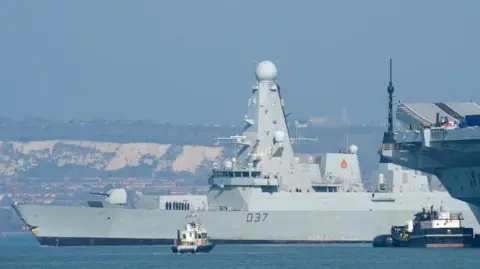
The U.K.'s Navy, unlike the U.S. Navy, understands that building more 1980s era concept destroyers no longer makes sense. They've been paying attention to the Ukraine War in the Black Sea in which traditional surface combatants are being felled by drones. 

The U.S. hasn't been and instead is working on a "Trump-class Battleship" which is precisely the wrong direction, and more Arleigh Burke class destroyers.

Navy to build drone-equipped warships instead of replacing ageing destroyers

PA Media


Plans to replace ageing warships will be scrapped in favour of building at least six new modern "hybrid" vessels equipped to deploy drones as part of the UK's upcoming defence strategy.

The Ministry of Defence (MoD) said the new vessels would be more suited to the "pace and nature of modern warfare", and a better investment than a "small number of large expensive ships".

Defence Secretary Dan Jarvis said the new equipment would be "designed and built for the increasing threats we face".

Outgoing Prime Minister Sir Keir Starmer has committed to publishing the long-delayed defence investment plan (DIP) before the Nato summit in Turkey on 7 July after months of talks over how to fund it.

The MoD had been exploring options to replace the Type 45, the Navy's fleet of destroyers, with the Type 83, a concept vessel which was at an early design phase.

Instead, investment will now go towards six new Common Combat Vessels, which the department said would be capable of "coordinating uncrewed systems in the air, on the surface and under the sea to deliver more resilient air defence".

It said the change in approach would extend "the Navy's reach, resilience and firepower without a proportional increase in crew or cost".

From the BBC. 

02 May 2026

Planetary Defense Is Worth It

I will always be a strong supporter of a strong planetary defense against comets and asteroids. These "Black Swan" events are rare, but the consequences of even one of them striking Earth and doing great damage would be immense.

If they are headed towards Earth's surface and too large for our atmosphere to provide an adequate defense against, they are always the "bad guy."

There are estimated to be about 45 undiscovered mass extinction class near Earth asteroids, about about 13,750 undiscovered "city killer" sized near Earth asteroids (that would destroy everything in a whole metro area of a major city, if it hit one, killing millions of people), and about 214,000 Hiroshima blast sized near Earth asteroids out there. These asteroids could strike us with short notice. The asteroids wouldn't create the radiation blast and contamination of a nuclear bomb (or highly toxic chemical weapon), but would have comparable kinetic impact to a nuclear bomb.

We need both better asteroid detection technologies (which NASA's new NEO Surveyor mission which is scheduled to launch in Septemer of 2027, twenty-one years after it was proposed, will profoundly improve) and better asteroid interception technologies that can respond to incoming asteroids and comets on short notice (i.e. many hours to several days), which is not currently in place, although rudimentary and ad hoc ICBM responses could be devised that could mitigate the harm if done right (but could make things worse if it diverts a large fragment or cluster of fragments from an uninhabited area towards a city).

Image via Wikipedia.

The NEO Surveyor mission is projected to:

  • Find 2⁄3 of Asteroids Larger than 140 Meters in Diameter
  • Assess the Overall Threat Posed by Potential Earth Impactors
  • Assess the Impact Threat Posed by Comets
  • Determine Orbits and Physical Characteristics of Specific Discovered Objects
140 meters in diameter is a commonly used threshold for a "city killer" asteroid and would have an explosive energy twenty-times that of the Hiroshima A-bomb, and more in line with a never used H-bombs in the U.S. and Russian nuclear arsenal. 

If two-thirds of the 140 meter or larger near Earth asteroids were found, that would be about 5,000 of the estimated 13,750 undiscovered asteroids of that size in the first five years of the mission which is planned to run for twelve years.

It will also probably find at least a significant number of undiscovered global distinction sized asteroids of the estimated 45 that remain undiscovered, and a significant percentage of the estimated 214,000 undiscovered Hiroshima bomb impact class asteroids (of which only an estimated 7% of which are now discovered), although probably far less than two-thirds of them.

NEO Surveyor will also refine our estimates of how many large asteroids remain undiscovered despite this mission, and of the risk that these undiscovered asteroids could strike inhabited places on Earth. With more accurate estimates of known asteroid trajectories, more known asteroids which come close to Earth but are not on track to impact it could be ruled out as threats allowing surveillance of potential threats to be narrowed to those objects that really are something to worry about.

We are sufficiently technologically advanced at this point to build adequate planetary defenses, but organizing the planet to fund and deploy them is another matter. The NEO Surveyor mission cost $500 million to $600 million, which is less than a single major U.S. warship or Air Force long range bomber, or several start of the art U.S. Air Force fighter jets. Military missile defense technologies (like the "Golden Dome" plan for the U.S.) can be adapted for planetary defense purposes, to some extent, but aren't optimized for this task.

The good news is that the many millions or more smaller asteroids and space junk objects mostly burn up in the atmosphere before hitting Earth with enough damage to be much more dangerous than a random and rare lightning strike. So, we harm from not tracking or intercepting them is modest.

Also, a huge share of the Earth's surface is made up of oceans, large lakes, uninhabited ice scapes, thinly inhabited mountains and deserts, and thinly inhabited rural areas or wilderness. A "city killer" or smaller asteroid has a quite localized danger zone and isn't radioactive or toxic for the most part. 

So, while it might kill or injure a small number of people in the immediate vicinity of the impact, and might trigger a significant tsunami or landslide (urban areas are disproportionately coastal), about 71% of Earth's surface is water, about 28% of Earth's surface is nearly uninhabited or rural, and only about 1% of Earth's surface is urban. So, most "city killer" or smaller extraterrestrial impacts would lead to fairly modest casualties. But the risk of mass casualties from an extraterrestrial impact is much greater now than it was for most of human history, because the world's population has grown so much and is concentrated in cities.

This analysis assumes that all locations on Earth are equally at risk, which isn't strictly speaking true, but is a close enough approximation of the reality to be a useful starting point.

While there have been only a handful of attested really big extraterrestrial impacts in human history, and only a few more than we have clear evidence of in the last 300,000 years or so when the human species came into being, there have probably been hundreds, if not several thousand that went unnoticed because they landed in uninhabited areas, or left no survivors in thinly populated areas and didn't leave any traces clear enough to attested to their impacts geologically before their impacts were eroded away.

More than half of the “city killer” asteroids that might threaten Earth remain undiscovered. With an infrared eye, NASA’s NEO Surveyor aims to find them.


Image from the linked article in Science magazine.

Russia Has Lost 30% Of Its Black Sea Fleet

Ukraine has done a remarkable job to degrading Russia's Black Sea naval fleet for a country without a navy of its own.

Russia’s Black Sea Fleet was once a dominant regional naval force. But the fleet has been severely weakened, resulting in a shift from an offensive force to a defensive “fleet-in-being.” What’s notable about the fleet’s degradation is that Ukraine didn’t need a traditional navy to inflict it; rather, it used drones, missiles, and targeting to strip the Black Sea Fleet of its ability to operate, offering another example of asymmetric, cheap measures crippling traditional, expensive military platforms.

Russia is believed to have lost 30 percent of its Black Sea Fleet, either to damage or outright destruction. That’s 24–29 vessels lost. Key losses include the flagship vessel, the Moskva cruiser, and multiple landing ships.

The remaining strike force consists of seven offensive warships, including two frigates, three corvettes, and two submarines. So the fleet still exists, but its offensive capabilities have collapsed. . . .
The primary weapon in the fleet’s arsenal is the Kalibr cruise missile. Before the Russo-Ukrainian War, the fleet had the capability to launch large missile salvos. But now the Kalibr can be launched from just five surface ships and two submarines, limiting the fleet’s ability to launch its pre-war missile salvos. . . .

Loss of Bases 

Ukraine has also targeted Russian naval bases. Sevastopol, the primary naval hub, has been repeatedly struck, forcing the fleet to relocate. But the new base, Novorossiysk, has also been under attack.
The result has been that Russia no longer has a secure naval base in the Black Sea, which has obviously degraded its ability to maintain a meaningful presence there. And now, with the fleet concentrated in Novorossiysk, Ukraine has a base under constant drone threat, limiting the fleet’s ability to maneuver.

As a defensive measure, the ships rarely leave port, and the submarines hide near the bases. So the existing fleet is effectively contained—still present but operationally inactive.
Missile Capability Degradation
Maintenance Collapse

The fleet has suffered from a maintenance collapse. The core issue is that there is no dry dock, and the Bosporus Strait has been closed. The result is that no major repairs have been made, and overall readiness has been severely degraded.

Damaged ships have been forced to simply remain damaged, meaning that even ships that survive are slowly losing their effectiveness. . . .

Strategic Implications

The destruction of Russia’s Black Sea Fleet suggests that large ships are now vulnerable to cheap and effective drones that adversaries can deploy in swarms.

Sea control has been redefined; Ukraine does not have a traditional navy, yet it still managed to deny Russia’s ability to use a traditional navy to control the seas.

The global lesson here is that fleets can be neutralized without a fleet-on-fleet battle. The Black Sea may offer a glimpse into the future of naval warfare, where distributed, low-cost systems are effective counters to legacy systems.

From National Security Journal.

29 April 2026

Apache AH-64 Gunships On Ships

I've been a longtime advocate of using Apache AH-64 helicopter gunships on naval ships, particularly in roles like piracy suppression on otherwise lightly armed ships, like the Littoral Combat Ships.

Now, the U.S. Navy is now considering the idea.

22 April 2026

Oil And Water

Scarcity of oil and rising petroleum prices, and climate change driven drought, are a big deal. But there are fairly clear paths by which our society can adapt to both. Neither would be apocalyptic, even though it would drive significant, visible changes in our day to day material culture.

These matters are particularly worth thinking about on Earth Day, which is today.

Oil

A very large share of all petroleum consumption is for transportation, mostly cars, trucks, construction vehicles, boats, ships, and trains. Advances in battery technology, and EV manufacturing and infrastructure are making electric vehicle alternatives to all of those technologically viable. And, advances in renewable energy and nuclear power can replace almost all of the fossil fuels in the electrical power grid. Coal is well on its way to be phased out in the United States and much of the developed world. Alaska and Hawaii are the only U.S. states where a significant share of electricity is generated from petroleum. Heat pumps are paving the way as an alternative to heating buildings that were historically heated with heating oil in the U.S. (mostly in the Northeast). 

Heat pumps and evaporative coolers (together with better insulation) also dramatically more energy efficient than conventional air conditioning, and renewables like solar and wind combined with modern batteries are particularly well suited to meet the demand for electricity to provide cooling.

Lots of fertilizers that are petroleum based could also become unaffordable, as they have as global petroleum supplies have been interrupted by U.S. and Israeli attacks on Iran, and its counterattacks. But organic farming techniques are now well established enough that these methods pose an obvious alternative path for agriculture is petroleum based fertilizers cease to become economically viable. Dutch models of intensive hydroponic agriculture suggests another off ramp from what is now considered conventional agriculture.

There are some applications where there aren't good alternatives to petroleum, like plastics and jet fuel. But these are such a small share of total petroleum consumption that these uses could be sustained, even if they become more expensive, even if petroleum prices soar and the supplies contract greatly. 

Of course, plastics and petroleum based fabrics like nylon, have only been in wide use for about sixty years. If plastic becomes too expensive, we can revert to using metal, glass, wood, and plant and animal fiber alternatives for applications like kitchen ware and trash bins that aren't uniquely suited to plastic, as traditional alternatives becomes more affordable relative to plastic with rising petroleum prices.

The changes wouldn't be geographically neutral. A collapse in demand for petroleum driving by electric vehicles and organic farming would crush the economies of petrostates in the Middle East, in Brunei, in Nigeria, in Venezuela, and in select states within the United States. West Virginia has already seen its coal based economy collapse, as have many historically coal mining economy based regions in Europe. Wyoming will follow suit. 

On the other hand, rare earth rich areas who supply key components of modern batteries and electronics, may see mineral economy booms.

Water

In most of the arid west, marginal agricultural activity consumes 80%-90% of all fresh water, while landscaping and golf courses consume about half of the rest of the fresh water. If water becomes scarce, entire regions can eliminate their water hungry landscaping, golf courses can close or become much more expensive or use artificial grass, and marginal agricultural operations can close.

In places like the Arabian Peninsula, Greece, Utah, and California, desalination technology might become more prominent as a water source, at least for high value municipal waters uses like drinking, cooking, and bathing, and gray water systems would use non-potable water (such as salt water from the ocean or salt water lakes) in applications where drinkability wasn't important, like flushing toilets.

Climate change that produces global warming ultimately both gives and takes away arable land. It renders much of the arid West unsuitable for farming and ranching, but makes places that were too cold for farming in the past, more suitable for it. Even when climate change doesn't actually change the total amount of arable land somewhere, it may change the kind of agriculture that is appropriate in that place.

Places that used to support subtropical orange groves may freeze more often and get dryer and become more suitable for cotton and the soft wheat varieties currently grown in places north of Florida in the American South. Crops now grown in the South might start to be grown in the Midwest. The abundant corn and wheat fields of the Great Plains and Midwest might move north to Canada. The Great Plains might transition from grain farming to cattle grazing.

I'm not a climate scientist. I don't have exact models of exactly when and where climate zones that are suitable for particular crops and livestock will relocate. But that's the basic concept.

The ongoing wars across the Sahel of Africa illustrate how ugly the process of having herders ecologically forced into historically horticultural land can be without strong geographically large states to force the transition to be made with money instead of violence can look. But with strong states that remove violence as a viable option, the transition, while still massively disruptive, could be less tragic in places like North America and Western Europe.

Similarly, the skiing industry might relocate from places like Colorado and Vermont to places like the Yukon and Alaska, in North American, and from places like the Alps in Europe to the northern Urals and the Himalayas in Eurasia.

Many Sunbelt communities in places like Arizona and Texas and Florida may see the waves of migration to avoid the cold winters of the north replaced by migration north to avoid the months of hundred degree plus water in the Sunbelt which are already commonplace in cities like Phoenix and Las Vegas, while the rust belt, with its winters made milder due to global warming and abundant fresh water, may start to look more attractive, and may attract mass return migrations.

One of these days, people in the Sunbelt may return to the traditional solution of having midday siestas, inside cooler, shaded adobe insulated homes, and becoming more active once the sun goes down and the air cools late into the evening.

Coastal communities will have to build dikes or lose land area as sea levels rise, and many will have to remake their architectural landscape in the face of increasingly severe storms, something that will hit the U.S. states of Florida and Louisiana and some islands in Oceania particularly hard.

Species limited to narrow microenvironment ranges will go extinct en masse, as human encroachment upon their habitats, ecological disruption, and human predation have already done to many species already.

How fast will it happen?

We are, in 2026, at about the place on this path that we thought we'd be in the year 2006, back in 1986. Events like the transitions to EVs and heat pumps and renewables and industrial scale organic farming happened, but it took about twice as long as futurists at the time thought that it would.

Climate change, on the other hand, is happening faster than expected by a decade or three. The changes that were initially looking like they would take a century to run their course are now looking like they will occur in half of that time.

Certainly, these transitions are medium to long run trends. They will probably takes decades more to run their course. These transitions probably won't be complete in my lifetime, although they probably will run their course in the lives of my children, or at least, in the lives of my future grandchildren. Less poetically, this time frame is about 30-90 years.

But these trends are both massive and inexorable, like plate tectonics but much, much faster. Fast enough that it will be visible in future tree ring records.

Conclusion

These are huge, traumatic changes that will force mass migrations and fundamental changes in people's day to day culture. But they don't mean the end of modern life as we know it either. And falling birthrates will eventually lead to smaller global and regional populations that put less strain on scarce water and fossil fuel resources.

08 March 2026

Indirect And Non-Obvious Effects Of The Iran War

The U.S.-Israeli attack on Iran (the NYT recaps the first week here) will have some indirect and non-obvious impacts, some of which mirror those from the Ukraine War.

* Iran is the sole significant outside military supplier for Russia in the Ukraine War (supplying drones) apart from North Korea which has supplied artillery rounds and some old school military equipment (and even about 10,000 troops) all of which have been subpar in quality and not very useful. The attacks on Iran are likely to divert existing supplies of drones to domestic military use from exports to Russia for use in counterstrikes, and are likely to somewhat degrade Iran's military production capabilities.

* Iran's counterattacks and continued war-like footing have driven up global oil prices dramatically, have had direct supply effects on most of Asia, and have damaged the oil production infrastructure in many Middle Eastern oil producing nations (including Saudi Arabia) which will reduce the capacity of these countries to produce oil in the short to medium term.

* This oil price shock, like many more before it, makes electric vehicles and public transportation more attractive to policy-makers and consumers alike, all over the world, potentially resulting in long-term systemic reduction in demand for oil.

* This mirrors the indirect effect of the Ukraine War in causing Europe to rush to find long term alternatives to oil and natural gas, resulting in wider adoption of EV vehicles, renewable energy sources for their power grids, and energy conservation measures. Again, this results in long-term systemic reductions in demand for oil and natural gas in one of the largest economically developed regions in the world.

* The Ukraine War also strengthened NATO, strengthened European cooperation, and caused re-militarization of European countries, especially those most at risk of attacks from Russia.

* Trump's inexplicable decision to temporarily ease sanctions on Russian oil sales to India, helps Russia in the Ukraine War despite the fact that Russia has used its intelligence resources to help target the U.S. and its allies for Iranian counterstrikes.

* Generally, an international war strengthens the regime attacks vis-a-vis external dissent (something that partially explains Russia's persistence in the Ukraine because the ongoing war there makes Putin more able to crush dissent against him at home). The protests of the Iranian people against its regime may suffer because of this effect. While the U.S. assassinated the Ayatollah, Iran's supreme leader, and many of the likely successors, the successor chosen for this reason is probably more likely to be a hardliner than the person who might have been chosen if the Ayatollah (who was 86 years old and close to 87 when he was killed by a U.S. strike) had died of natural causes as was likely in the near future.

* It seems unlikely that Iran will experience regime change, either in favor of a more democratic regime (Iran's democracy was actually more robust than a lot of regimes in the Middle East), or a monarchist restoration of the Shah. Pre-attack, this had been conceivable because of huge protests against the too conservative Shiite religious regime's social policies, despite the fact that Iran is actually quite religiously and ethnically diverse. Air strikes and missiles are rarely sufficient to secure regime change.

* The war probably delays steps that could be positive for the residents of Gaza.

* The war probably depletes military equipment supplies of Iran, and to a lesser extent, the U.S. and Israel, weakening the affected countries' capacity to fight further wars.

* In much the same way, the Ukraine War has dramatically depleted Russia's military resources (despite half the national budget in Russia being spent on the military and interest on loans to support it).

* The strikes in Iran are very likely to weaken the Republican Party's MAGA coalition, since MAGA campaigned on ending foreign wars of choice and then has repeatedly sought out those wars in Trump's second term, striking Venezuela, embargoing Cuba, striking Iran, and renewing a "drug war" in Mexico, Ecuador, the Caribbean, and the Pacific, which doesn't seem very calculated to actually do anything about drug abuse and drug related crime in the U.S. (as well as threatening Canada and Greenland). This coalition has already been beaten up in special elections and survey results and has a very thin majority (especially in the U.S. House).

* The inflation caused by rising oil prices, weakens support for Trump and the Republicans and strengthens Democrats chances in the 2026 midterm elections, which are just seven months away.

* The Iran War hasn't been particularly effective at diverting attention from the Epstein files which graphically reveal a coalition of child trafficking, corrupt, and Russian influenced officials in senior levels of politics, business, and academia, with Trump at the center of all of it as a highly culpable serial child rapist.

* The Venezuela invasion, by the way, seems inconclusive and certainly doesn't seem to be having much of an oil supply impact.

04 March 2026

Trump's Many Wars

Trump has declared wars on small boats in international waters in the Caribbean and the Pacific, claiming that they are drug boats, without proof, claiming a right to kill the people on them, contrary to international law.

Trump invaded Venezuela and seized its leader.

Trump has involved U.S. military forces in striking a Mexican cartel chief, leading to a bloodbath there.

Trump has unilaterally made strikes on Iran.

Trump has now deployed the U.S. military in Ecuador.

Trump is trying to impose an oil embargo on Cuba.

Trump deployed the National Guard to peaceful American cities.

Trump has deployed ICE as his private secret police to lawlessly terrorize American cities with scant regard to what they are actually legally authorized to do.

Trump has deployed U.S. forces to interdict Russia's shadow fleet of oil tankers trying to evade sanctions arising out of the Ukraine War. The Ukraine war itself is ongoing and Trump and blown hot and cold on it, prolonging the war by giving Putin hope.

Trump has threatened, but not yet struck, Greenland, Canada, and Panama.

And, while only metaphorical, Trump has declared trade wars on the entire world.

In most of these cases, Trump hasn't had even a whisper of Congressional authorization or legal authorization to act. The uses of force (and the tariffs) have violated domestic and international law. 

22 February 2026

Four Years Of War

Tuesday is the fourth anniversary of the latest Russian invasion of Ukraine, that started on February 24, 2022, after an eight year respite following the Russian seizure of Crimea and Russian allied sympathizers trying to join Russia in parts of a couple of the far western provinces of Ukraine that were most ethnically and linguistically Russian.

Russia thought it would have a quick and easy triumph, just as it had had in Crimea in 2014. It didn't. 

* It has had 1.2 million casualties (including wounds not mortal, captured soldiers, and desertions), which is more than the size of the entire Russian Army it started with, and the losses have extended to officers and even the highest ranking generals. About 325,000 of them were killed.

* It is losing soldiers as fast as it can draft them, at a rate of about a thousand soldiers a day. It is replacing a large share of its seasoned soldiers with green conscripts that are ill-trained, ill-equipped, and ill-treated.

* The vast majority of it tanks, infantry fighting vehicles, artillery, and the like gone. It's soldiers are resorting to using museum pieces and horses. Ukraine's estimates (below) may be slightly high, but they've largely been born out by third-party assessments. Here is there assessment as of yesterday:


Russia's losses in this war have been greater than all but a handful of entire military forces in the world, and greater than the entire amount of its ground forces and ground force equipment that was in active service four years ago.

* It's military tactics sometimes seem similar to the inability of World War I generals to recognize the futility of their approaches, trying the same things over and over to abject failures.

* Its Black Sea fleet suffered heavy casualties and neutered.

* Its air forces have suffered not insignificant losses.

* Its supplies of advanced drones and guided missiles has thinned.

* After the early part of the first year of the invasion, its territorial gains have been minuscule, and have come at immense cost in troops lives and equipment. The most recent assessment I could easily find was as of February 11, 2026:

Since Feb. 24, 2022: Russia: +29,210 square miles. 13% of Ukraine. (Area roughly equivalent to half the U.S. state of Illinois).

Total area of all Ukrainian territory Russia presently controls, including Crimea and parts of Donbas, Russia had seized prior to the full-scale invasion on Feb. 24, 2022: Russia: +45,835 square miles. About 20% of Ukraine. (Area roughly equivalent to the U.S. state of Pennsylvania.) . . .
In 2025, the average monthly rate of Russian gains was 171 square miles. . . . 
According to RM’s measurements, using ISW data, Russia captured 2,171 square miles—about 0.93% of Ukraine including Crimea—in 2025.

Russia still controls less Ukrainian territory than it did in August of 2022, six months into the war.

Russia has gained 5,200 square miles of territorial control since November 2022, its low point in this four year long war. This is an average gain of 133 square miles a month in a war where it is currently experiencing 30,000 casualties or so per month.

* The territory taken, which was home to the strongest political opposition to Ukraine's government, has strengthened the political backing of Ukraine's government in the territory it still controls. And, Russia has alienated former pro-Russian Ukrainians in territory it does not control.

* Crimea was mostly as a summer resort for Russians and had been a key Black Sea fleet military base for Russia. It is neither of those things now.

* Its oil and gas infrastructure has been seriously ravaged. Its ability to sell its oil and gas abroad is also increasingly restricted.

* Its transportation infrastructure, especially en route to the front and to Crimea, has been seriously damaged.

* It has been isolated internationally and the restrictions have tightened, while the world, and especially Europe has embraced it. It has failed to win military support from any countries except North Korea and Iran. China and India have remained lukewarm towards it.

* It's oligarchs have been pinched and looted as sanctions.

* It's domestic economy has again been squeezed out for military demand.

* An estimated 7,254 Russian civilians have been killed.

* It's best and brightest young men have fled abroad to avoid conscription and likely death or disability in the process. 1,000,000 (0.7% of Russia’s 2022 population) left Russia for economic or political reasons in the first year of the full-scale war. Between 15% and 45% of those who had left have returned since then, so, between 550,000 and 850,000 people have not returned to Russia.

* It has withdrawn from other international military commitments, for example, in Syria (whose regime fell), and in a strip of land in Moldova.

* NATO has expanded and grown stronger.

* It's European neighbors have built up their own military might and military solidarity, at the same time that Russia's military might is a shadow of what it was four years ago.

* It has relied heavily on more or less random attacks with long range drones, glide bombs, and missiles on civilian targets of little tactical value that violate intentional laws of war. Ukraine's air defenses have been about 89% effective, which means that strikes do get through regularly and cause damage, but the air defenses make it about 9 times more expensive for Russia to do so than it would be without them.
Russia fired: 
* 4,838 drones
* 14 ballistic missiles
* 61 cruise missiles 
Ukraine intercepted: 
* 4,120 drones (718 not intercepted)
* 1 ballistic missile (13 not intercepted)
* 38 cruise missiles (23 not intercepted)
* Ukraine has proven to have more military industrial capacity, more allies, more competent troops, and more of a capacity to learn and change their tactics and technologies.

* Ukraine has managed to strike both military and economic targets deep in Russia, but has done so without indiscriminately harming civilians.

* Russia has found that its immense nuclear arsenal has been challenging to turn into practical military gains.

This isn't to say that Ukraine has won. It has had about 600,000 military casualties (including wounds not mortal, captured soldiers, and desertions), of whom about 120,000 have been killed, and lost lots of military equipment too (although Ukraine has faired better at replenishing its equipment losses). An estimated 15,954 Ukrainian civilians have been killed (from the same source).

The vast majority of harm to civilians and the civilian property has been on its territory. 

It has lost significant amounts of territory. Millions of Ukrainians have been internally displaced or have become refugees. As the New York Times explains:
At the start of the full-scale invasion, excluding regions that were already occupied by Russia, it had a population of perhaps 36 million people, according to Tymofii Brik, a sociologist and the rector of the Kyiv School of Economics. (Other estimates tend to be higher.) Since then, Brik says, six million have been displaced inside the country and some four million — mostly women and children — have left Ukraine. More than 100,000 Ukrainians, troops and civilians, are estimated to have been killed. Millions of people live under occupation in areas Russia controls.
Ukraine's whole existence has become an existential fight for survival every day, with intense uncertainty.

But, at best, the Russo-Ukrainian war has been a stalemate for the last three and a half years, and Russia's military capacity to challenge anyone is profoundly depleted.

Russia's leaders have seized on the war to exert greater control on its people in an authoritarian style, but the cracks are showing.

The feckless "leadership", or lack thereof, by Trump and the Republicans in Congress has helped encourage Putin and extended the war, given Putin hope that his unilateral adventure unknown outside his inner circle until it happened, can prevail, at least into a treaty that leaves Russia better off. They have also cratered NATO.

03 February 2026

Military Updates

Initially without links:

* 70%-80% of the casualties in the Ukraine War have been from drones. Heavy armored units en masse have almost vanished as a tactic and a very large share of all artillery batteries have been destroyed. Russia has had 1.2 million military casualties, Ukraine has had 0.6 million military casualties. The fourth anniversary of the start of the latest phase of the war is coming up later this month. Russia's rate of territorial advance has been the slowest in the last century. Europe is stepping up support for Ukraine and considering deploying troops as U.S. support under Trump continues to be fickle. Ukraine's campaign against oil and gas infrastructure in Russia seems to have subsided somewhat although it has hit some relatively low value targets near Moscow. Russia has stepped up strikes against civilian targets in Ukraine (more or less indiscriminately). Russia is nearing a breaking point economically, although it has finally started to ramp up its military-industrial capacity someewhat. U.S. and European forces are being more pro-active in interrupting "ghost fleet" trade in sanctioned Russian oil.

* Germany has invented anti-torpedo torpedos.

* Japan has invented a 40mm railgun for one of its ship classes. It overcame the hurdles faced by the U.S. program with a 40mm round instead of a 155mm round, different materials in the barrel that have different electrical properties, and gallium capacitors that reduce the power supply footprint. It can fire 120 rounds in shot succession and doesn't suffer the barrel burn out problem of the U.S. attempt. It can fit in a shipping contain plus a small turret. This would be mostly useful in anti-small craft, anti-drone, anti-helicopter, and missile interception roles. It is quite accurate although range and accuracy details are not publicly available. The same ship would have lasers, something that China is also investing it. But lasers are only effective for 3-5 km, and can be disrupted by heavy sea spray, fog, low lying clouds, storms, and fog, so the lasers would be mostly for close in missile and drone defense together with something like a Phalanx Close In Weapons System. Railgun rounds are basically immune to lasers.

* The U.S. has developed a large area anti-drone system that uses microwaves to generate an electromagnetic pulse that can take down hundreds of drones at once, deployed on military truck.

* The U.S. is stepping up B-21 Raider production, a stealth bomber similar to the B-2 but a bit smaller and more modern.

* A prototype of a next generation Abrams tank was shown off at the Detroit auto show.

* China claims to have ready for prime time sensors that can see U.S. stealth aircraft.

* Progress is being made in ground drones, generally, either on a small unmanned ATV scale or a robot dog with a rifle sized weapon approach.

* Progress is being made on surface and submarine drones.

* Progress is being made on optical gun sight attachments that make it much easier to identify sniper sights that would otherwise be almost invisible at ranges up to a mile.

* China continues to be active in deploying its navy, coast guard, are paramilitary maritime forces around the Philippines and the South China sea.

26 December 2025

New Almanac Data Points

I have my 2026 World Almanac now and there are some statistics I keep a close eye on.

* As of March 31, 2025, the U.S. had 1,307,679 active duty military personnel. This is as small as the U.S. military has been by that measure since before World War II. At its peak, it was more than 50% bigger. Roughly 55% of U.S. active duty military personnel are non-Hispanic white men (with significant variation from one military service to another).

* Birth rates for women in all age categories under age 25 were at their lowest for all of recorded history and prehistory in North America.

* Infant mortality has increased each year since 2020. The anti-vax movement and the impact of the ban on abortions in many states could be factors.

23 December 2025

Trump's Misguided Battleship Program


The centerpiece of the Trump administration’s revamp of the U.S. Navy is the largest surface combatant America will build since World War II.

The U.S. Navy will buy two new “battleships” as part of the “Golden Fleet” effort, President Donald Trump, Defense Secretary Pete Hegseth and Navy Secretary John Phelan announced Monday at Mar-a-Lago.

Trump said the Navy will start by purchasing two ships and eventually purchase 10, with a goal of 20 to 25 in total for the class with the start of construction planned for 2030.

From USNI. 

Battleships were retired from the U.S. Navy for a reason. The reason hasn't changed, although this is a "battleship" more in name than in fact. 

The last U.S. battleship, the USS Missouri (BB-63), left active service when it was decommissioned on March 31, 1992, after serving in World War II, the Korean War, and the Gulf War, and is now a museum ship in Pearl Harbor.

Battleships were large, heavily armored surface combatants built around multiple very large unguided slug throwing naval artillery guns (up to 16" diameter rounds). The problem was that they were sitting duck targets that could be defeated with modern munitions despite their heavy armor, and had only short range with low accuracy. Guided missiles which had longer range, greater accuracy, and didn't require so much bulk, replaced them.

Nuclear missiles were placed on nuclear submarines which were more stealthy and less vulnerable to counterattacks. 

Every other navy in the world, except Russia, which has one "cruiser" along these lines, has also learned this lesson and many world navies don't even see much use for larger surface combatants like destroyers and cruisers, largely limiting themselves to frigates, air independent diesel coastal submarines, and corvettes.

Trump's proposed nuclear missile carrying "battleship" with 35,000+ tons, about the same number of cruise missiles as existing destroyers and cruisers, a vaporware rail gun, two 5" naval guns, two vaporware large laser guns, four defensive laser guns, about eight air defense guns, and a helipad propelled by a diesel engine isn't what the U.S. navy needs. A price wasn't announced but it would be in the double digit billions per ship.

The last attempt to build a railgun centered ship, the USS Zumwalt destroyer, was an epic failure.

In the end, the Navy will spend lots of money over the next three years (at most) on R&D that will be abandoned when Trump leaves office or dies, if not sooner. 

This "battleship" also is ill suited for the conflicts and likely naval adversaries that the U.S. may face in the coming decades. It isn't suited for a war with China over Taiwan or the waters near the Philippines, for naval conflict with Iran near the Persian Gulf, with Russia, or with North Korea.