Showing posts with label ecology. Show all posts

22 April 2026

Oil And Water

Scarcity of oil and rising petroleum prices, and climate change driven drought, are a big deal. But there are fairly clear paths by which our society can adapt to both. Neither would be apocalyptic, even though it would drive significant, visible changes in our day to day material culture.

These matters are particularly worth thinking about on Earth Day, which is today.

Oil

A very large share of all petroleum consumption is for transportation, mostly cars, trucks, construction vehicles, boats, ships, and trains. Advances in battery technology, and EV manufacturing and infrastructure are making electric vehicle alternatives to all of those technologically viable. And, advances in renewable energy and nuclear power can replace almost all of the fossil fuels in the electrical power grid. Coal is well on its way to be phased out in the United States and much of the developed world. Alaska and Hawaii are the only U.S. states where a significant share of electricity is generated from petroleum. Heat pumps are paving the way as an alternative to heating buildings that were historically heated with heating oil in the U.S. (mostly in the Northeast). 

Heat pumps and evaporative coolers (together with better insulation) also dramatically more energy efficient than conventional air conditioning, and renewables like solar and wind combined with modern batteries are particularly well suited to meet the demand for electricity to provide cooling.

Lots of fertilizers that are petroleum based could also become unaffordable, as they have as global petroleum supplies have been interrupted by U.S. and Israeli attacks on Iran, and its counterattacks. But organic farming techniques are now well established enough that these methods pose an obvious alternative path for agriculture is petroleum based fertilizers cease to become economically viable. Dutch models of intensive hydroponic agriculture suggests another off ramp from what is now considered conventional agriculture.

There are some applications where there aren't good alternatives to petroleum, like plastics and jet fuel. But these are such a small share of total petroleum consumption that these uses could be sustained, even if they become more expensive, even if petroleum prices soar and the supplies contract greatly. 

Of course, plastics and petroleum based fabrics like nylon, have only been in wide use for about sixty years. If plastic becomes too expensive, we can revert to using metal, glass, wood, and plant and animal fiber alternatives for applications like kitchen ware and trash bins that aren't uniquely suited to plastic, as traditional alternatives becomes more affordable relative to plastic with rising petroleum prices.

The changes wouldn't be geographically neutral. A collapse in demand for petroleum driving by electric vehicles and organic farming would crush the economies of petrostates in the Middle East, in Brunei, in Nigeria, in Venezuela, and in select states within the United States. West Virginia has already seen its coal based economy collapse, as have many historically coal mining economy based regions in Europe. Wyoming will follow suit. 

On the other hand, rare earth rich areas who supply key components of modern batteries and electronics, may see mineral economy booms.

Water

In most of the arid west, marginal agricultural activity consumes 80%-90% of all fresh water, while landscaping and golf courses consume about half of the rest of the fresh water. If water becomes scarce, entire regions can eliminate their water hungry landscaping, golf courses can close or become much more expensive or use artificial grass, and marginal agricultural operations can close.

In places like the Arabian Peninsula, Greece, Utah, and California, desalination technology might become more prominent as a water source, at least for high value municipal waters uses like drinking, cooking, and bathing, and gray water systems would use non-potable water (such as salt water from the ocean or salt water lakes) in applications where drinkability wasn't important, like flushing toilets.

Climate change that produces global warming ultimately both gives and takes away arable land. It renders much of the arid West unsuitable for farming and ranching, but makes places that were too cold for farming in the past, more suitable for it. Even when climate change doesn't actually change the total amount of arable land somewhere, it may change the kind of agriculture that is appropriate in that place.

Places that used to support subtropical orange groves may freeze more often and get dryer and become more suitable for cotton and the soft wheat varieties currently grown in places north of Florida in the American South. Crops now grown in the South might start to be grown in the Midwest. The abundant corn and wheat fields of the Great Plains and Midwest might move north to Canada. The Great Plains might transition from grain farming to cattle grazing.

I'm not a climate scientist. I don't have exact models of exactly when and where climate zones that are suitable for particular crops and livestock will relocate. But that's the basic concept.

The ongoing wars across the Sahel of Africa illustrate how ugly the process of having herders ecologically forced into historically horticultural land can be without strong geographically large states to force the transition to be made with money instead of violence can look. But with strong states that remove violence as a viable option, the transition, while still massively disruptive, could be less tragic in places like North America and Western Europe.

Similarly, the skiing industry might relocate from places like Colorado and Vermont to places like the Yukon and Alaska, in North American, and from places like the Alps in Europe to the northern Urals and the Himalayas in Eurasia.

Many Sunbelt communities in places like Arizona and Texas and Florida may see the waves of migration to avoid the cold winters of the north replaced by migration north to avoid the months of hundred degree plus water in the Sunbelt which are already commonplace in cities like Phoenix and Las Vegas, while the rust belt, with its winters made milder due to global warming and abundant fresh water, may start to look more attractive, and may attract mass return migrations.

One of these days, people in the Sunbelt may return to the traditional solution of having midday siestas, inside cooler, shaded adobe insulated homes, and becoming more active once the sun goes down and the air cools late into the evening.

Coastal communities will have to build dikes or lose land area as sea levels rise, and many will have to remake their architectural landscape in the face of increasingly severe storms, something that will hit the U.S. states of Florida and Louisiana and some islands in Oceania particularly hard.

Species limited to narrow microenvironment ranges will go extinct en masse, as human encroachment upon their habitats, ecological disruption, and human predation have already done to many species already.

How fast will it happen?

We are, in 2026, at about the place on this path that we thought we'd be in the year 2006, back in 1986. Events like the transitions to EVs and heat pumps and renewables and industrial scale organic farming happened, but it took about twice as long as futurists at the time thought that it would.

Climate change, on the other hand, is happening faster than expected by a decade or three. The changes that were initially looking like they would take a century to run their course are now looking like they will occur in half of that time.

Certainly, these transitions are medium to long run trends. They will probably takes decades more to run their course. These transitions probably won't be complete in my lifetime, although they probably will run their course in the lives of my children, or at least, in the lives of my future grandchildren. Less poetically, this time frame is about 30-90 years.

But these trends are both massive and inexorable, like plate tectonics but much, much faster. Fast enough that it will be visible in future tree ring records.

Conclusion

These are huge, traumatic changes that will force mass migrations and fundamental changes in people's day to day culture. But they don't mean the end of modern life as we know it either. And falling birthrates will eventually lead to smaller global and regional populations that put less strain on scarce water and fossil fuel resources.

10 December 2024

A Clean Slate For Property Rights, Entities, Federalism, And Related Matters

There are some economic and legal reforms which are hard to make now, but starting with a clean slate would have been better to have made differently, or which are just structural reforms.

Mineral Rights And Water Rights

* All mineral rights should be owned by the government and merely leased by firms exploiting them.

* The rights of surface owners of land over mineral rights leased by the government should follow the Colorado rule (which requires underground mining that preserves the rights to support of the surface owners) and not the Wyoming rule (which permits strip mining).

* All water rights should be owned by the government and leased annually to water users. All water users in the same watershed would pay the same lease rate based upon an auction. Market failures and transaction costs cause inefficient overallocation of water at very cheap prices to agricultural users to the detriment of fishing, recreational use, and municipal water use.

* Grazing land would be primarily publicly owned with the right to graze cattle on open ranges leased.

Wildlife Management

* To the extent possible, management of wildlife populations with natural predators, like bears, wolves, and mountain lions, would be preferred to hunting.

Real Property Rights

* Legal life estates and other present and future interests in real property should not be permitted. Someone wishing to create the equivalent to a life estate could establish a trust in which some beneficiaries had equitable life estates and others had equitable remainder interests. Existing legal life estates could be deemed to be trusts in which the present interest holder is the trustee for the benefit of themselves and all future interest holders.

* The race-notice statute should be modified so that a person with an interest in real property created by a written instrument could only benefit from the notice provisions for up to four months from the date of the instrument to gain priority over a recorded instrument creating rights in land. Written instruments creating an interest in real property that are more than four years old would be subordinate to the rights of the owners and encumbrances of record.

* Judgment liens would be possible to record against all real property in the state owned by a debtor in a single state filing.

* Ancillary probate of real estate would be replaced with a requirement to give full faith and credit to an executor, personal representative, or administrator appointed in the place of domicile, subject only to state homestead exemptions.

Property Taxes

* Education would be funded through state income, sales, and gifts and estate taxes, not through local property taxes.

* Non-profits, including churches and state government property, would not be exempt from property taxes, but state government property would be assessed at the state level rather than at the local level.

* Property tax assessors, and state and county treasurers, would be civil service appointments, not elected.

Limited Liability Entities and Judgment Liens

* Ownership interests in entities would have to be recorded with a state registrar, although this information would only be available to interested parties. 

* Trusts would be registered with the state registrar rather than with courts of probate jurisdiction.

* Trusts and estates would be treated as entities for state law purposes.

* Judgment liens should be possible to record against all interests in entities in a state with a single state filing.

* All limited liability entities would be required to be bonded against the claims of trade creditors and insured to standards established by regulation, with the bonding agent and insurers made a matter of public record. The directors, officers, managers, and partners of the entity would have joint and several personal liability for any failure to do so, guaranteed by the owners if they, collectively, were unable to satisfy any debts of the company that should have been bonded or insured.

Local v. State Authority

* Occupational licensing in the construction trades, and building codes, should be regulated at the state level, rather than the local level.

* Local governments should not be permitted to have their own courts and instead would enforce their rights, including ordinance violations, in the appropriate state courts.

* Local governments should not be permitted to enact ordinances for which incarceration is a penalty, other than contempt of court punishments for violations of injunctions previously imposed against a particular defendant in a state court proceeding brought by the local government against that particular defendant.

* Zoning and use regulation by local governments would be limited at the state level.

Copyrights and Intellectual Property

* Copyrights should have a much shorter term, such as the pre-1976 rule of 26 years from publication and an additional 26 years if a copyright registration is renewed, which a separate regime protecting the exclusive right of the authors to publish and register unpublished works. Works not published within 26 years of the death of the author would be in the public domain. This might be accomplished with a one time buyout of existing copyrights more than 52 years old at fair market value or a nominal amount for unmarketed and unappraised copyrights.

* There would be mandatory licensing of copyrighted works, handled by one or more non-profits for performances of all musical works, all orphan works, translations of works for which had not been translated into a particular language pursuant to a license within some designated period of time after the publication of the work in its original language, and almost all other derivative works.

* The scope of the derivative work right for copyrights would be greatly narrowed.

* Statutory damages for copyright violations would be abolished. Economic damages for copyright violations would be limited to unjust enrichment relative to licensing the work, or lost profits relative to licensing the work, whichever was greater.

* Common law trademark rights in trademarks not registered in the principal register under the Lanham Act (including rights under state trademark filings) would be exclusively a matter of federal law.

* Rights of publicity would be exclusively a matter of federal law.

* Royalty income from intellectual property would be taxable where the sale giving rise to the transfer takes place, not where the owner of the intellectual property is domiciled.

Federal Court Jurisdiction

* Federal court diversity jurisdiction not involving international diversity would be abolished.

* Federal question jurisdiction in cases between private parties not involving other specific grants of federal court jurisdiction (e.g. in the cases of intellectual property, civil rights, certain class actions, and election law cases) would be abolished.

* Federal crimes for matters that can be prosecuted under state law, like bank robbery, intrastate controlled substances violations, and most murders, would be repealed.

* Felonies committed in Indian Country would be governed by new Indian Country District Courts and a U.S. Court of Appeals for Indian Country, and a related Indian Country law enforcement agency, rather than by the relevant U.S. attorney's office and the FBI.

* The lowest level immigration offense of illegal entry would be made a civil offense governed primarily by the immigration courts, and decriminalized (this makes up a significant share of the total criminal docket in many U.S. District Courts).

* The immigration courts would be reformed and made Article III courts. A right to an attorney at public expense would be established in the immigration courts.

04 August 2022

Don't Solve For The Equilibrium

One of the classic catch phrases of both economics and physics is "solve for the equilibrium". It is easier, mathematically and simpler, in  principle, to solve a problem with formulas in which everything has to balance out, than it is to solve a problem and predict a result where everything is out of equilibrium.

But, in the 21st century, we are in a context in which most questions worth asking in the social sciences involves circumstances that are further from an equilibrium state than at almost any other time in human history.

Technology, the fundamentals and system self-interactions that drive economics, the climate, the ecological balance of nature, parenting, dating, marriage, gender, racial identities, the way the political system works, military realities, and more are in intense flux.

Only a handful of political regimes anywhere in the world are more than five generations old. The first powered fixed wing aircraft flew four generations ago in 1903, commercial aircraft entered wide use about a generation later, and two generations later a man had walked on the Moon. Internal combustion engine vehicles fueled with refined petroleum became predominant by 1908 and will probably be a minority of vehicles on the road by 130 years later - the vast majority of non-transportation uses of petroleum have already largely been phased out (except heavy heating oil in a few regions, electricity generation in Hawaii and Alaska, lubricants, plastics, and fertilizers). General Relativity and quantum mechanics are less than four generations old, and when they were invented, Armies still had horse cavalry. Most of the national boundaries in the Middle East were drawn shortly after World War II. 

Jews started to return to Israel in the 1920s, after by tradition, about 1850 years in the diaspora, and the State of Israel came into being in 1948. Hebrew was an exclusively a liturgical language and a language used by religious scholars from about 200 CE to 1880 CE, was spoken by a community of about 34,000 people during World War I, and did not start to become a widespread living first language until the 1920s in the British Mandate in Palestine and first became a national language in 1948, about two generations after it started to be revived, when Israel became an independent state (at which point about 80% of Jews spoke it as a first language, and 15% spoke it as a second language).

The home that I live in was built less than a hundred years ago, in 1925 with coal fired steam heat boiler made popular by then recent global Spanish flu pandemic, had a door in the kitchen wall to receive ice deliveries, had a garage sized for a Model T, had galvanized steel pipes, didn't have electricity until it was added in later renovations, and was in a neighborhood that got its start as a streetcar suburb of Denver called "South Denver" before it was annexed by the City of Denver. Coal is now used predominantly to generate electricity in large power plants, in which it has a rapidly decreasing market share, and for "coke" in the steel production process.

Soviet style communism lasted less than 75 years in Europe, where it no longer exists. Many countries in East Asia and Southeast Asia still have nominally communist political systems (none of which are yet 75 years old), but their economies have adopted so many market economy reforms that their economies aren't really communist anymore. These nominally communist regimes are still authoritarian one-party states, but collective ownership of the means of production, and distribution of the fruits of production according to need, is a Marxist pipe dream that Asian regimes that are nominally communist have largely abandoned.

Around the time that my parents were born, the Great Depression wasn't over yet, the airship industry was collapsing, most of Africa and Asia was governed by European colonial powers, the Communists were just an upstart political party in China, and the Soviet Union was alive and well. My in-laws were born during World War II and experienced the Korean War in ways that put their lives at risk. The farm my father grew up on used a horse for farm labor when he was a child. The entire nuclear dimension of military affairs came into being at a time when my parents could read about it in the newspaper, as did the political regimes in Europe, Asia, and Africa. 

When my parents started high school, Latin was a mandatory subject for every college bound high school student and public schools in the South were still segregated by race as a matter of law. All Roman Catholics in the world conducted their church services in Latin at a time when my parents had both finished their undergraduate educations. My parents were first generation college students who earned PhDs. Co-ed dorms didn't exist when my parents were in college. At the time my father served in the Army, it was just in the process of desegregating. 

Long term mortgages and employment based health insurance were first widely used in my parent's lifetimes. My father-in-law was one of the first doctors to use radiology machines more sophisticated than X-Rays and his parents were first generation Christians. 

Over the course of my parents lives, the Republican party went from being a liberal leaning Northern party to a conservative party of the South and rural America. At my father's first job as a professor in Atlanta, Georgia, many of his students had spent at least some of their school years in segregated schools, and some of their African-American friends had first been able to vote in a Presidential election just four years before they arrived in Georgia as a consequence of the Voting Rights Act of 1965. 

My father was on the committee that organized the first Earth Day. My parents were peers of Elvis Presley and disliked the Beatles and pretty much all other kinds of rock musics, well into their 30s, when rock music started to become predominant. Big band music, more than one sub-genres of jazz music, rock music, and the music of "crooners", like Frank Sinatra featured on the Lawrence Welk show on TV, all came into being during their lifetimes before I was born.

Most of the hydroelectric, geothermal, and nuclear power plants in the world were built during my parents lifetimes before I was born, or when I was a child. The vast majority of the wind, solar, tidal power and natural gas fueled power plants powering the electrical grid in the world has come online in my lifetime, and a majority of the wind, solar and tidal power powering the electrical grid in the world has been added during my children's lifetimes.

Polio afflicted tens of thousands of people a year in the United States until after my parents were finished with college; there were ten cases of polio that originated in the United States in the first decade of my life, and there has only been one case of polio from any source in the United States in the last twenty-nine years, which was this year. The concept of autoimmune diseases as a coherently class of ailments was developed after my parents had graduated from college (and after my aunt was first diagnosed with M.S. an autoimmune disease whose true cause has only been ascertained in the last few years).

When I was born, most cars ran on leaded gasoline, most physics and engineering calculations were still done with slide rules, computers took up whole rooms, the primary method of putting information into a computer was a punchcard, formulas in physics journal articles were written by hand, and many rural areas were still served by "party line" telephone service. Early computers (in my lifetime) with the power of my cell phone would have taken the same amount of electricity to operate as a skyscraper. Computer processor power and memory has increased exponentially, and has seen power consumption decrease exponentially, for my entire life. The core components of the Standard Model of Particle Physics were invented in my lifetime. "No fault" divorce, legal recognition for LGBT rights, females making up more than low single digit percentages of lawyers and doctors and professors, the modern concept of attention deficit disorder, the generalized concept of post-traumatic stress disorder, widespread use of statins to control cholesterol, widespread use of student loans for higher education, and the modern environmental movement all came into existence, for all practical purposes, in my lifetime. Obesity rates for both children and adults in the U.S. have roughly tripled from their long term historical norms to current levels during my lifetime. 

The first time I met someone who was openly gay was in college, which is also the first time that I used the Internet, and the first time I'd encountered Muslims face to face, and the first time I'd eaten tofu. The Soviet Union ceased to exist when I was in college. Crime rates hit all time highs around the time that I was in college and have since declined to half century lows. Divorce rates which were once low across the board soared to record highs during my lifetime, then experienced a class divide with divorce rates for college educated couples plummeting and divorce rates for couples without any college educations reaching levels never before seen that continue to rise checked only by couples not bothering to get married when living together and having children at all.

MTV came and went in my lifetime, as did disco, New Wave, eight track tapes, cassette tapes, videodisks, compact disks (CDs), DVDs, and analog broadcast television. Broadcast satellite TV and radio came into wide commercial use in my lifetime and I doubt that either will still be in wide commercial use when I die. Rap and Hip hop were invented in my lifetime and remain vibrant. The proportion of Americans who identify as non-religious has increased by a factor of ten in my lifetime. 

Commercial supersonic aircraft came into being and then ceased to exist in my lifetime, and will renter the market again in a few years.

"Smart bombs", guided missiles, stealth aircraft, and unmanned military drones all entered regular military use in my lifetime.  Amphibious assaults, air to air combat between fighter aircraft in "dog fights", ship to ship battles, submarine to ship battles, ship to submarine battles, and the use of nuclear weapons in war, have become vanishingly rare or non-existent in my lifetime.

The death penalty in the United States was abolished nationally, and then reinstated on a much more restricted basis, in my lifetime. Abortion was first constitutionally protected after my brother and I were born, and has now been denied constitutional protection in my lifetime. Marital rape was criminalized, and domestic violence  and acquaintance rape first began to be taken very seriously by the criminal law in my lifetime, and gay sex between consenting adults was legalized by becoming constitutionally protected in the United States in my lifetime. Serious drunk driving penalties and major reductions in tobacco use both arose in my lifetime.

At my first job as a summer law clerk with a law firm, lawyers were not allowed to use computers or typewriters, we had to dictate everything that we didn't write longhand, leaving typing for a large and almost entirely female corps of secretaries who knew how to use typewriters and early word processors (even though the youngest lawyer in the firm and the law clerks knew how to do so themselves). Legal research, including checking cases to make sure that they had not been overruled or narrowed by subsequent cases, was done almost entirely with dead tree books, because computerized legal research while it existed, was very expensive per minute or per search. At the end of each day, a recent high school graduate would rush to hand deliver all of the firm's court filings to the local court clerk before the office closed at five p.m., and to mail copies of those documents before five p.m. at the local post office that this courier had spent all afternoon photocopying to every party of record in the case and the court with an extra copy to be pinned down with metal clamps in a hard copy paper pleadings file. Lawyers needed to finish their dictations and final handwritten revisions to court documents by three or four o'clock in the afternoon, to allow time for them to be typed by the secretaries, photocopied, delivered to the court clerk, and mailed, before the hard five o'clock deadlines for doing so. All court hearings were held in person.

Now those jobs are gone. All lawyers except men in their sixties or older type their own first drafts of court documents subject to only light editing and proofreading by staff (younger lawyers do their own advanced typesetting as well, while older ones rely on secretaries or paralegals for these formatting tasks), after personally researching cases and statutes online, and then they either personally, or with one paralegal serving several lawyers, e-file the documents to the court and to all other parties in the case by midnight deadlines, often without the final draft ever being printed or manually signed or filed. The client gets an email copy and often there is no paper pleadings file in a case at all. Many non-evidentiary court hearings like status conferences and pre-trial conferences are conducted remotely, as are many mediation sessions (something that also was rare back then, but now is required in almost every case).

Back in the day, many court documents needed to be notarized, in person, with a red ink stamp with a raised embossed seal. Now, the documents that used to be notarized are just signed by the client or witness in pen under penalty of perjury, scanned, and emailed to the lawyer for filing. 

As a result, modern law firms are profoundly more top heavy than they used to be in most kinds of law practices, and lawyers no longer work "banker's hours."

Mass produced electric cars were reinvented in my children's lifetime. I have never owned a car that wasn't made by a Japanese or Korean car company since my children were born. We haven't had broadcast television service at any time in my children's lives. We ended our cable TV service before they started middle school. We discontinued our landline telephone service before my children were in high school. My wife was pregnant with my oldest child when the Euro came into being and about a dozen European national currencies ceased to exist. My children were alive when cryptocurrencies came into being and when same sex marriages were legalized. The Department of Homeland Security, the TSA, the "no fly list", security checkpoints with shoe removal, and limits on carrying liquids arose after my oldest child was born. The U.S. has been a party to low intensity "small" wars for essentially all of my children's lifetimes. The privately enforceable constitutional right to bear arms was first recognized in my children's lifetimes. Lockdown drills at school, in response to numerous mass school shootings, have replaced in my children's generation the duck and cover drills of the Cold War era.

My children don't really remember ever living without the Internet or cell phones. Some of my children's high school textbooks were delivered on electronic tablets and they had homework assignments in high school that included typing mathematical formulas using LaTex computer typesetting. COVID, of course, arose during my children's lifetime. We are still a couple of years away from the U.S. getting its first truly high speed rail line, long after they have become common in Europe and China.

This recitation of historical events reminiscent of Billy Joel's song, "We Didn't Start The Fire" and a few subsequent imitations of its structure, may be a bit excessive and familiar. But, in this post, my real point is that everyone alive today, and our parents, and our grandparents, and even a generation or two beyond them, have never known a time when science, technology, economics, international affairs, culture, and law weren't in periods of breakneck change. 

Austrian-born economist Joseph Schumpeter, who is most famous for his Marxist inspired characterization of dynamic capitalist economies in the long run as a process of "creative destruction", particularly in his 1942 book Capitalism, Socialism and Democracy, was one of my favorite economists in college. This was because he had a realistic description and astute understanding of the essential features of the big picture of the workings of modern capitalism, when other economists so frequently seemed to lose sight of the forest for the trees attempting to devise simple, theory driven mathematical models of the economy.

It is easy to fall into the trap of thinking about the present as if this is the way that the world has always been and always will be, and one of the most important lessons I learned as a history minor in college was just how untrue that assumption was over far shorter time frames than I ever would have guessed otherwise.

But, solving for an equilibrium in the social sciences that can't be reached in the very short term of a fewer minutes to a few decades, at most, is irrelevant and often counterproductive. 

Change, and not equilibrium, has been the long standing norm for all of living history and all of the oral history and recollections of the vast majority of living people alive today. 

Forcing yourself to almost always consider dynamic models in the social sciences and in predicting the future of technology, is far harder and far less certain than trying to solve for an equilibrium predicted by your theories based upon the present. But, at least doing so avoids the near certainty that any attempt to solve for the equilibrium for any significant period of time will be wrong.

31 January 2022

The Regions That Can Grow Particular Crops Is Shifting

One of the most trivial and obvious, but nonetheless important, implications of global warming is that the places where agricultural crops grow will shift. A new study breaks down the details of that with respect to four representative warm climate crops.

A new analysis predicts that, as climate change progresses, the most suitable regions for growing coffee arabica, cashews, and avocados will decline in some of the main countries that produce these crops.

Replacement growing locations may emerge, but that isn't guaranteed, because the appropriate growing conditions for a crop include not just mean temperature, but also rainfall patterns, soils, and other parts of the ecosystem that are symbiotic with the crops in cryptic ways.

For example, even at the same mean temperatures, crops that grow well in a Mediterranean weather pattern may not grow well in a South Asian monsoonal weather pattern.

26 October 2021

A Breakthrough in Converting Heat To Electricity More Efficiently

Scientists have made a breakthrough in converting heat to electricity much more efficiently with a class of materials called thermoelectric oxides.  One of the main reasons that this is important is that in developed countries nearly two-thirds of total energy production (mostly from fossil fuel power sources, and from nuclear fission power plants) is typically discarded as "waste heat".

This would make it possible, for example, to convert waste heat from electricity generation to electricity, which has been a major problem involved in making nuclear fusion power generation economically viable. It is a break through that is also relevant to some, but not all, renewable energy sources. It would enhance solar thermal plants, biofuel plants, and geothermal plants, but wouldn't have much of an impact on hydropower, tidal power, wind power, or photovoltaic solar cells. (Geothermal plants, by the way, are usually sited where magma is unusually close to the surface of the Earth in places like Iceland, but can, in principle, be used anywhere if you dig deep wells.)

More mundanely, this development might facilitate clothing with thermoelectric converters that would power your smart phone, flashlight, or laptop. Or it might be used in hybrid cars to extend their range by using waste heat from the internal combustion engine to recharge the car's batteries in much the same way the regenerative braking does in existing hybrid and electric cars. It could also reduce the drain that using air conditioning places on electric car batteries, by using the waste heat the air conditioner generates to recharge the car's batteries.

Other materials called chalcogenides are currently still more efficient at converting heat to electricity than even these new enhanced thermal oxides, but chalcogenides have other drawbacks that have prevented them from being used on a large scale. Chalcogenides are unstable in air, require cold temperatures to work well, and are toxic. So, their large scale use has been a problem.

The methods used in the breakthrough, using a Lithium-Titanium oxide, in contrast, lacks those drawbacks. The benefits of the new method arise mostly from the manufacturing process used to create the two layer, film over substrate, material, rather than the specific thermoelectric oxide material used in this proof of concept test. So this method can probably be generalized to other thermoelectric oxides that work even better.

These materials would allow power plants to attain a total energy production efficiency similar to that of co-generation plants that divert waste heat from electricity generation to generate useful heat such as heating greenhouses or buildings. So, power plants would produce much more useable energy with the same amount of fuel. The reduced fuel consumption would also makes the electricity generated at fossil fuel and nuclear fission power plants greener in every respect.

Waste heat itself is an environmental problem called thermal pollution, that contribute to global warming and disrupt ecologies in the water and other habitats near power plants: "Elevated water temperatures decrease oxygen levels, which can kill fish and alter food chain composition, reduce species biodiversity, and foster invasion by new thermophilic species." This breakthrough could greatly reduce thermal pollution.
One of the possible ways to recover this waste heat as electricity is via "thermoelectric conversion" -- a process that uses temperature difference in semiconductors to convert waste heat into electric power. The thermopower (S) is a measure of the magnitude of an induced thermoelectric voltage in response to a temperature difference across the material. The electric power is evaluated by power factor (PF), which is the product of thermopower (S)-squared and electronic conductivity (s). Therefore, the high electric power (PF) is capable of combining large S with high s in thermoelectric materials.

However, the PF is constrained by a trade-off between S and s. The S and s depend on carrier concentration, and thus the PF is usually maximized by tuning the carrier concentration with the addition of impurity elements -- the s increases with increasing impurity concentration but the S decreases. This trade-off limits the PF.

In a recent study published in Advanced Science, a team of scientists led by Associate Professor Takayoshi Katase of the Tokyo Tech have discovered a way to break this trade-off. The scientists grew thin films of the Mott insulator oxide LaTiO3 on different substrates and found a way to introduce epitaxial strain, a strain that is born from a mismatch in the lattice structures of the substrate and the deposited (epitaxial) film. The artificial compressive strain was able to change LaTiO3 from the Mott insulator to metal. In the metallic state, increase in both S and s resulted in a hundred-fold increase in PF. . . .

This discovery promises to advance the field of thermoelectric materials. 
Our experiments suggest that epitaxial strain will be a novel tool to harvest large power factors from thermoelectric oxides that are inconspicuous in their bulk by breaking the trade-off problem. Metal chalcogenides such as Bi2Te3 have been known as high performance thermoelectric materials, but the chalcogenides have problems with toxic elements, and low thermal and chemical stability, which restrict the large-scale use of thermoelectricity. Contrarily, since oxides are stable in air and even at high temperatures, they are ideal for maintenance-free thermoelectric conversion applications. The thermoelectric conversion efficiency is much lower than that of metal chalcogenides at this stage. But, by greatly improving the thermoelectric performance of oxides beyond the trade-off relationship, thermoelectric conversion is expected to become widespread as a general energy source. 
concludes Dr. Katase.

From Science Daily discussing a paper in:

Takayoshi Katase, et al., "Breaking of Thermopower–Conductivity Trade‐Off in LaTiO 3 Film around Mott Insulator to Metal Transition." Advanced Science 2102097  (2021). DOI: 10.1002/advs.202102097

28 June 2021

Most People Live Near Sea Level

About 98% of the world's population lives at or below Denver, Colorado's elevation.


[Solid lines are cumulative distributions.] 

Approximately 1.88 × 10⁹ people, or 33.5% of world population, live within 100 vertical meters of sea level. Only 15.6% of all occupied land lies below 100 m elevation. . . . Kopec estimated that 17% of all land (not limited to occupied land) lies below 100 m elevation.

From Joel E. Cohen and Christopher Small, "Hypsographic demography: The distribution of human population by altitude" 95 (24) PNAS 14009-14014 (November 24, 1998).

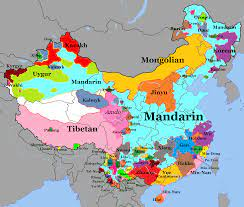
China Is Linguistically Diverse

China works hard to convey an image of monolithic unity to the world and to its own people. But the reality is more complex. 

China is still wrestling with how to rule over a diverse, ethnically mixed population that does not necessarily accept the dominance of the Han or the CCP [Chinese Communist Party] narrative. 
The challenge for the CCP is that ethnic minorities constitute only about 10 percent of the total population but inhabit 60 percent of the land mass, much of which is in sensitive border areas (the Guangxi Zhuang Autonomous region, Inner Mongolia Autonomous Region, Tibet Autonomous Region, and Xinjiang Uyghur Autonomous Region). 
The national language is a recent construct and has priority in schools over the local languages. About 30 percent of the population speaks a language at home other than the national language.

Some linguists call the various varieties of the Chinese language, which shares a common logographic script "topolects" which are sometimes described as "dialects" but many of which are really at least as different from each other as different languages within a language family like the Romance languages or Germanic languages or the Dravidian languages.


From here. The areas in white are arid regions of the extremely high altitude Tibetan plateau that have almost no permanent residents.


From here.

China's political subdivisions and neighbors (from Landsat):


China by elevation (Creative Commons Attribution License 4.0) from Hui Zhao, et al., "Preliminary study on alterations of altitude road traffic in China from 2006 to 2013"(February 2017):


For reference (rounded to the nearest foot):

1,609 meters = 5,280 feet (1 mile) = Denver
2,000 meters = 6,562 feet
Aspen = 8,000 feet
Vail = 8,150 feet
3,000 meters = 9,843 feet
4,000 meters = 13,123 feet
5,000 meters = 16,404 feet

Ecological regions of China:

19 January 2018

A Crazy Idea

"Bleeding hearts" want to reduce the suffering that animals experience in feedlots and the like.

Other liberals think we should reduce meat consumption because it is bad for our health or has too large of a carbon footprint.

Men who are "brutes" want more opportunities to engage in violent activity that sports can only partially handle, and enjoy hunting large animals. But, trophy hunting is problematic as it hastens extinction of wild megafauna.

The solution?

Meet both concerns by providing a larger share of meat on a "free range" basis in which food animals roam free and wild in natural comfort, while people pay money to hunt those animals.

This is a far less economically efficient way to produce meat, if producing more meat is your sole objective. But, this inefficiency is reduced when the process not only improves animal welfare, but also provide a recreational outlet for lots of people. Yet, since this would still be a more expensive way to produce meat, the price of meat would rise, and this would cause people to eat less of it, improving public health and reducing our carbon footprint.

This would basically be a true "paleo" solution, rolling back the clock on herding to replace it with hunting to a significant extent (while still parting with tedious "gathering").

03 October 2017

The Platte River Basin

Denver is a part of the Platte River basin that in turn feeds into the Mississippi River basin (other parts of Colorado are sources for many of the other major U.S. river basins). The Platte River basin is part of the Louisiana Territory as the French had claimed the entire Mississippi River basin as their own. The territory of Colorado that is west of the Continental Divide and much of Southern Colorado, in contrast, was not part of the Louisiana territory. Much of that territory was part of "Old Mexico".

Here is a nice map of that river basin via a Facebook post by John Orr whose blog is Coyote Gulch.


08 June 2017

The Undeclared War On Trophy Hunting

Not all political wars are openly declared. 

One of the more artful undeclared wars in modern America is the undeclared war on trophy hunting, which is being fought not in court cases, or with legislation, but by guileless statements that implicitly assume that everyone knows that trophy hunting rare African megafauna is manifestly immoral.

Case in point, a national TV put down in connection with meta coverage of reactions to former FBI director Comey's testimony today by MSNBC newscaster (you can't really legitimately call someone in her position a "reporter") Nicolle Wallace:
For a guy who kills baby elephants for kicks to be giving James Comey a lesson in character and strength of character is rich at best and pathetic at worst.
Wallace doesn't formally argue that "killing baby elephants" are wrong. Indeed, she implicitly acknowledges that it is legal and doesn't try to call Donald Trump, Jr. (the man targeted by her comment), whose elephant hunting pictures have been circulating around the web recently, a criminal. Instead, she simply assumes, by implication, that this should be so obviously morally wrong that it doesn't require any explanation. 

Moreover, if Donald Trump, Jr. defenders come back and dispute that the elephant wasn't a baby, or that his conduct was legal, or that it wasn't just "for kicks", they may defend Donald Trump, Jr. this time around, but they are also conceding the critical point (for the larger African megafauna debate) that "killing baby elephants" is immoral.

This is one of a fairly long running series of a mostly social media based campaign to "out" wealthy big game hunters with their own prized photographs, framing those photos as evidence of disrespect for nature, of cruelty, and of oblivious affluence.  These too viscerally connect the killing of charismatic African megafauna to condemnation, without bothering to argue on the merits that the wrongness of this conduct needs to be debated. 

And, as far as I can tell, it's working. 

Hunting, in general, is dramatically less common than it used to be as people have moved in droves from rural areas to suburbs and cities, and have taken jobs that don't allow them to be away every year for long hunting trips. Moreover, even media that has glorified hunting, like the first "Hunger Games" movie, have taken care to make clear that "moral" hunting is mostly about providing your family with food, while underlying the aspects of hunting as an emotional dual between the hunter and the hunted that figures into predominantly British traditions like fox hunting and safari hunting.

This fits the evolving demographics of hunting. Hunters are increasingly working class rural people who really are engaging in that activity, in part, as a way to provide premium food for their families at a pretty modest cost, in local forests and meadows. The people who primarily hunted for sport moved to the cities, and while there are gun loving, sport hunting families out there still in the cities, their numbers of dwindled dramatically and with those numbers, their influence on public opinion has fallen as well.

It is a tactic firmly rooted in movement politics - making the personal political and changing hearts and minds - rather than traditional electoral or legislative or even governmental politics. And, it has turned what was once an exuberant reward for success into a source of shame and social rejection.

The campaign is brilliant for is subtlety, restraint and ability to influence people's beliefs in a basically unconscious, emotional and visceral way without resort to the kind of overt, logical, formalistic modes of persuasion that Democrats, generally, and their last Presidential candidate, Hillary Clinton, in particular, have been so wedded to and reliant upon. 

This isn't to say that this isn't completely divorced from electoral and legislative politics. Liberals made great hay out of efforts early in the Trump Presidency to cancel regulations prohibiting practices like hunting hibernating bear cubs that are both squarely examples of sport hunting for trophies and are also widely viewed as unsporting and inhumane.

19 March 2017

The United States Is Big, Empty And Naturally Dangerous Compared To England

An interesting post at Travel Stack Exchange explains the unexpected dangers, mostly natural, that a long distance bicyclist from England is likely to face in the United States on a cross-country trip.

Some of the points made really stood out (italics and comments in brackets mine; bold emphasis and links in the original), although I have omitted a lot of the detailed discussions of traffic risks particular to bicyclists on different classes of roads including special warnings about the fact that railroad crossings in the U.S. are far less safe than in the U.K.
I think you have no sense of how big and how empty the US is. If the US were as densely populated as England, it would have 2.5 billion people. [The true population of the U.S. is about 319 million people and is highly concentrated in about 100 urban areas.] Unless you are in an urban center, you won't find many people of any sort, let alone criminals. 
The quickest coast-to-coast route is Jacksonville to San Diego, almost 4000 km, three times the distance from Land's End to John O' Groats, 200 hours of riding for a strong cyclist, six weeks on the road. Here is what it looks like about half-way. See any potential muggers? At about three-quarters. [Do click on the links, the immense granular scope of Google Street View, even in the middle of nowhere, is truly remarkable.] (This is the shortest route, not the scenic route.) . . .  
Your big concern will be water. Out west, 100km gaps between sources of fresh water are not at all uncommon, and it would only take a little bit of bad luck (a leaky camelbak shorting out your cell-phone for example) to make dying a very real possibility. 
You'll also have to cross two, and possibly three, major mountain ranges. I don't know if there is any route you could take that would not require you to climb to a pass half again as high as the highest peak in England. [This is probably an underestimate for most routes- the highest peak in England is 3,209 feet; I don't think there is any way to cross the Rocky Mountains in Colorado on a road at less than 8,619 feet or in Wyoming at less than 8,323 feet, although you can get a bit lower crossing Montana or New Mexico. Most of the more heavily used passes are higher. I usually cross the mountains at Eisenhower Tunnel which is 11,158 feet.]
Another response:
Depending on exactly where you are, weather, traffic, vast distances between even tiny towns (often 100+ miles, sometimes much more,) harsh terrain, and/or wildlife will be much larger concerns. Most of those concerns (except traffic) apply more to the Western states. Once you're East of the Mississippi River, things aren't quite as desolate and there will at least be small towns somewhat frequently (though still not nearly as close as they are in Western Europe.) 
Make sure to read up on the normal climate of the areas you'll be traversing in the season you'll be traversing them and also make sure you have some way to keep up with the weather forecasts for where you'll be. Weather in many parts of the U.S. (especially the parts away from the coasts) can change very quickly. Depending on season and where you are, the temperature may be anything from +50 C to -40 C. When I was in North Dakota a couple of years ago, it was +40 C while I was there and they had a snow storm about a week later. Even where I live in the Southeast, temperature swings of 20-30 C over the course of a day or two are not at all uncommon, especially during the non-summer seasons. . . .
Also, in case you haven't spent much time in the U.S., it's worth a reminder that the U.S. is very, very large. The distance from New York City to Los Angeles is a little more than the distance from Lisbon to Moscow. You'll be crossing everything from large mountains to desert to plains to hilly countryside. It typically takes about 3-4 days to cross the U.S. by car at 70+ mph / 110+ km/h. Even by airplane, it's similar to crossing the Atlantic. Crossing it by bicycle is not a small undertaking.
A third response:
Apart from a handful of urban areas, USA is far less densely populated than England (and even many urban areas are so sprawling that the urban area of Atlanta has a lower population density than all of England). In remote areas, you'll find roads where traffic is almost nonexistent.
A fourth response:
Wildlife, including dog packs, is more of an issue in the US than in England. This is very situational, in most areas the threat is about zero but if you're off the main roads and in the areas in the west with evergreen forests the bear threat is small but real. Generally they'll leave you alone but getting between mama and her cubs is a very bad idea. 
Also, in the southwest the distances can be long and the weather can be hot. I would recommend reading up on desert survival before biking between cities in the summer in the southwest deserts. Unless you're on the interstate you're unlikely to have cell coverage, an accident on a side road could be a very serious situation. Now and then we have cases of tourists who head out into the desert unprepared, have some sort of breakdown and die out there. 
On the flip side, winter storms can be a lot worse than you're used to, also. England is surrounded by ocean and the Gulf Stream warms it to some degree. Much of the US is a lot farther from the moderating effects of the ocean and only a small part of it is warmed by ocean currents. 
Finally, our extreme weather events are also worse than anything you're used to. If you're near the ocean in the southeast beware of hurricanes. You're looking at winds of at least 120 kph and the worst of them will be twice this. Rain will be extreme, flooding common. The areas near the ocean are usually subject to a mandatory evacuation in such cases and the areas a bit inland aren't but you'll have problems finding supplies and shelter. In the Midwest you'll also have the threat of tornadoes. They are too unpredictable for evacuation, alerts go out when there is threatening weather, warnings when radar sees a tornado and some communities also have sirens. People take shelter where they can, the well prepared have underground rooms. Winds again start at 120 kph and the record holder was 476 kph. All ordinary houses will be flattened by the strongest of these.
Similarly:
Do keep tabs on the weather forecasts, as others have said. It's not just the temperature swings to beware of, there can be downright dangerous weather. Thunderstorms with strong gusty winds, large hail, lightning strikes, and tornadoes are a common thing in the summer months in the middle and eastern parts of the country.
And finally:
Your two problems are going to be the vastness of the US, an the way our road system works. 
The size of it. I had a family friend come from England and stay with us in Florida. They decided they wanted to see the country so they decided to drive to California. They were totally unprepared for the shear distance and what it would mean. Our country is large enough that you have different eco systems as you travel, specially east to west. Your will have Swamp, plantations, flatland, prairie lands, deserts, mountain ranges, arid zones and coastal areas (just to name a few). There are areas that get 170cm of rain a year and others that get 60ml. 
This is also true for people. In some areas strangers are welcome and invited guests. In others they are an annoyance to be avoided. It all depends on area. . . . 
Even animal concerns are going to be different. Most parts of the US, (even in cities at times) have loads of wildlife. Cougars, snakes, (brown or black) bears, alligator, panthers, crocodiles, bob cats, and so on, are very common in rural areas, some even in cities. Smaller animalas are "worse" if your going to be camping out. Raccoons, Possums, Armadillos, squirels, etc. all will have no problem getting into your food stores. 
Cell coverage doesn't reach everywhere are there are large stretches of road with nothing on them. Your could easily find your self sleeping rough.
The English bicycler responding to these and other responses who had originally been concerned primarily about crime states:
I have been comprehensively reassured. You have not only demonstrated that violent criminals aren't a problem, you've demonstrated why as well. What with all the articulateds, trains, hailstones, tornadoes, hurricaines, thunderstorms, blizzards, droughts, earthquakes, bears, wolves, rattlesnakes, dogs, alligators and whatnot, criminals don't hang around because they think it's too damned dangerous.
Reflections

On the whole the comments made are accurate and sensible. The United States is vast. Huge expanses of the United States are empty farmland, empty mountain forests and deserts. There is far more wildlife, even in cities, than in England and some of it is dangerous. Indeed, even domesticated animals like cows, and herbivores like moose, can pose serious threats. And, we take the ecological diversity for granted.

You forget how inured you become to the ways to safely deal with unmonitored train crossings, extreme temperature changes, hail, torrential thunderstorms, hurricanes, tornados, blizzards, wildfires, floods, earthquakes, sunstroke, and wild animals from mosquitos and ticks to alligators and bears - let alone traffic related risks.

There are crime risks in rural America. Several commentators noted that people can be much more insistent on property rights in the United States and can use guns to make their point. No one pointed out the fairly serious risks associated with hitchhiking these days. One person did point out risks that can be present in the impoverished rural South to someone who looks out of place, and another pointed out the need to be careful in one's political discussions on certain topics in "Red States", and a third pointed out issues particular to Appalachia. Everyone agreed that parts of many U.S. cities can be problematic. 

But, since rural America has so few people, and since for a cross-country bicyclist crimes per square mile matter more than crimes per capita, de-emphasis on the importance of violent crime risks in these situations in rural America is appropriate. Predators don't gather where there is very little prey.

The sheer emptiness of much of the United States is one of the important reason why fixed rail transit is more of an economic challenge here than in Western Europe, Israel, India and East Asia.

I recently travelled from Denver to Pueblo, Colorado and back on business (240 miles roundtrip including some minimal driving around downtown Pueblo for a few days). Apart from cities like Pueblo, Colorado Springs, Monument, Castle Rock and exurban to central Denver, most of the trip you pass through absolutely empty desert, even along a major interstate highway like I-25. And, even some of the cities along the way, like Pueblo and Monument and Castle Rock aren't all that big.

It would cost $750 million to build high speed rail from Denver to Pueblo, but it would have to be very fast indeed to make that price worth the increase in speed you could get relative to I-25 where speed limits are mostly 75 miles per hour on flat, straight roads, and a significant share of the traffic is going at 80 to 90 miles per hour. Apart from construction zones and urban rush hour traffic, moreover, the interstate isn't all that crowded on that route. If high speed rail wasn't at least 175 miles per hour, it would be hard to justify, and the cities along the way are quite sprawling, so often you'd need to rely on a rental car, a car share, or dubious and hard to understand local bus service to reach your final destination which limits the benefits conferred by the high speed rail part of the trip.

30 April 2016

Soylent Green Is Inefficient

Contrary to popular perception, cannibalism is not an efficient use of scarce resources.  If we want to maximize planetary carrying capacity, vegetables are the way to go.

19 February 2016

Are Cat Lovers Suffering From Mind Control?

Lots of people know that the parasite toxoplasma gondi, a protozoan that reproduces only in cats but can infect any warm blooded animal and can cross the brain-blood barrier, causes infected mice to be attracted to the smell of cat urine. This, in turn and on average, causes the mice to be eaten by cats allowing the t. gondi within them to reproduce as the cat is infected.

It turns out, the chimps which are infected with t. gondi are attracted to leopard urine leading to a similar cycle.

Almost half of humans are infected. In humans, it is much more often found in cat owners than non-cat owners and is also common in people who eat unwashed fresh fruits and vegetables, undercooked lamb and pork, and unpasteurized goat milk.  It is possible that this infection may also be sexually transmitted.

Some behavioral effects of the infection in humans have been characterized:
The differences in behavior observed in infected hosts compared to non-infected individuals have been shown to be sex dependent. In humans for example, studies using the Cattell’s 16 Personality Factor questionnaire, found that infected men scored lower on Factor G (superego strength/rule consciousness) and higher on Factor L (vigilance) while the opposite pattern was observed for infected women. In 9 out of 11 studies, sex differences within personality traits were observed using Cattell’s Personality Factor questionnaire. However, human studies have not been able to show causation as they have all been observational studies. . . . 
In a human study with volunteer blood donors, reaction times and the amount of time the subject remained focused were worse for the infected group than for the control group. However, the infection status was found to only explain less than 10% of the variability in motor performance, making this a weak correlation. A few observational studies on human subjects have also found the risk of traffic accidents to be significantly greater in infected persons than non-infected controls. One of these studies concluded that this risk was 2.65 times greater for infected persons, and it is hypothesized that the patterns of decreased psychomotor performance could be responsible for the increased prevalence of traffic accidents among infected persons.
West Hunter takes this evidence and poses the intriguing question of whether t. gondi plays a role in cat domestication, causing people to faun upon cats because it makes them susceptible to cat pheromones.  In effect, t. gondi may be domesticating humans just as much as humans are domesticating the cats.  Thus, for example, the stereotypical "cat lady" might be engaging in behavior driven by a t. gondi infection and might act differently if the t. gondi infection were eliminated by one of the medicines that is effective in doing so.

23 August 2014

Vote No On Colorado Proposition 105

Colorado Ballot Issue 105 would enact a new law to require any "prepackaged, processed food or raw agricultural commodity that has been produced using genetic modification" to include the label: "Produced with genetic engineering." The law would be put into effect by January 1, 2016.

California, Oregon and Washington State have rejected similar ballot issues.  Vermont enacted a statute this year to require such labeling.  Some European countries require this kind of labeling.

GMOs are not appropriate to require food providers to label

Genetic modification as used in this sense is not a useful or meaningful concept

Perhaps the most important point to understand in the debate is that all domesticated plants and animals are genetically modified, which is to say that humans have consciously and deliberately manipulated their genome in a manner that would not have happened had humans not intervened.

The genomes of modern wheat, corn and rice are all wildly different than the wild types.  "Ancient grains", like emmer wheat, mostly represent early attempts at genetic modification of wild plants that were previously gathered by humans that had diminished commercial success when further genetic modifications produced more desirable crops.

Vegetables that are completely different in appearance such as kale, cabbage, Brussels sprouts, cauliflower, broccoli, broccoflower, broccolini, Romanesco broccoli, red cabbage, collard greens, savoy, kohirabi, kai-lan, and Chinese kale are all genetically modified versions of a single species of plant known as wild mustard (Brassica oleracea) which is native to coastal southern and western Europe.

Almonds would be poisonous without genetic modification.  Chickens are genetically modified to produce about twenty times as many eggs as their wild ancestors of Southeast Asia.

These genetic modifications aren't simply a matter of accelerated natural selection either.  Developing hybrid plants is every bit as much as genetic modification as more high technology methods.  Commercially developed hybrid oats have been produced since 1892.  Hybrid wheat and corn strains were widespread before World War II.  One of the main forms of rice grown in Africa is a hybrid.

Pretty much the only thing you buy in a grocery store for human consumption which are not genetically modified are wild caught fish and water.

GMOs are not a health risk

The modern campaign to label and have consumers avoid genetically modified plants and animals defines genetic modification narrowly to include only certain newly invented techniques for accomplishing this end, but this is ultimately a distinction without a difference.  As the American Association for the Advancement of Science noted in an October 20, 2012 statement, there are no proven health risks associated with genetically modified foods.

Labeling of genetically modified foods also promotes the misapprehension that "natural" foods are more healthy and more safe, which is simply not the case.  While pretty much every healthy animal is edible when cooked well (apart from mad cow disease and the venomous parts of venomous reptiles, frogs and insects), wild and natural plants are frequently hazardous to your health and have not been systematically tested for their health effects on humans.

It is impracticable to mandate GMO labeling in a small state like Colorado

Colorado residents value the wide diversity in the foods that they have available to them.  But, many of these choices could vanish if GMO labeling is required.

Why?

Because most food vendors in Colorado are incapable of determining in good faith if their foods are, or are not, genetically modified.

For example, most U.S. corn, but not all U.S. corn, is genetically modified.  A very large share of all processed food in the United States has some form of corn in it, be it corn syrup, corn flour, corn starch, or just plain old corn.  But, food vendors who buy corn derived products have no reliable way to determine if the corn in their supply chains, the vast majority of which comes from places which would not be subject to Colorado's GMO labeling mandate, is genetically modified or not.  The same concerns apply to products made with imported wheat flour, to Colorado beer made with imported barley and hops, to pork and beef made in other states or abroad, and so on.

Also, even if foods are imported from a place that does have GMO labeling, there is no consensus definition of what constitutes a GMO, so there is no assurance that food that is GMO free by Vermont standards, for example, is GMO free by Colorado standards.

This proposed law may be pre-empted by federal law or unconstitutional

This practical impact potentially has constitutional implications.  Under a legal doctrine known as the "dormant commerce clause", state regulation that substantially interferes with interstate and international commerce in void, because the power to regulate interstate commerce is reserved to the federal government.  So, if Colorado GMO labeling regulations make it very difficult or impossible for merchants who want to bring food from outside of Colorado that is not compliant with Colorado's GMO labeling law, then Colorado's law is probably unconstitutional.

This requirement is also arguably pre-empted by the federal food safety and labeling laws enforced by the Food and Drug Administration.

These kinds of concerns are the reason that states can only regulate motor vehicle emissions within the context of federally authorized environmental regulations.

Voluntary labeling has been an effective paradigm so far

Nothing prevents food vendors who market to people who are concerned about GMOs (or at least nothing should prevent them) from voluntarily monitoring their supply chains to assure that their products are GMO free and developing a labeling certification program to do so.

This is the approach that has been used to develop markets for organic products, for fair trade products, for product safety assured through third parties like Underwriter's Laboratories, for lactose free products, for Kosher foods, and for gluten free products.  These approaches have legal force under the federal Lanham Act.  They are also much more accurate and less corrupt because they secure the willing cooperation of people who believe in the value of the labeling regime.  It also puts key operational definitions in the hands of people who believe that these labels matter, instead of government bureaucrats who may be subject to industry capture and produce inadequate definitions.

Voluntary GMO labeling, if it is pervasive enough, naturally gives rise to the inference that unlabeled products are not GMO free, but does so in a manner that doesn't require every food vendor who wants to do business in the marketplace to have a full command of the supply chain of every ingredient that they use in places where there are no GMO labelling laws.

Conclusion

While the proponents of a mandatory GMO labeling law in Colorado are no doubt well meaning and have our best interests at heart, and while they merely want to label GMO food, rather than ban it, this law still does not deserve your vote.  The definition of a GMO is dubious.  There are no proven health benefits to non-GMO food.  It is impractical and probably unconstitutional to mandate GMO labeling at the state level at this time.  And, voluntary labeling is a completely adequate, well precedented, and effective alternative that does not raise the same problems.  Mandatory GMO labeling would not be accurate, would be costly, does not advance a compelling public need, and would reduce food choices for Colorado consumers.

Vote no on Colorado ballot issue 105.