16 March 2022

Fossil Fuels, Geopolitics, And Electric Cars

Overview

The rapidly decreasing price and increasing quality of electric car batteries are on the brink of reaching a tipping point that will dramatically increase the market share of electric vehicles relative to internal combustion vehicles, and with it will dramatically reduce global demand for oil and oil prices. We may be at or near peak oil prices and demand right now.

Falling oil prices over the next decade or so will dramatically decrease the geopolitical clout of Russia and other authoritarian regimes, and of conservative forces in U.S. politics, although their economic contractions may push them to far right militarism driven by this economic malaise. 

These countries will also scramble to find ways to get natural gas to distant markets (oil and natural gas are usually found in nature together). But this will only partially compensate for their lost oil revenue due to shifts to renewable electricity generation and another round of nuclear energy generation development driven by the unwillingness of natural gas importers to rely on authoritarian regimes like Russia and Saudi Arabia for energy security as they were caught doing in the Russian-Ukraine war, and also out of concerns about air pollution and climate change.

Falling oil prices will also easy the process of converting agrarian third-world countries into industrial economies and in strengthening economic growth in the developing world driven by industry. This will tend to strengthen democracy in these countries.

The coal industry is on its death bed in developed nations and is unlikely to rebound.

Oil Is Bad For Democracy

Economies that rely heavily on oil and gas revenues tend to be less democratic. A more than 5-9% of GDP reliance on oil revenues appears to be pretty toxic to the democratic political process.

Oil Revenues as Percentage of GDP (per the World Bank):

Country
Most Recent Year
Most Recent Value
2019
43.9
2019
43.4
2019
42.1
2019
39.6
2019
25.1
2019
24.9
2019
24.2
2019
21.9
2019
18.8
2019
17.8
2019
16.9
2019
16.3
2019
14.4
2019
13.8
2019
7.4
2019
6.7
2019
5.6
2019
4.8
2019
4.7
2019
3.7
2019
3.6
2019
2.8
2019
2.4
2019
2.2
2019
2.0
2019
2.0
2019
2.0
2019
1.8
2019
1.7
2019
1.6

Honestly, even state governments in the U.S. with heavy fossil fuel components to their economies are mostly not paragons of the democratic process.


Even within U.S. states, oil economy driven counties, see, e.g. Weld County, Colorado, are not thriving centers of economic growth.

The Coal Curse And Electricity Generation

Historic Coal Production Slows Economic Development

Coal is also bad news in the long run for economic development. In Europe, "former coal-mining regions are substantially poorer, with (at least) 10% smaller per-capita GDP than comparable regions in the same country that did not mine coal." Similar effects have been observed in India and Australia

In the U.S., coal centers in West Virginia and Wyoming probably have bleak futures as coal ceases to be economically relevant because it is such an intense source of air pollution and driver of climate change, as have many other regions in Appalachia that are coal rich but where the coal industry doesn't dominate the entire state's economy to the same degree.

The End Of Coal

Coal was already predominantly used to generate electricity, as other "steam age" technologies were replaced with "diesel age" technologies in other applications, when its decline started in earnest. 

The final blow has come as utility companies replaced coal, first with natural gas (made cheaper and more abundant with "fracking") and wind power. As production costs have fallen and efficiencies have risen, coal has been replaced with solar power as well. 

Tidal power is likely to join the ranks of renewables in the near future and is particularly attractive because it is reliable and predictable enough to be a source of baseline power. 

Electricity is also generated in significant quantities with hydroelectric plants that are near maximum capacity and may be threatened by mega droughts in some areas, and by nuclear fission. Some European countries rely mostly on nuclear power, and there is significant room to expand nuclear power generation in a way that benefits from the technological advances since the 1960s when the first nuclear power plants came online.

Nuclear fusion remains in the distant future and may never be cost efficient due to high plant costs despite negligible fuel costs and essentially creating no pollution in the power generation process.

Naturally, coal prices fall when alternatives like renewable electricity gets cheaper, to match the competition, cutting into the profits of coal producers and owners of coal mineral rights and reducing the erosion of coal's market share. 

But that can only go so far. Pollution controls drive up the cost of coal fueled power plants, and coal prices can't drop below the cost of mining and delivering the coal in the long run. If renewables and other sources of power can get cheaper to make even at negligible prices for the coal mining rights themselves, coal is doomed and can't lower its price to maintain market share any longer. And, that is pretty close to where we are now.

Incidentally, coal can be converted in an industrial process to liquids and gases that are substitutes for oil and natural gas. But this oil substitute is too expensive to make sense relative to cheaper oil conventional oil wells in places like the Middle East. 

Similarly, natural gas is available without the expensive conversion process in many places in the world that currently burn it off or decline to extract it because they can't get it to the consumers inexpensively enough. The transportation and storage problems for natural gas are cheaper to solve than the cost of making natural gas substitutes from coal. So, this too is a dead end for the coal industry.

Some developing nations, most notably China, make heavy use of coal, but are well aware of the extreme price that they are paying for doing so in terms of air pollution. 

Also, these developing nations are well positioned to leap frog to post-industrial technologies less reliant on coal for fuel, without the highly polluting intermediate steps that the developed world went though to get to their current environmental and energy balance, without having to invest in developing those cleaner technologies from scratch.

So, a third-world or developing world surge in coal utilization also seems unlikely.

The Global Oil Markets

Oil is fairly easy to transport cheaply by pipeline, by oil tanker over water, by rail, and by truck. Its easy portability has also made it the fuel of choice for motor vehicles, boats, ships, heavy construction and agricultural equipment, military vehicles, and aircraft. Its transportability and non-perishable nature also means that oil trades in a world market.

For example, even though the United States is a slight net oil exporter, its domestic oil prices and the prices of products derived from oil like gasoline and diesel fuel, are impacted by anything that affects the supply or demand for oil worldwide. So, even though the U.S. itself doesn't actually important more than a de minimus amount of oil from Russia (and mostly low grade petroleum products not suitable for gasoline and diesel refining), when sanctions have cut Russia off from global oil markets reducing supply about 10%, this has driven up oil prices everywhere, because countries that used to buy Russian oil are now trying to buy supplies from elsewhere including U.S. suppliers, and because places that used to buy oil from places that countries formerly reliant on Russian oil supplies are buying from are now looking to U.S. suppliers instead.

The flip side of the oil market being global, however, is that cuts in supply can be offset by increases in production and releases oil stockpiles to make up for the shortfall.

So, while sanctions preventing Russia from selling oil deprive Russia of its dominant source of export revenue, the removal of this supply from the global oil market leaves few countries without viable alternatives to meet their oil consumption needs, and the increase in global oil prices only partially reflects the drop in supply that these sanctions cause due to offsets from other oil suppliers.

In other words, sanctions preventing Russia from selling oil hurt Russia more than they hurt the rest of the world that is imposing the sanctions. And, the harm to the world outside Russia due to the sanctions is spread relatively evenly across the globe, rather than too acutely impacting the countries that usually buy their oil from Russia, although those countries are hurt somewhat worse than other countries.

Regional Natural Gas Markets

Natural gas is another story.

Demand

Natural gas is used mostly to generate electricity and for space heating (e.g. to run furnaces in homes and offices). In places where air conditioning is widely used, peak demand is in the summer to meet peak electricity demands. But Europe makes fairly little use of air conditioning due to its climate. In places that get cold in the winter and not too hot in the summer, like most of Northern, Central and Eastern Europe, peak demand for natural gas is in the winter.

Supply and Trade

Natural gas is sold in a regional, rather than a global marketplace. Mostly, it is delivered by pipeline. It isn't impossible to deliver it by ship, by train, or by truck, and rural areas without pipelines get propane deliveries for household and commercial use in lieu of natural gas. It also isn't impossible to store and its perishable. But it is much more cumbersome and expensive to deliver natural gas by means other than pipelines, and it is much more challenging to store than oil. So, little non-pipeline delivery infrastructure and large scale natural gas storage infrastructure is in place.

So, natural gas is predominantly delivered overland, through a small number of big, regional natural gas pipelines that run from production areas (in Europe, many of which are in Russia), to areas where it is consumed (in Europe, especially to urbanized areas without much nuclear power generation).

Germany gets 55% of its natural gas from Russia and is heavily reliant on natural gas for both electrical power generation and space heating. Italy gets 45% of its natural gas from Russia, with less focus on space heating and more on electrical power generation. Other countries in Europe, for example, Poland, are also heavily reliant on Russian natural gas.

In contrast, France, whose power grid is heavily fueled by nuclear power plants, and countries like the United Kingdom and Norway, which produces oil and natural gas in the North Sea, aren't very reliant on Russian natural gas.

Europe's reliance on Russian natural gas pipelines is second only to Russia's nuclear weapons stockpile, in giving Russia leverage to discourage European countries from intervening in Ukraine.

Unlike oil, finding alternative sources of natural gas for the European countries that rely upon it is very challenging.

While oil price hikes from reductions in Russian supplies are global in impact and hurt the U.S. and Canada as well, for example, even though they don't import meaningful amounts of oil to refine into gasoline and diesel from Russia, interruptions in Russian natural gas supplies have almost no impact on the U.S. and Canada.

The U.S. and Canada are net exporters of natural gas, mostly export to other places in the Americas, and import what little they do import (in the form of liquid natural gas or LNG by ship) about 80% from Trinidad and Tobago in Latin America. They import essentially no natural gas from Russia, and since their natural gas isn't easily sold outside of the Americas, their natural gas prices aren't affected by interruptions in Russian natural gas supplies.

The Economics Of Electric Cars 

The world is in the process of transitioning to electric motor vehicles as improvements in battery technology have made them economically competitive with internal combustion engine vehicles fueled with oil derived gasoline and diesel fuel.

Environmental Impacts

Electric vehicles are zero emission at the point source, not generating the tailpipe air pollution of gasoline and diesel fueled vehicles. The pollution created by generating electricity to power electric vehicles depends upon how the power grid is fueled. But renewables, nuclear fission plants, and natural gas all generate much less pollution per unit of vehicle moving power than gasoline or diesel, although coal is a closer call between being better or worse. Even electric cars on a coal-fired grid aren't unambiguously worse than gasoline or diesel fueled vehicles, because electric cars are more efficient (especially in city driving) than gasoline or diesel fueled vehicles in terms of miles travelled per unit of energy. 

Electric vehicles are also better than internal combustion vehicles even considering the manufacturing related pollution and disposal issues for batteries and electric vehicles themselves compared to conventional internal combustion vehicles.

An Electric v. Internal Combustion Tipping Point

The production costs for electric vehicles relative to internal combustion vehicles is mostly driven by the relative cost of batteries and motors to engines, gas tanks and exhaust systems. The costs of the mature technologies of electric motors, internal combustion engines, gas tanks, and car exhaust systems is more or less fixed in the short to medium run. So, the relative cost of electric vehicles and internal combustion vehicles is functionally, mostly a matter of how much electric car vehicle batteries cost. 

Currently, batteries are expensive enough in early stages of low level mass production, that electric vehicles cost more than internal combustion vehicles, with a price differential that considering fuel costs, leaves electric vehicles a bit more expensive than comparable internal combustion vehicles. 

But we are very close to the tipping point where electric vehicles will be cheaper on a lifetime of the vehicle including fuel and maintenance basis than internal combustion vehicles (and arguably are already there for vehicles with heavy city driving use like taxis). We could reach that point in two to five years.

And progress is being made in battery technology so fast, after a long logjam of glacial progress, that electric vehicles that are no more expensive, even before considering fuel costs, than internal combustion vehicles, are plausible in the medium term of perhaps five to ten years from now.

So, a surge in electric vehicle market share, and a corresponding plunge in petroleum demand worldwide, may be just around the corner.

2018 study from the University of Michigan's Transportation Research Institute found the average cost to operate an EV in the U.S. was $485 per year compared with a gasoline-powered vehicle at $1,117. In round numbers, with current economics, the fuel costs per mile driven for electric vehicles if you use residential chargers at night, rather than high speed commercial chargers, are about a third of the cost of internal combustion vehicles.

In the long run, oil prices have been remarkably steady at about $2.10 a gallon in equivalent gasoline prices in 2022 dollars, even though gasoline prices are currently about $4 a gallon due to the Russo-Ukraine war.

If production costs for electric vehicles can fall with mass production to something close to the cost of internal combustion vehicles, then gasoline prices would have to fall to about 70 cents a gallon to maintain market share, which is equivalent to about $18 per barrel oil prices. 

The Geopolitical Impact Of Electric Car Driven Drops In Oil Demand

There are some oil producers out there that can produce oil at that price at a profit. But many more oil producers can't cut their costs enough to make it profitable to produce oil at the $18 a barrel price that a mass shift to electric vehicles could lead to due to falling demand.

Impact On Oil Producers

Oil production costs vary by country and the following analysis is as of 2018:
A world oil price in the range of $55 to $60 per barrel is less than the cost of Russian Arctic oil production, European and Brazilian biofuel production, US and Canadian shale and tight oil production [ed. aka "fracking"], and Brazilian presalt oil production. 

It doesn't take all that much of a downward shift in prevailing oil prices to make a large share of production from some of the world's biggest oil producers uneconomic.

Production in the U.S., Canada, and Brazil, and European biodiesel and ethanol, falls dramatically at below $55 a barrel. Russian and Angolan production falls dramatically at sustained oil prices below $40 a barrel. Production in the Middle East, Venezuela, Ecuador, Kazakstan, and Nigeria (onshore only), in contrast, can remain economic down to only a little more than $20 a barrel.

But some of the high cost oil producers still account for a large share of the global oil market as shown below from the same source:


Also, while it will continue to be economic for the Middle East and a few other countries to continue producing oil even if there are massive reductions in the price per barrel as electric vehicles with cheaper and better batteries contract global demand, the impact on these countries will still be immense, because their profits from selling their oil with decline precipitously. 

All countries that rely heavily on oil revenues will see their economies contract permanently, in the cases of the countries most reliant upon oil revenues, on scales comparable to that of the Great Depression or post-WWI Germany as electric vehicles cross the tipping point.

Countries like Saudi Arabia, UAE, Oman, and Kuwait will suddenly find themselves with economies that look more like Yemen's, unless they can transition away from fossil fuels, or can find a way to shift to natural gas production to meet increased electricity generation demand from electric vehicles in a way that they can get that to market, like LNG shipping or new pipelines.

As their economies shift from relying on economic rents from oil and gas production to more diversified commercial economies, their authoritarian regimes will be undermined. 

Russia, due to its higher cost of oil production, which effectively leverages the relationship between oil prices and its oil industry profits, faces the collapse of the clout of its primary and predominant export industry much more quickly, which could imperil Vladimir Putin's regime, even without the woes Russia is facing due to its ill advised invasion of Ukraine.

Also, European countries reliant on Russia for their oil and gas needs are now acutely aware of the national security risks they face by doing so and will be transitioning away from reliance on oil and natural gas from Russia by all means possible as soon as they possibly can, by adopting extreme conservation measures such as heavily subsidizing transitions to electric vehicles, by boosting investments in renewable and nuclear energy generation, and by developing pipelines and LNG and natural gas storage facilities that make them more independent from a Russian energy supply partner which has proven unreliable.

So, even if Russia extricates itself from its current war in Ukraine and unwinds many current sanctions, European countries and big businesses will be loath to invest more in reliance on Russian oil and gas supplies than they have already, thus permanently reducing Russia's oil and gas revenues. 

Similarly, in the U.S., which will take the hit from lower oil prices and return to being an oil importer if electric vehicle sales don't grow fast enough, even sooner, the power of fossil fuel lobbies in Washington and in state legislatures across the nation will ebb greatly in the next decade or so.

Impact On Developing Countries

On the other hand, cheap oil prices can help fuel economic development, especially in oil-poor countries that are trying to transition to industrial economies, including many of the world's poorest countries in Africa.

These countries may get a boost from reduced developed country oil demand from electric vehicles and in these countries, a shift from a pre-industrial agrarian economy to an industrial economy, may advance the cause of democracy and human rights, rather than impeding it, and this may also hasten the demographic transition that comes with industrialization.

15 March 2022

Problems With The Median Voter Theorem

The median voter theorem, while a good starting point, is flawed.

1. Most voters have no meaningful opinion about most issues.

2. Voters are at least as influenced by their elected representatives as their elected representatives are influenced by them. The implicit chain of causation is flawed.

3. Politicians have a more bimodal distribution of political opinion than rank and file voters, and act accordingly, although this has gradually changed in recent years.

The Intersection Of Social Class And Religion In The United States

The deep political divisions in American society have a lot to do with deeply different lived experiences divided by race and social class. 

Background

I've focused a lot on the differences rooted in the fact that working class Americans (defined by education) tend to have children before getting married, often without getting married in unstable cohabiting relationships, and when they do marry tend to get divorced early and often. To a lesser extent, I've noted how vulnerable working class families are to losing parental rights due to abuse and neglect charges.

Mostly, this is attributable to the fact that working class white men have had stagnant incomes since the 1970s in real terms, face persistent unemployment at high rates, and have high rates of disability by middle age. Meanwhile, working class women have seen job opportunities surge as employment discrimination has faded, pay little economic cost for temporarily leaving the work force to have children, are more likely to get some college or certification that increases their economic clout, and are more likely to seek help from the government and extended family. Black men also tend to have low incomes and high rates of unemployment, but have at least seen their economic and educational prospects improve dramatically as a result of laws against discrimination, despite being worse off in absolute terms than white men. black men have also experienced, to a greater degree than white men, the demise of the nuclear family. Mass incarceration has impacted both working class and poor white men and to an even greater extent, working class and poor black men.

In contrast, incomes have surged for college educated men and women, unemployment has been persistently low for them, but the immense cost in lifetime income that college educated women experience when they take time out of the workforce to have and raise children, and the fact that their college educated husbands are reliable providers, have caused divorce rates to fall for college educated people and encouraged college educated couples to have children in wedlock. Almost no college educated people go to prison, and few experience efforts to terminate their parental rights for abuse or neglect

Yet, as recently as the 1950s and early 1960s, there was almost no race or class disparity in marriage rates or divorce rates or illegitimacy rates. Since the 1970s, economic inequality between socioeconomic classes has surged continuously.

Religion, Education and Economic Prospects

A New York Times guest essay by Professor Iliana Horowitz from Tulane University explores another wrinkle of the class divide in the United States. Being religious provides few economic and educational benefits to college educated upper middle class people, and can be a hinderance. And, it provides only modest economic and educational benefits to working class girls. 

But it provides great economic and educational benefits to working class boys. 

Demagogues might argue that religion "feminizes" young working class men. It keeps them socially connected and encourages them to behave in a pro-social way, to focus on school, and to avoid risky behaviors. It gives them hope that doing so is worth it and will pay off. And, their academic and personal lives are fragile enough that "little indiscretions" that upper middle class kids can get away with can throw their lives dramatically off track.

Put another way, involvement in church provides young working class men with institutional support for social class advancement. The notion that church provides a backstop for a lack of male role models and instability caused by parental job insecurity also rings true.

The bold and italic emphasis in the excerpt below is mine.

American men are dropping out of college in alarming numbers. A slew of articles over the past year depict a generation of men who feel lost, detached and lacking in male role models. This sense of despair is especially acute among working-class men, fewer than one in five of whom complete college.

Yet one group is defying the odds: boys from working-class families who grow up religious.
As a sociologist of education and religion, I followed the lives of 3,290 teenagers from 2003 to 2012 using survey and interview data from the National Study of Youth and Religion, and then linking those data to the National Student Clearinghouse in 2016. I studied the relationship between teenagers’ religious upbringing and its influence on their education: their school grades, which colleges they attend and how much higher education they complete. My research focused on Christian denominations because they are the most prevalent in the United States.

I found that what religion offers teenagers varies by social class. Those raised by professional-class parents, for example, do not experience much in the way of an educational advantage from being religious. In some ways, religion even constrains teenagers’ educational opportunities (especially girls’) by shaping their academic ambitions after graduation; they are less likely to consider a selective college as they prioritize life goals such as parenthood, altruism and service to God rather than a prestigious career.

However, teenage boys from working-class families, regardless of race, who were regularly involved in their church and strongly believed in God were twice as likely to earn bachelor’s degrees as moderately religious or nonreligious boys.

Religious boys are not any smarter, so why are they doing better in school? The answer lies in how religious belief and religious involvement can buffer working-class Americans — males in particular — from despair.

Many in the American intelligentsia — the elite-university-educated population who constitute the professional and managerial class — do not hold the institution of religion in high regard. When these elites criticize religion, they often do so on the grounds that faith (in their eyes) is irrational and not evidence-based.

But one can agree with the liberal critique of conservatism’s moral and political goals while still acknowledging that religion orders the lives of millions of Americans — and that it might offer social benefits.

A boy I’ll call John (all names have been changed to protect participants’ privacy under ethical research guidelines) was a typical example of the kind of working-class teenager I’ve been studying. He lived an hour outside Jackson, Miss. His father owned an auto-repair shop and his mother worked as a bookkeeper and substitute teacher. His days were filled with playing football, fishing and hunting with his grandparents, riding four-wheelers with friends and mowing the occasional lawn to earn pocket money.

John aspired to attend college, but given his parents’ occupations, income (the equivalent of $53,000 today) and education (both had earned vocational certificates), the odds were not in his favor. . . .

Children with college-educated parents have many advantages that make their academic trajectories easier. They tend to live in neighborhoods with a strong social infrastructure, including safe outdoor spaces. They have more familial and geographic stability, which means they rarely need to transfer between schools, disrupting their educations and severing social ties.

Children from wealthier families also benefit from a network of connections and opportunities that many poorer children lack. College-educated parents tend to work in professional organizations and have robust social networks from college where they meet other members of the professional class. All these social ties — from the neighborhood, the workplace, and college — provide a web of support for upper-middle-class families, which sociologists refer to as “social capital.”
But working-class families like John’s do not have the same opportunities to develop social capital. The workplace used to be a central social institution for working-class families, but in the gig economy it is nearly impossible to feel a sense of stability, acquire health insurance or develop relationships with colleagues.

The lack of social capital — along with systemic problems and inequities — has contributed to the unraveling of the lives of millions of working-class Americans, especially men. Since the early 2000s, just as the kids in my study were entering adolescence, there has been a drastic rise in the number of working-class men dying “deaths of despair” from opioids, alcohol poisoning and suicide.

But despair doesn’t die: It gets transmitted to children. Most of the working-class kids in my study — especially boys — seemed to look out in the world and feel despair physically, cognitively and emotionally. I found that most of the working-class boys in the study had dropped out of the educational system by their mid-20s and seemed on track to repeat the cycle of despair.

But not John. He and dozens of other boys in the study had a support system that insulated them from the hopelessness so many of their peers described. Through his teenage years, John regularly attended his local evangelical church and was active in its youth group. There were organized social activities like rafting and weekly gatherings at the minister’s house to talk about what was going on in their lives. 
. . . 

The academic advantage of religious working-class children begins in middle and high school with the grades they earn. Among those raised in the working class, 21 percent of religious teenagers brought home report cards filled with A’s, compared with 9 percent of their less-religious peers. Grades are also the strongest predictor of getting into and completing college, and religious boys are more than twice as likely to earn grades that help them be competitive for college admissions and scholarships.

Religious girls from working-class families also see educational benefits compared with less religious girls, but there are other factors that help them be academically successful outside of religion. Girls are socialized to be conscientious and compliant, have an easier time developing social ties with family members and peers, and are less prone to get caught up in risky behaviors.

Why does religion give boys like John an academic advantage? Because it offers them the social capital that affluent teenagers can get elsewhere. Religious communities keep families rooted to a place and help kids develop trusting relationships with youth ministers and friends’ parents who share a common outlook on life. Collectively, these adults encourage teenagers to follow the rules and avoid antisocial behaviors.

Although John cited peer pressure as the most stressful problem facing teenagers, he avoided falling into a pattern of drug and alcohol abuse that often derails kids from academic success. The research for my book focused on Christians, but I’ve found that religious communities are a source of social capital for Jewish people as well.

Theological belief on its own is not enough to influence how children behave. Adolescents must believe and belong to be buffered against emotional, cognitive or behavioral despair. I found that religion offers something that other extracurricular activities such as sports can’t: It prompts kids to behave in extremely conscientious and cooperative ways because they believe that God is both encouraging and evaluating them. . . 

Religious Benefits For Young Men 

Religion doesn’t just help boys from working-class families during their teenage years — it also deters them from falling into despair in adulthood. We can see this in the way John’s life unfolded. In his early 20s, John stopped reading the Bible and no longer participated in his church community. Other parts of his life also started to fall apart. He dropped out of college and got arrested for marijuana possession.

That was a wake-up call, and John decided to return to church. Within a few years, he managed to get his life back on track. John is now living with his grandmother, whom he cares for, and his girlfriend, whom he plans to propose to. He believes that God has called him to serve others by working in the medical field. He returned to community college while working as an E.M.T. and plans to become a paramedic or a nurse. He attributes much of this to his faith.

In his final interview with researchers at age 26, John said, “The most important things in life to me is my family and my relationship to God.”
What does the link to "Religious boys are not any smarter" say?
Zuckerman et al. (2013) conducted a meta-analysis of 63 studies that showed a negative intelligence–religiosity relation (IRR). As more studies have become available and because some of Zuckerman et al.’s (2013) conclusions have been challenged, we conducted a new meta-analysis with an updated data set of 83 studies. 
Confirming previous conclusions, the new analysis showed that the correlation between intelligence and religious beliefs in college and noncollege samples ranged from −.20 to −.23. There was no support for mediation of the IRR by education but there was support for partial mediation by analytic cognitive style. Thus, one possible interpretation for the IRR is that intelligent people are more likely to use analytic style (i.e., approach problems more rationally). 
An alternative (and less interesting) reason for the mediation is that tests of both intelligence and analytic style assess cognitive ability. Additional empirical and theoretical work is needed to resolve this issue.
Miron Zuckerman, et al., "The Negative Intelligence–Religiosity Relation: New and Confirming Evidence" 46(6) Personality and Social Psychology Bulletin (October 15, 2019).

Thus, while there isn't a huge correlation between intelligence and religious belief in college, it isn't positive, although that may be mediated by less high IQ college students being religious because they are more prone to have working class cultural origins while higher IQ college students are more likely to be from less religious upper middle class families, rather than because there is a cause and effect relationship.

14 March 2022

Quotes Of The Day

David Letterman: America is the only country where a significant proportion of the population believes that professional wrestling is real but the moon landing was faked.

Betsy Salkind: Men are like linoleum floors. Lay 'em right and you can walk all over them for thirty years.

John Glenn: As I hurtled through space, one thought kept crossing my mind – every part of this rocket was supplied by the lowest bidder.

Arnold Schwarzenegger: Having more money doesn't make you happier. I have 50 million dollars but I'm just as happy as when I had 48 million.

Mixed Messages

It is notable that many countries with established monotheist religions (e.g., Egypt - Sunni Islam, United Kingdom - Anglican, Greece - Greek Orthodox) have pagan monuments and relics as some of their main tourist draws.

Bleg For Solutions To Blogger Flaws

With more than 10,000 posts between three blogs on blogger, I am pretty much locked into this platform. But the blogger platform has two major flaws.

1. It randomly messes with font sizes after any edit, no matter how small, so I constantly have to select a whole post and reset the font size or I get odd anomalous font sizes immediately before I publish or update it.

2. It "eats" web links that I confirmed were good immediately after embedding them. This happens less often with links in material that I cut and paste from elsewhere, but happens sometimes, even then, without me editing them.

I am at a loss as to how to prevent these problems from manifesting in the first place as I don't have the IT chops to research and figure it out.

I'd like the change the default font size to "large" and the default alignment to fully justified, formats which I adopted after my aging eyes (I'm 51 years old and very nearsighted with whatever they call the modern equivalent of bifocals) had trouble reading standard sized fonts comfortably. But I can't figure out how to do that.

I'd be even more grateful for a solution to the disappearing link problem.

Comments suggesting constructive solutions would be welcome.

13 March 2022

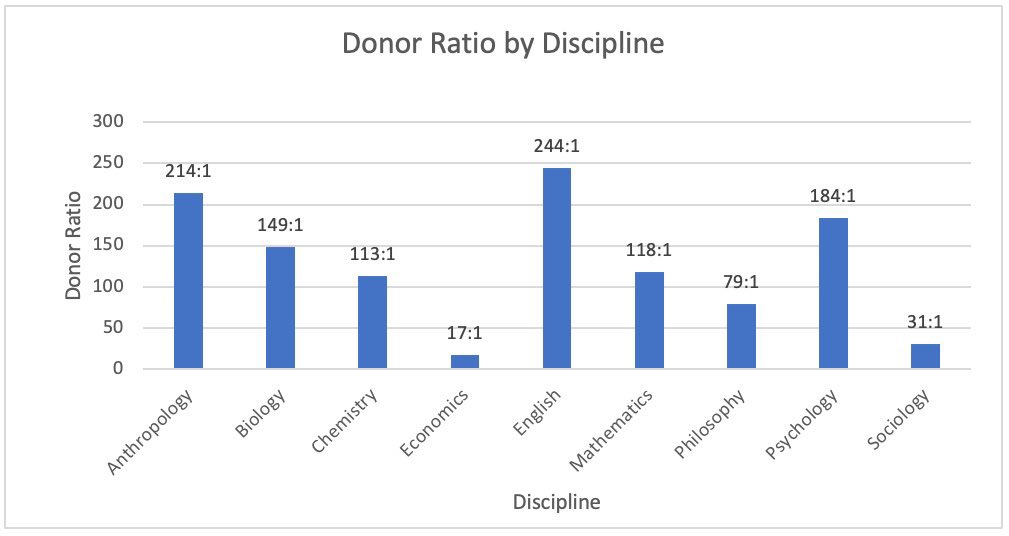
Partisan Leanings In Academia

Here’s the ratio of D to R donors by academic discipline.
Say 97% of Dem professors are wonderful people but 3% are assholes.

Then in many fields you’re more likely to meet a professor who’s an Asshole Democrat than any kind of Republican.

https://slowboring.com/p/education-polarization?s=r…


4:42 PM · Mar 7, 2022·Twitter for iPhone
From here.

12 March 2022

Words To Live By

Dogs are for soup.

Piano movers are worth it.

Behind every great fortune is a great crime.

Love should be reckless and impulsive.

Don't be a flat squirrel.

I work to support my hobbies.

Information, tools, and incentives are more important that education, ability, and motivation.

The right definition for a word depends upon the reason you want to know it.

If you are carrying a gun, your life doesn't matter.

Artificial problems call for artificial solutions.

People who believe demons are real are dangerous.

Religion thrives when it preserves a threatened culture.

Nothing fails like prayer.

No fate but what we make.

Those who can make you believe absurdities, can make you commit atrocities. (Voltaire)

11 March 2022

Boycotts And Such

Most of the time, I make decisions on what to buy from various choices available for something that I need based upon factors intrinsic to the purchase. What is the price? What is the quality of the good or service provided?

Sometimes, however, I consider additional factors that go beyond the intrinsic nature of the transaction. At one extreme, I may decline to do business with a firm entirely as part of a boycott of that firm for some reason related to the conduct or affiliations of the firm itself that don't necessarily relate to the quality of the good or service that it provides. At another extreme, I may chose to do business with a firm despite unfavorable intrinsic elements of the transaction, such as a higher price or more inconvenient delivery option, because I have a positive opinion of the firm providing it. In less extreme cases, these firm related factors may influence my purchasing decision but don't entirely dictate it.

Of course, there are firms that I have an opinion about that I don't meaningfully boycott or favor because I simply don't have any intrinsic reason to buy their products. Whether I feel good or bad about Boeing or Airbus, I simply don't have any good reason to buy or lease commercial or military aircraft.

Also, parallel to this notion is that some purchases have an intrinsically cultural element that is pertinent to a purchase at the primary level. 

For example, I am more likely to purchase Kimchee, rather than sauerkraut, because culturally Korean foods are part of my family culture to a much greater extent than culturally German foods. 

Boycotts Often Don't Work

Further, I am well aware that boycotts and economic sanctions designed to isolate countries or firms are only rarely effective, and sometimes backfire, although there have been notable exceptions. 

Internationally, the current sanctions against Russia and Belarus, and historically, sanctions against South Africa, are rare examples of cases where sanctions have been quite effective. 

Sometimes sanctions have unintended consequences. Sanctions against Turkey, related to its presence in Cyprus, sanctions by many countries against Israel, sanctions against Iran, and sanctions against South Africa, were all important in giving rise to thriving local defense contractor industries. Sanctions can encourage countries to become allies with your enemies or competitors too.

Grass roots consumer boycotts against firms for their undesirable conduct are often even less effective. For example, Coors, Chick-fil-A, Hobby Lobby, Walmart, Wells Fargo, and Amazon.com are all apparently doing well enough, despite long standing consumer boycott efforts at one level or another. It is hard to quantify what impact these boycott efforts have had. A boycott effort has to be particularly widespread to be effective.

Action in the civic arena can sometimes be more effective. For example, the Boy Scouts, the Roman Catholic Church, and the NRA were all hurt badly by firm level concerns and scandals not closely related to their core missions. Firm level virtue matters more in the civic and non-profit area where firm level virtue is part of the decision to be involved with the organization.

My Own Case By Case Views

The list of factors I consider and matters upon which I am influenced by firm level conduct are modest, and each carries with it a story.

I don't cross picket lines by doing business with, or buying good made by firms where workers are on strike, ever, while the strike is in progress. Mostly this is a firm level consideration, although it also reflects the fact that the quality of the consumer experience is usually reduced in a scab staffed firm and this creates doubts about whether quality control measures are being followed.

I don't patronize Chick-fil-A, a fast food chicken restaurant chain, because of their anti-LGBT advocacy and to a lesser extent by their Republican political advocacy and campaign contributions.

I don't patronize Hobby Lobby, a big box craft supply store, because of their conservative Christian agenda, especially as applied to reproductive rights for their employees.

I don't drink Coors beer, in part,  due to their anti-union labor practices, but also because, intrinsically, their marquee beer is crappy quality beer.

While I am sympathetic to recent boycotts of Russian vodka in light of Russia's recent invasion of Ukraine, in truth, I haven't bought Russian vodka in decades for the intrinsic reasons that French, Swedish, Finnish and Icelandic vodka is a better product, and because I have ethnic affinities to Sweden and Finland which a positive firm level reasons to buy those products.

I firmly reject buying on a "locavore" basis, as I feel strongly about the importance of international trade in food goods and don't believe that any virtues are served by buying local food stuff. Similarly, in most circumstances, I don't care if food is organic, which can be good for the environment but rarely actually makes food healthier, and I am not worried about GMO foods.

I certainly do not oppose "corporate" or "factory" farms relative to "small family farms" which are vastly less efficient and often have worse quality control and issues with how they treat migrant workers that they often have to employ on a seasonal basis.

On one hand, farm raised fish can be prone to accumulation of toxins, on the other, "wild caught" fishing is depleting world fisheries and shellfish and top of the food chain predator fish like tuna are still prone to accumulations of heavy metals and contribute to threats to aquatic species like dolphins that everyone loves. So, I'm fairly ambivalent about that distinction.

I have historically been willing to pay extra in my utility bill to subsidize wind generated power in lieu of coal fired power generation, but I'm not very concerned about nuclear power or natural gas generated power. As life has gotten busier, my wife now handles our utility bills, so I'm not involved in those decisions.

I have firm level reasons to favor CostCo, which pays its workers well and does not support bad causes, over Walmart and Sam's Club, which are anti-union and treat their worker's poorly and are owned by major GOP donors. But my preferences between the two aren't terribly strong, and intrinsic reasons related to the quality of the goods sold at CostCo and other grocery stores relative to Walmart and Sam's Club, and related to the shopping experience, also factor into this preference.

I have a slight preference for shopping at Tattered Cover Book store, a local small business, over Barnes and Nobel, a national corporate chain competitor, but not a big one (and Barnes and Nobel, other than being a big national corporate chain, isn't particular despicable).

I avoid Wells Fargo Bank, NA, because of its history of bad banking practices, but also intrinsically, because I've seen first hand the way it has mishandled business transactions and mistreated customers.

I have a strong preference against things associated with Texas and with being in Texas. I once declined to pursue a good paying job at a large Texas law firm, in an area where I had the relevant skills, where I was being recruited by a headhunter to work, because I didn't want to live in Texas or raise a family there. I wouldn't consider a vacation for pleasure there either. Texas is notorious for outrageous injustice in its criminal justice system, for racism, for a violent gun oriented culture, for anti-abortion and anti-LGBT political activism, and more. This preference isn't absolute, however, and I did once attend an academic conference for legal scholars there to present an academic paper. Similarly, despite the branding, I'm not adverse to patronizing Texas Roadhouse restaurants, a large chain of mid-tier steak houses, because the connection to Texas itself is so attenuated. And, I am similarly

Many people on the left seek to boycott Israel because of its unjust treatment of its Palestinian population, and to a lesser extent, due to its discrimination against Arabs. I'm aware of those issues. I don't support those policies and actions and favor diplomatic action and legal action to curtail that conduct. But I am also aware that Israel has provided a safe haven from anti-semitism for Jews around the world and that Israel's neighbors have threatened genocidal warfare against it that would result in the extermination of about half of the world's Jews, most of the rest of whom live in the U.S. Also, Israel has done plenty of very positive things and has an overall society whose level of civic development and respect for women's rights and for other worthy things is exemplary within the Middle East and North Africa. So, overall, my attitude to Israel in a boycott or preference analysis is ambivalent.

Similarly, I am aware that the restaurant chain Cracker Barrel, which is a low end sit down restaurant chain that sells Southern regional food, has faced serious racial discrimination in employment charges with it paid handsomely to settle, but it is also one of the few places where many foods of my childhood in Georgia are easily available in a reasonably authentic format. And, Cracker Barrel has not been particularly prominent in taking stances that appeal to the worst prejudices of a majority of its customer base. So, I am ambivalent towards it.

Some people are not a fan of Amazon.com, because it is a giant national corporation owned by billionaires that has put many small businesses, including book stores, out of business, because it charges very high fees to smaller firms that sell goods through it depriving those firms of profits that they would earn if you bought goods directly from them, and because it tends to exploit its warehouse workers. But the intrinsic benefits to doing business with Amazon are considerable. It has a good quality user interface. I get credit card points for purchases there at very favorable rates that I use for things I want. I can find things that I want to buy there that are hard to locate elsewhere. They deliver their goods promptly and frequently more reliably with in house delivery vans than the U.S. Postal Service or United Parcel Service do. Returning goods from Amazon is trouble free and can be done in person at nearby Whole Foods locations (which it recently acquired). The retail level prices are competitive with in person retail. The Amazon Prime video offerings and Kindle ebook offerings are reasonably priced (or free with an annual or monthly subscription in some cases) and are good quality. It is good at recommending things that I might want to buy in the future. It makes it easy to pre-order soon to be released books and get them on their release dates. Their reviews are helpful in evaluating purchases and reasonably trustworthy. I don't worry about it engaged in e-commerce fraud that can be a concern with very small firms. Home delivery is often convenient when I'm overwhelmed with work and have little time for trips outside the grocery store. So, while I sometime look for opportunities to buy direct from small firms affiliated with Amazon, mostly I don't avoid it as some people do.

While I recognize the economic and social benefits in some cases of supporting locally owned and small businesses, I'm not terribly dogmatic or moved by those concerns unless I know the owners personally (and I do buy books that I wouldn't otherwise buy when they are written by people I know). 

Similarly, while many people are upset at Spotify, justifiably, for its sweet deal with an anti-vaxx podcaster, this platform is so vastly superior to any other music streaming platform, and has also provided a way for my own son to distribute music he produces to a larger audience in what amounts to self-publishing with the polish of big time artists, so I haven't backed away from supporting it.

I'm aware of concerns about Goodwill, the thrift store and semi-charitably oriented business, but not particularly concerned about the income of the CEO or its business model of making profits by receiving inventory for free, paying marginal workers minimum wage with few if any benefits, and selling used good cheap.

I do not favor the very old U.S. boycott of Cuba. Cuba does engage in certain human rights violations. But it is also, in many respects, one of the most admirable Communist regimes in terms of how it has handled public health measures, for example, and its human rights violations do not rise to the level of extreme totalitarian regimes. It certainly has a better human rights record than countries such as Saudi Arabia and China, which the U.S. has not embargoed. The sanctions have also not proven effective and greater rather than less engagement would probably be a better way to promote positive change there.