Showing posts with label genetics. Show all posts

14 April 2026

New Health And Climate Research

* They're well along in developing a toothpaste or mouthwash that with treat gum disease by stymying harmful mouth bacteria that cause it, while leaving the good parts of your mouth's microbiome alone. Current mouth washes like Listerine kill everything and the bad bacteria often recover quicker.

* The drought is a problem in surprising ways.

For years, water managers have been puzzled as the Colorado River kept delivering less water than expected—even when snowpack levels looked promising. New research reveals the missing piece: spring rain, or rather, the lack of it. Warmer, drier springs mean plants are soaking up more snowmelt before it can reach rivers, fueled by sunny skies that boost growth and evaporation. In fact, this shift explains nearly 70% of the shortfall, tying the mystery directly to the long-running Millennium drought.

* The same, yet different:

New research reveals that obesity affects men and women in surprisingly different ways. Men are more likely to develop harmful abdominal fat and signs of liver stress, while women show higher inflammation and cholesterol levels. These differences could help explain why health risks vary between sexes. Scientists say this could lead to more tailored treatments for obesity.

* Genes greatly influence your chance of dying from age related health conditions: 

For years, scientists believed our lifespan was mostly shaped by environment and chance, with genetics playing only a minor role. But a new study from the Weizmann Institute flips that idea on its head, revealing that genes may actually account for about half of the differences in how long people live. By analyzing massive twin datasets—including twins raised apart—and using innovative simulations to filter out deaths from accidents and other external causes, researchers uncovered a hidden genetic influence that had been masked for decades.

* A possible alternative to GLP-1 drugs would have less side effects, but some of those side effects like greater executive function and an ability to fight addictions might be good ones:

A newly discovered molecule could reshape the future of weight loss treatments by mimicking the powerful appetite-suppressing effects of drugs like Ozempic — but without many of the unpleasant side effects. Identified using artificial intelligence, this tiny peptide, called BRP, appears to act directly on the brain’s appetite-control center, helping animals eat less and lose fat without nausea or muscle loss.

* Another study suggests that an early dinner and an early breakfast might help you lose weight:

A major study suggests that when you eat could play a key role in staying lean. People who fast longer overnight and start their day with an early breakfast were more likely to have a lower BMI years later. Scientists think this is because eating earlier aligns better with the body’s internal clock. But skipping breakfast as part of intermittent fasting didn’t offer the same advantage—and may even be tied to unhealthy habits.

* Colonoscopies are a big deal and aren't fun. An alternative stool test may be almost as good of a diagnostic test:

A breakthrough in microbiome research could change how colorectal cancer is detected—no colonoscopy required. Scientists used AI to map gut bacteria at an unprecedented level of detail, revealing subtle microbial patterns linked to cancer. By analyzing simple stool samples, their method identified 90% of cases, rivaling one of medicine’s most trusted diagnostic tools.

* Alzheimer's disease attacks your sense of smell early on, which would be very helpful if there were effective treatments for the disease, which there aren't (yet):

Losing your sense of smell might signal Alzheimer’s far earlier than expected. Scientists found that immune cells in the brain actively destroy smell-related nerve fibers after detecting abnormal signals on their surfaces. This damage begins in early stages of the disease, well before cognitive decline. The discovery could help identify at-risk patients sooner and improve treatment timing.

* Also, while I'll find the link again another day, the Epstein-Barr Virus, that caused mono, cold sores, and M.S., also causes lupus. The case for developing an EBV vaccine has just gotten a lot stronger.

18 February 2025

DNA Evidence Probably Identifies Jack The Ripper

More than a dozen suspects who could have been Jack the Ripper, one of the earliest well known serial killers, have been seriously considered. 
A police investigation into a series of eleven brutal murders committed in Whitechapel and Spitalfields between 1888 and 1891 was unable to connect all the killings conclusively to the murders of 1888. Five victims—Mary Ann Nichols, Annie Chapman, Elizabeth Stride, Catherine Eddowes, and Mary Jane Kelly—are known as the "canonical five" and their murders between 31 August and 9 November 1888 are often considered the most likely to be linked. The murders were never solved.
Several other murders, less definitively connected to this spree than the "canonical five" also occurred in the vicinity before the man who is now clearly the prime suspect was committed to an insane asylum.

But, DNA evidence has tipped the balance and arguably cracked this cold case case and linked the killings to one of the top suspects.
A Polish barber by the name of Aaron Kosminski was a suspect at the time of the five murders in Whitechapel, east London, in 1888. . . . A bloodstained shawl said to have been found on the body of one of the victims – which was purchased at auction in 2007 by author and Ripper researcher Russell Edwards – was recently found to have the DNA of both the victim and Kosminski. In October, the Daily Mail revealed that Mr Edwards had uncovered new evidence of Kosminski’s links to the highly secretive Freemasons which may have motivated his sadistic killings and shielded him from law enforcement, ensuring he was locked away in an asylum, where he eventually died. . . . Aaron Kosminski was a Polish immigrant who worked as a barber upon moving to London. He was only a young man when he embarked on his killing spree – 23 years old to be exact. To uncover the killer’s identity, Kosminski’s oldest brother’s great-great-granddaughter actually helped Edwards. She provided a DNA sample that was able to be matched with that of the shawl. . . . When the original inquest was held on October 4, 1888, a verdict of ‘wilful murder’ was returned. But police were still hunting for the serial killer at the time.
From here.

While the DNA match isn't ironclad, it apparently relied on mtDNA which isn't as useful at definitively fingering a suspect as autosomal DNA, it also corroborates other evidence against him which was stronger than the evidence against of any of the other leading suspects, even without DNA evidence. He was formally diagnosed at the asylum with paranoid schizophrenia. 
On 12 July 1890, Kosminski was placed in Mile End Old Town workhouse due to his worsening mental illness, with his brother Woolf certifying the entry, and was released three days later. On 4 February 1891, he was returned to the workhouse, possibly by the police, and on 7 February, he was transferred to Colney Hatch Lunatic Asylum. A witness to the certification of his entry, recorded as Jacob Cohen, gave some basic background information and stated that Kosminski had threatened his sister with a knife. It is unclear whether this meant Kosminski's sister or Cohen's. Kosminski remained at the Colney Hatch Lunatic Asylum for the next three years until he was admitted on 19 April 1894 to Leavesden Asylum. Case notes indicate that Kosminski had been ill since at least 1885. His insanity took the form of auditory hallucinations, a paranoid fear of being fed by other people that drove him to pick up and eat food dropped as litter, and a refusal to wash or bathe. 
The cause of his insanity was recorded as "self-abuse", which is thought to be a euphemism for masturbation. His poor diet seems to have kept him in an emaciated state for years; his low weight was recorded in the asylum case notes. By February 1919, he weighed just 96 pounds (44 kg). He died the following month, aged 53.

While the evidence that Kosminski was Jack the Ripper might not meet modern standards of proof beyond a reasonable doubt, in a case that is 130 years old occurring at the dawn of modern policing, there is enough evidence that is is very likely that he was the Ripper, and he is far more likely to have been the killer than any of the other leading suspects.

08 December 2024

Super Deadly Cow Flu Is One Mutation Away From Causing Mass Human Death

We are one random mutation away from a strain of cow flu that could kill 30% of the people who get it.
In 2021, a highly pathogenic influenza H5N1 clade 2.3.4.4b virus was detected in North America that is capable of infecting a diversity of avian species, marine mammals, and humans. In 2024, clade 2.3.4.4b virus spread widely in dairy cattle in the US, causing a few mild human cases, but retaining specificity for avian receptors. Historically, this virus has caused up to 30% fatality in humans, so Lin et al. performed a genetic and structural analysis of the mutations necessary to fully switch host receptor recognition. A single glutamic acid to leucine mutation at residue 226 of the virus hemagglutinin was sufficient to enact the change from avian to human specificity. In nature, the occurrence of this single mutation could be an indicator of human pandemic risk.
Via Marginal Revolution (linking to another article calling it the most foreseeable catastrophe in human history).

29 August 2024

Jewish Genetic Ancestry


From Razib Khan's substack. A brief quote from the article:

The admixture results immediately offer a simple explanation for why in the PCA of the 2010 paper the Palestinians were shifted toward the Saudis: they have African ancestry, and the Arabian cluster that is maximized in the Saudis is itself closer to the Nigerian African cluster genetically on the pairwise Fst representation. In other words, any African ancestry in Palestinians will also move them on a PCA toward Saudis even without direct Saudi ancestry per se.

15 July 2024

Facts About Rare Diseases

The linked post discusses whether it is better to spend money on treating rare diseases or using genetic screening (pre-conception and post-conception, potentially linked with fertility treatments related screening) to address them. But a predicate to that debating that intelligently is understanding the underlying problem.
Rare diseases cost Americans around 8 trillion dollars a year. About half of that is direct medical costs. If families are lucky, they may go bankrupt paying for treatment of often questionable effectiveness. The unlucky families may go bankrupt just trying to find a cure; unfortunately less relevant as only about 5% of rare diseases have treatments. . . .

In the United States, a rare disease is defined as one that affects fewer than 200,000 Americans. Despite each disease affecting no more than .06% of the population, there are about 7,000 different rare diseases, meaning roughly 10% of the U.S. population has a rare disease.

These numbers may seem large, but it makes sense if you consider the complexity of human genetics and development. Humans have around 20,000 genes. Mutations in some genes are lethal. Mutations in some genes lead to normal human variation; you may not even know the person has a mutation. And mutations in others lead to rare diseases; not lethal at or before birth, but often quite deleterious. Around 80% of rare diseases are genetic and many of these diseases are discovered in children – the mutations are severe enough to be noticed early.

30% of children with rare diseases do not live past the age of 10. The devastation of rare diseases stems from their chronic, progressive nature and the fact that many involve multi-organ system failure or neurological impairments.
From here.

The average rare disease in the U.S. affects about 4,760 people.

Part of the economic issue is that curing a rare disease generally has a cost comparable to curing a non-rare disease, but benefits fewer people. Yet, a single medical grade genetic test can screen for all genetic diseases.

04 February 2024

Potential Approaches To Genetic Engineering

We are fast approaching the point where the transhumanist goal of intentionally modifying humans to further our own objectives with tools that include genetic engineering is possible.

There are several approaches that could be taken to doing this that are easier and less sophisticated than simply synthesizing whole genomes, or large parts of them from scratch. And, these are the approaches the would probably dominate the early days of transhumanist genetic engineering that seeks to improve the human genome. 

Of course, each approach also comes with its own particular risks. The risks mostly flow from the fact that biological systems are highly interrelated and tweaking any one part of them can have unintended consequences if we don't perfectly understand those interrelationships (which will probably won't for the foreseeable future).

Fixing Existing Simple Genetic Disorders

The first wave of genetic engineering, which is just starting to be utilized medically, is to change single genes that cause Medellin genetic disorders like sickle cell anemia or achromatopsia, to cure these disorders.

This is among the lowest risk forms of genetic engineering. A known harm is alleviated. But it isn't completely without side effects. The sickle cell anemia gene also creates resistance to malaria when only one rather than two copies of it are present. But removing this benefit from someone's descendants is a small price to pay in someone who had sickle cell anemia and doesn't live in a place where malaria is a problem (or when someone who can be protected from malaria by other means such as a malaria vaccine).

Purging Recessive Genetic Disorder Genes

Everyone has some recessive genes for genetic disorders. And, as long as you don't have children with someone else who has the same recessive genes, this is basically harmless.

The main reason that inbreeding is fitness reducing is that it increases that likelihood that a couple's children will end up with both copies of recessive genes for genetic disorders.

But, in addition to genetic engineering to remove genes that cause genetic disorders from people who already have genetic disorders, essentially the same approach could be used to remove recessive genes that cause genetic disorders from people who are merely carriers for those genetic disorders.

This might be particularly attractive for participants in a space colonization mission that would have a low effective population size and, necessarily, a higher inbreeding coefficient.

This kind of genetic engineering is particularly low risk, because we would be replacing the recessive gene known to present a risk of a genetic disorder, with genes found in the vast majority of the population that are known to be harmless.

Genetic Engineering With Existing Human Coding Genes

It is elementary that there is genetic diversity among humans. Some people have genes that make you tall or smart. Other people have genes that make you short or stupid. People have different blood types, different skin and eye and hair colors, different skin and hair textures, different ability to tolerate high altitudes, etc.

One fairly straightforward, if not necessarily technically easy, form of genetic engineering is to take genes from people who have a desirable genetic trait and place them in people who do not have that trait (often replacing a gene that codes an alternative to that trait).

In other words, basically doing that same thing that could be accomplished with selective breeding, but much more rapidly, directly, and precisely.

This is higher risk than simply removing recessive genes that cause genetic mutations (and even the example of sickle cell anemia which also confers malaria resistance illustrates the trade offs of that), because it could be that a known desirable gene interacts with other genes in an important unknown way that is disrupted when the known desirable gene is transplanted. But it is still lower risk than giving someone a gene that isn't found in humans at all.

Tweaking Top Level Designs That Utilize Existing Coding Genes

Our DNA devotes lots of its coding genes to the blueprints for a mix of proteins, and how to combine those proteins into particular kinds of tissues, and how to combine those tissues into particular organs and structures in the human body. By comparison, our DNA devotes a far smaller share of our genome to specifying which organs and structures go where, and how many of those structures we have.

A genetic modification that hacks this small portion of our DNA governing which organs and structures go where and how many of them we have could create noticeable macroscopically observable changes with comparatively minor tweaks to our DNA and with less risk of adverse side effects on the complex, multifaceted biochemical interrelationships of other parts of our bodies.

For example, a tweak to our DNA that gave us four figures or six, instead of five, would be much easier to accomplish than a tweak to our DNA that gave humans the organ that electric eels use to create electromagnetic shocks which we don't have the blueprints for in our genome.

Similarly, tweaks to our DNA to give us an extra pair of eyes in the sides of our heads, or an extra pair of kidneys, or to rearrange the location of the internal organs in our torsos, ought to be possible with a fairly modest amount of DNA modification.

Genetic Engineering With Pseudo-Genes

Pseudo-genes are genes in our DNA that are no longer part of our coding DNA and have been deactivated by mutations.

At this point, their main practical use is that they allow us to trace historically what genes organisms have lost due to mutations, approximately when that happened, and what those genes looked like immediately prior to being deactivated.

For example, one deactivated gene allowed predecessors to primates to produce their own Vitamin C, which was no longer critical since fruit supplied it. Another allowed us to better break down uric acid in our blood, which has bad aspects since this can cause gout, but also helps us turn fructose into fat which helps us weather fruit scarcity in the winter. We've also lost taste receptors for bitter tastes, in part, because we've learned to distinguish safe and unsafe plants culturally so we don't need the receptors as much.

The thing about pseudo-genes, though, is that often a single slight mutation can undo the mutation that deactivated them in the first place, can reactivate the ability of the pseudo-gene to make the very complex molecule that was genetic fitness enhancing at some point in our evolutionary history.

Mutations that reactive pseudo-genes are extremely rare as a matter of random chance. But if one is engaged in intentional genetic engineering in order to do a transhuman biohack because you believe that the pseudo-gene might be fitness enhancing at our current level of technology and in current environmental conditions, it would often be easier to reactivate a pseudo-gene than it would be to insert all of the genetic code necessary to code a molecule into someone's DNA with a much more complex custom designed retrovirus.

A catalog of pseudo-genes in humans is basically a menu of biological functions that could easily be added to people with a simple biohack.

The risk here is that pseudo-genes were usually purged from the genome to the point of fixation for a fitness enhancing reason. Sometimes the circumstance that enhanced fitness at the time is no longer present, but sometimes it is and we just don't understand it well enough.

Another possibility to consider is that if much of the 90% of the human genome that is non-coding really is literally "junk DNA" that doesn't serve any fitness enhancing function, there might be some form of benefit to simply purging it from our genomes.

The risk of purging junk DNA, of course, is that some of it might have purposes that we just don't understand yet that are still important. So far as we know, simply having junk that does nothing in our DNA isn't a big problem.

Genetic Engineering With Exogenes

Another categories of genes that code molecules which are out there are genes that aren't present in either the coding or non-coding DNA of humans, but are present as coding DNA in other organisms. I don't actually know what the proper scientific name for them is, but I'll call them for convenience in this post, "exogenes."

Suppose, for example, that a honey bee produces a pheromone not found in human genes or pseudo-genes that it would be nice for humans to have. You could cut that gene out of the honey bee genome, splice it onto a retrovirus, infect a human with that retrovirus, and then that human and that human's descendants could produce that pheromone too.

Of course, inserting exogenes into a human could potentially be harmful in all sorts of hard to see ways, because we have no good way of knowing if the exogenes are incompatible with our existing genome until we try it.

Genetic Engineering With Derived Genes

There are some genes in humans that share a common ancestor with different genes in another species, even though the human genes now code for a different molecule with a different purpose than the non-human gene with which it shares a common ancestor.

For example, some of the biochemicals in human saliva are derived from the same ancestral biochemicals that evolved in some snakes into a kink of snake venom.

If you wanted to make it possible for humans to produce that venom, it might be easier to genetically modify human DNA that makes those biochemicals in saliva into DNA that produces snake venom, than it would be to insert the entire snake venom exogene into a human through a much larger retrovirus than one that would merely tweak our existing salvia biochemical gene.

This is less risky that a straight out exogene, because humans already have something similar, but it is still far from risk free.

For example, maybe snakes have genes that give them immunity from their own venom, in addition to the genes that create the venom, that a human with a tweaked salvia gene that creates the same venom would not have.

Small Tweaks To Create Chemically Similar Molecules

Similar to genetic engineering of genes with a common origin is genetic engineering of genes that produce a molecule that is chemically similar to another molecule, even if the genes that produce the two different biochemicals do not share a recent common origin.

For example, the caffein molecule and the chocolate molecule differ by only a single atom. So, it probably wouldn't be too hard to engineer a cocoa bean that was caffeinated instead of chocolaty, or a coffee bean that was chocolaty instead of caffeinated.

The general concern about unintended consequences that is present throughout genetic engineering is present here, but to the extent that tweak is small, and we understand what the purpose of the molecule being tweaked is in the original organism, the risk can be fairly modest.

26 November 2023

Stray Thoughts

* Firetrucks should have lead blankets to assist in dealing with radioactive materials.

* Humans are gradually becoming like Tolkien's elves, long lived, with few children, and high cultural development. Unlike many other technologies based upon physics which are nearing their theoretical limits, medical technology and biotech has immense potential without hitting any hard scientific barriers. We already know all of the physical laws pertinent to biology and chemistry more or less exactly We have proof of concept and possibility in various existing plants and animals. We have increasingly solid understandings of many diseases, of genetics, of biochemistry and anatomy, and of the aging process itself. We have the power to remake ourselves in almost any image we imagine. 

* We are fast approaching peak human population, and have the potential to gradually reduce the globe's population without coercion and in the process increase the amount of natural resources per capita while becoming more efficient so we need fewer natural resources per capita.

* Seattle has lots of roundabouts and narrow city streets. More intriguing is why it has so many independent small businesses. Its diversity and large share of immigrants come to mind. Its downtown architecture, on the other hand, is dismal. Liquor in grocery stores is nice. Its high level of environmental consciousness and traffic safety measures are probably good on balance, but inconvenient. It seems to be doing a decent job of infill development.

* Cultures of honor are outdated in the modern world, unless it backslides. Christianity with its doctrine of forgiveness was a way to end blood feuds and get past cultures of honor to a more adaptive society. But we may be backsliding, if civilization can't work well enough.

* Imagine how utopian the world could be without dogs and without guns.

27 September 2023

Nurture Is Overrated

Conventional twin studies overestimate the environmental differences between families relevant to educational attainment.
- From here. Specifically:
Estimates of shared environmental influence on educational attainment (EA) using the Classical Twin Design (CTD) have been enlisted as genetically sensitive measures of unequal opportunity. However, key assumptions of the CTD appear violated for EA. 
In this study we compared CTD estimates of shared environmental influence on EA with estimates from a Nuclear Twin and Family Design (NTFD) in the same 982 German families. Our CTD model estimated shared environmental influence at 43%. After accounting for assortative mating, our best fitting NTFD model estimated shared environmental influence at 26%, disaggregating this into twin-specific shared environments (16%) and environmental influences shared by all siblings (10%). 
Only the sibling shared environment captures environmental influences that reliably differ between families, suggesting the CTD substantially overestimates between-family differences in educational opportunity. Moreover, parental education was found to have no environmental effect on offspring education once genetic influences were accounted for.

I'm not surprised despite the fact that it hurts one's pride as a parent to know this fact. There is also a limitation of range effect at work. Really bad environmental circumstances for a family can impair the likelihood that children in the family will receive an education. But essentially no German families enrolled in twin studies are subject to those effects, in part, because Germany has basically free, universal higher education, which many other countries do not.

13 June 2023

IQ Predicts Academic Performance Better Than Parental SES

Honestly, I'm not surprised at all by these results, although it is tricky to study because IQ is heavily hereditary within a broad "normal" range of nurture conditions, so distinguishing parental socio-economic status (SES) effects from IQ is challenging, methodologically.
In this post, I will review studies comparing the predictive validity of cognitive ability and parental socioeconomic status (SES) on academic achievement. I’ll start with some important statistical background that is necessary to understand the studies cited in this post. After those preliminaries, I start by reviewing meta-analyses reporting the correlations between parental SES and achievement and between cognitive ability and academic achievement. Next, I review individual studies investigating the relative predictive validity of ability and parental SES on grades. The final section will review individual studies investigating the relative predictive validity of ability and parental SES on test scores. A clear picture emerges from each study cited in this post: cognitive ability is a far better predictor of academic achievement than is parental SES.
From “Parental SES vs cognitive ability as predictors of academic achievement”

24 April 2023

Addiction Is Genetic Predisposition Plus

Most people who try drugs don’t get addicted, even to opioids or methamphetamine, which suggests that ‌factors other than simply being exposed to a drug can contribute to addiction. ‌The majority of people who do get hooked have other psychiatric disorders, traumatic childhoods or both — only ‌7 percent report no history of mental illness. ‌‌Nearly 75 percent of women with heroin addiction‌‌ were sexually abused as children — and most people with any type of addiction have suffered at least one and often many forms of childhood trauma‌‌.
Chandra Sripada, professor of psychiatry and philosophy at the University of Michigan, argues that distorted thinking is more important in addictive behavior than overwhelming desire, leading to what he calls “unreliable” control over use. . . .  During addiction . . . despairing thoughts about oneself and the future — not just thoughts about how good the drug is — predominate. At the same time, thoughts about negative consequences of use are minimized, as are those about alternative ways of coping. Drugs are overvalued as a way to mitigate distress; everything else is undervalued. The result is an unstable balance, which, more often than not, tips toward getting high.

This theory ‌is helpful for explaining who is most likely to get addicted and what is most likely to generate recovery. Risk factors like poverty, a traumatic childhood and mental illness generate excess stress while tending to produce negative thoughts about oneself. In my case, I was depressed and isolated because of what I later learned was undiagnosed autism spectrum disorder — and hated myself for my inability to connect. The result was a mental climate conducive to relying on drugs, even when they no longer ‌provided relief.

Factors linked to recovery — like social support and employment — can offset distorted thoughts and inflated valuation of drug use. Essentially, people make better choices when they recognize and have access to better options‌. If you are locked in a room with an escape route unknown to you hidden under the carpet, you are just as trapped as if that exit didn’t exist. My recovery began when I saw that there was a bearable way out.

This is why punitive approaches so often backfire: Causing more pain to people who view drugs as their only way to cope drives desire to use even more. Punishment doesn’t teach new skills that can allow better decisions.

From the New York Times. 

The story has many other worthwhile insights, for example, on how addition is neither a total absence of free will nor a totally unfettered free choice.

05 October 2022

DNA Registration In Denmark Seems To Greatly Reduce Revidivism

I'm skeptical that this result would replicate to the very different society and criminal justice system found in the U.S. from the results in Denmark. But even a much smaller effect size from the same strategy of creating  a DNA database of felons would still be worth it.

This paper studies the effects of adding criminal offenders to a DNA database. Using a large expansion of Denmark’s DNA database, we find that DNA registration reduces recidivism within the following year by up to 42%. It also increases the probability that offenders are identified if they recidivate, which we use to estimate the elasticity of crime with respect to the detection probability and find that a 1% higher detection probability reduces crime by more than 2%. We also find that DNA registration increases the likelihood that offenders find employment, enroll in education, and live in a more stable family environment.

Anne Sofie Tegner Anker, Jennifer L. Doleac, and Rasmus Landersø, "The effects of DNA databases on the deterrence and detection of offenders" (April 2020).

Hat tip to Yglesias via Fully Myelinated.

From the body text of the paper:
[W]e measure the effects of a 2005 Danish reform that increased offenders’ probability of being added to the DNA database from 4% to almost 40%. The change allowed police to add anyone charged with what is roughly equivalent to a felony in the U.S. (which is the relevant policy margin for most U.S. states considering database expansions), increasing offenders’ average probability of being included in the DNA database dramatically. Using the database expansion as an exogenous shock to the likelihood of DNA registration, we estimate that being added to the DNA database reduces recidivism by 6.5 percentage points (42%) in the first year (p < 0.01) – a deterrence effect persisting for at least three years. 
Using the rich Danish register data, we are further able to explore heterogeneity in effects of DNA registration by previous criminal history, age, and family structure. We find statistically significant deterrence effects for all groups except older offenders. The effects of DNA registration are larger for first time offenders, offenders with children, and offenders initially charged with violent crime, while DNA databases prevent subsequent property, weapon, and violent crime, which supports the hypothesis that offenders frequently commit multiple types of crime instead of specializing in one specific type. 
In addition, we find that DNA registration has beneficial effects on subsequent employment, education, and family life. Young offenders are more likely to enroll in education while older offenders are more likely to be employed if they are in the DNA database. Also, first-time offenders are more likely to be married after they are added to the DNA database, and recidivists are more likely to be with the same partner and to live with their children, at least in the short run. These findings are consistent with the hypothesis that keeping people out of trouble (and out of prison) can put their lives on a more positive track. 

Table 1 compares the characteristics of felons before and after the 2005 reforms in Denmark (which are generally speaking similar before and after the reforms).

Table 6 sets forth the core conclusions of the paper.
 

Table A-2 shows that the more serious the crime, the more inclusion in the DNA registry discouraged felons from reoffending by committing it.
Recidivism was extremely low, however, for federal prisoners who received early release due to COVID-19. As the Washington Post reports:
To protect those most vulnerable to covid-19 during the pandemic, the Cares Act allowed the Justice Department to order the release of people in federal prisons and place them on home confinement. More than 11,000 people were eventually released. Of those, the Bureau of Prisons (BOP) reported that only 17 of them committed new crimes.

That’s not a typo. Seventeen. That’s a 0.15 percent recidivism rate in a country where it’s normal for 30 to 65 percent of people coming home from prison to reoffend within three years of release.

Of those 17 people, most new offenses were for possessing or selling drugs or other minor offenses. Of the 17 new crimes, only one was violent (an aggravated assault), and none were sex offenses.

This extremely low recidivism rate shows there are many, many people in prison we can safely release to the community. These 11,000 releases were not random. People in low- and minimum-security prisons or at high risk of complications from covid were prioritized for consideration for release.

Better distinguishing between offenders with high and low risks of recidivism and adjusting sentences accordingly could greatly reduce mass incarceration in the United States. The most important factor was that the early released prisoners were mostly old or sick.

28 September 2022

The Genetics Of Autism and ADHD

A new study compared the genetic profiles of people diagnosed with an autism spectrum disorder (ASD), attention deficit hyperactivity disorder (ADHD), and people diagnosed with both disorders. Both conditions are highly heritable. 

The study used large data set with 23,583 subjects (with ADHD and/or one of four subtypes of autism spectrum disorder) and 42,201 controls, apparently mostly from the national health records of Denmark and possibly also from 23andMe data. The study excluded individuals with a moderate to severe mental retardation from both its subjects and its controls.

The study finds seven genes that are associated with both disorders, and five genes that distinguish between the disorders which are also associated with educational attainment, neuroticism and regional brain volume. 

The Paper And Its Abstract
Attention-deficit hyperactivity disorder (ADHD) and autism spectrum disorder (ASD) are highly heritable neurodevelopmental conditions, with considerable overlap in their genetic etiology. We dissected their shared and distinct genetic etiology by cross-disorder analyses of large datasets. 
We identified seven loci shared by the disorders and five loci differentiating them. All five differentiating loci showed opposite allelic directions in the two disorders and significant associations with other traits, including educational attainment, neuroticism and regional brain volume. 
Integration with brain transcriptome data enabled us to identify and prioritize several significantly associated genes. The shared genomic fraction contributing to both disorders was strongly correlated with other psychiatric phenotypes, whereas the differentiating portion was correlated most strongly with cognitive traits. Additional analyses revealed that individuals diagnosed with both ASD and ADHD were double-loaded with genetic predispositions for both disorders and showed distinctive patterns of genetic association with other traits compared with the ASD-only and ADHD-only subgroups. 
These results provide insights into the biological foundation of the development of one or both conditions and of the factors driving psychopathology discriminatively toward either ADHD or ASD.
Manuel Mattheisen, et al., "Identification of shared and differentiating genetic architecture for autism spectrum disorder, attention-deficit hyperactivity disorder and case subgroups" Nat Genet (September 26, 2022). https://doi.org/10.1038/s41588-022-01171-3 (closed access).

The Data Set

The data set was apparently a national health care record system for Denmark in which there were 2,304 cases with both ADHD ad an autism spectrum disorder, 11,964 ADHD cases without an autism spectrum disorder, and 9,315 cases with an autism spectrum disorder without ADHD, although some of the data may also have been from the 23andme consumer genetic profiling company (a data set that would include me, my family, and a number of my extended family members). Also:
Controls were randomly selected from the full control cohort to roughly match a 1:4 ratio in cases and controls. . . . we excluded individuals with a moderate to severe mental retardation (ICD10: F71-F79) from both the case and control cohort.

Autism spectrum disorder cases were further categoried into four subtypes: childhood autism (cha, ICD10 F84.0); atypical autism (ata, ICD10 F84.1); Asperger’s syndrome (asp, ICD10 F84.5); and pervasive disorders, unspecified and others (pdm, ICD10 F84.8+9). 

It appears that ADHD cases were not subtyped, which is something of a shame. There is good reasons to think that the genetic basis of ADHD predominantly inattentive type (i.e. without hyperactivity), has a different genetic basis than ADHD combined type (and ADHD predominately hyperactive which probably overlaps heavily with the combined type). This level of information ought to have been available although empirically efforts to further subtype ADHD probably wouldn't have been available in the data. See, e.g, prior posts at this blog from September 8, 2012, April 3, 2012, and October 18, 2017 (Genetics of ADHD hyperactivity/impulsivity and inattention dimensions are quite different),

A Key Figure From The Paper


A figure from the closed access paper:


Fig. 2: Comparison of PRS profiles across ADHD and ASD subtypes for 15 traits and/or phenotypes that have shown significant genetic correlations with ADHD and ASD in the past.

Peer Review

The relatively new practice of disclosing comments from the peer review of the paper, provides some interesting insights although it is rather technical and difficult to evaluate without an open access manuscript to reference it to for the most part. Some notable comment state:
A serious limitation of this study is that the design relies on the common psychiatric nosology that in particular for ASD and ADHD has been problematic, surely in the past when only one of both diagnosis was allowed. Given the high comorbidity between ADHD and ASD, and among other psychiatric disorders in general, plus the fact that recent research shows that ‘genes do not respect diagnostic classifications’ (see CDG publications) I would rather see a focus on the shared genetic findings for ADHD and ASD, in aiming to find general genetic/biological vulnerabilities for trans diagnostic neurodevelopmental problems, instead of relying on a classification system that has surely proven its value in clinical practice but does not seem to guide biological underpinnings of those disorders.

and

Concerning the used sample, I would appreciate getting some more details on the assessment of comorbid ASD and ADHD in the respective cohort. While some of the individuals might have been diagnosed under DSM-IV, which did not allow a comorbid diagnosis of ADHD, I wonder if and how this was accounted for in the datasets. In light of the cited Meta-study 25-32% of ASD individuals do fulfill the criteria for ADHD. In this study, the comorbid cohort accounts for 10% of the sample (assuming they were from both the ASD and the ADHD cohorts).

The responses gave rise to a table regarding the shared risk genes:

26 August 2022

Observations About IQ, Education, Financial Aid, And Student Loans

Some observations:

* IQ is real and isn't just a sexist or racist construct (and neither are standardized tests). It isn't the only thing about a person that matters or influences their success in life, but one thing that it is particularly closely aligned with is ability to succeed in conventional academic studies. 

* Individual differences in IQ among people are heavily influenced by genetics outside conditions of serious environmental deprivation, which prevent people from reaching their genetic potential, and conditions of extreme environmental favorability which can foster academic ability and realized IQ development that someone with a given level of genetic endowment otherwise wouldn't be able to reach. 

The level of environmental deprivation necessary to seriously damp IQ corresponds to a level a little bit in excess of the poverty, or worse - maybe 20% of the U.S. population. For example, when I evaluated data about school in Denver when my kids were starting to reach various school choice threshold ages, I noticed that even students who were identified as gifted and talented in elementary school in the Denver Public Schools, who attended West High School, the "worst" regular high school in the district at the time, were not certain to even graduate from high school and were very unlikely to go to college without needing remedial work before taking regular classes.

The level of environmental favorability that can allow someone to exceed "par for the course" performance is even smaller, perhaps 5% of the U.S. population are in those circumstances, and those extremely favorable circumstances are predominantly present in families that are very affluent and where at least one parent has very high IQ. 

In the other 75% or so of the U.S. population that has reasonably livable and consistent day to day circumstances and attends schools that are within the normal range, individual differences in IQ are predominantly driven by genetics, which is to say that parental IQ is a powerful predictor of child IQ, with much of the rest of the variation driven by random variation in which genes a child inherits from the child's parents.

Since IQ is a significant factor in socio-economic success, and since extreme environmental favorability is predominantly found in affluent families with intelligent parents anyway, IQ and academic performance are quite strongly correlated with socio-economic status. No amount of education funding will change that disparity which is already strong visible in the correlation of socio-economic status and academic performance of students by 3rd grade if not earlier.

There are some indications that most critical time period of environmental deprivation that can cause a child to not reach their genetic potential of IQ is in utero and prior to about age six, although this evidence isn't unequivocal.

Differences in IQ between a group of people and their descendants, between different ethnic groups, and between different countries, however, are mostly driven not by genetic endowments (although that is a factor, for example, in the case of descendants of immigrants who were pre-selected for high IQ) but by environmental factors. The most striking recent and well documented example of this is the link between lead exposure and IQ.

* Ameliorating the environmental deprivations that prevent people from attaining their genetic potential IQ is an extremely fruitful place to invest public spending.

* The main factors that distinguish between people who graduate from high school and those who don't are anti-social behavior (especially in boys), pregnancy before graduating, and disruption in your personal life (e.g. homelessness). Notably, more than three-quarters of Colorado prison inmates are high school dropouts.

For example, most males who pass the GED exam, rather than graduating from high school, do so because their anti-social behavior caused them to be suspended or expelled from school and to be incarcerated for anti-social behavior, and earn their GED while or shortly after being incarcerated. Yet, a passing score on the GED requires greater IQ than the IQ of the average high school graduate.

A GED is far inferior to a high school diploma as a credential for use by employers, educational institutions, and military recruiters because it is so strongly correlated with a history of anti-social behavior, even though not all people take the GED for that reason.

Still, the factors that drive people to drop out of high school aren't entirely uncorrelated to academic ability, because anti-social behavior and pregnancy before graduating are often driven in part by students not getting much out of their studies because they have fairly low IQs. Low IQ is definitely strongly correlated with anti-social behavior, a factor also illustrated by the correlation between criminal offenses and lead exposure through the mediating variable of decreased IQ when one is exposed to lead.

Also, even when anti-social tendencies including mental health issues like substance abuse aren't closely tie to IQ, they are often heavily influenced by genetics and by cultural environment, and hence hereditary in practice, even when they aren't a function of low IQ.

* An extremely large share of students who start community college drop out, often after a single semester, without receiving a certificate or associate's degree, and without transferring to a four year college. A large share of students who start a four year college, especially for profit colleges and public colleges with open admissions or not terribly selective admissions standards, drop out, often within the first year or two.

* The likelihood that someone will drop out of college is closely related to academic preparation and IQ. Students who need remedial work to attain the college level when they finish high school, students who haven't completed a college preparatory high school curriculum, students with poor grades in high school, and students with poor test scores in high school are disproportionately likely to drop out.

Figuring out where to draw the college admissions line is difficult but not impossible. 

There is a certain level of academic ability above which students only drop out due to rare (for them) circumstances in the personal lives of such students (e.g. illness, pregnancy, physical injury, mental health breakdown, family crisis that needs to be attended to or impacts an ability to attend, conscription, criminal victimization, and committing a crime).

There is also a certain level of lack of academic preparation below which students graduate only through miracle-like perseverance and support from others.

But there is a big middle ground in which there is a non-negligible risk of dropping out, but it is hardly a certainty, with the likelihood of success being closely correlated with academic preparation. Even at moderately selective colleges and universities, six year retention rates as low as 60%-80% are not uncommon, and students who do not graduate within six years are disproportionately, but not entirely, at the bottom of the academic ability pool of incoming students.

Figuring out where to draw the line, and who should bear the economic risks that a student in the gray area will fail, in a way that isn't economically regressive, is a challenging policy decision that doesn't have an easy answer. 

Most Western societies have erred in being too open in admissions with significant public subsidies in a way that is wasteful, detracts from the quality of the higher educational enterprise, and does the students who predictably fail no favors. 

On the other hand, letting students attempt college, while bearing the economic costs through student loans, when the institutions admitting them and facilitating the loans know better than the students who take out those loans do that those students are likely to fail and receive little benefit from their expensive educations, also feels like fraud.

It isn't obvious that allowing students to take out student loans with no ability to have them discharged if the educational efforts aren't successful economically serves any valid purpose.

Keep in mind that students who receive government subsidized educations without loans will still end up paying the government back through taxes on their increased incomes and property values and taxed consumption anyway, which fairly reflects the benefits actually received by particular individuals from their educations.

* Tests measuring the academic and intellectual value added from college attendance show that students who are least academically prepared for college also receive the least benefit academically from attending college, even if they graduate. But, there is also solid statistical evidence that being admitted to college at all, and completing a degree, afford significant economic benefits to students who do so, due to sorting and signaling effects in the eyes of employers, and this benefit is greatest for the students who were only admitted and only graduated by the skin of their teeth without actually learning all that much in the process.

* It is a waste of money to encourage students to apply to publicly subsidized higher educational programs at which they are highly likely to fail.

* We as a society are doing no favors to students who are admitted to community college or four year colleges with little chance of success. They are not receiving value added from the experience, they are merely getting a sorting credential (often a "some college" sorting credential from being admitted and then dropping out) comes at the cost as dramatically demonstrating to them that they are academic failures.

* It isn't that high school graduates who are academically ready for college shouldn't be supported by the government and have a decent life path for themselves, and our society does a very poor job of laying out alternative paths for students for whom their weak academic ability as a result of not high enough IQ makes that a poor choice. But pushing them into a college track which is not what they need or even really want is not the right solution.

* On the other hand, the gender gap in college attainment is an area where pushing more boys to go to college (boys and girls on average have about the same IQs) might be wise.

* Moreover, the push to attend and if possible complete college as the only accepted mainstream route to a decent life also encourages employers to engage in degree inflation in job requirements imposing educational requirements that aren't really necessary for the jobs in question to sort out dysfunctional people generally, and unreasonably delays adult life, including getting married and having children (see also here), for far too many people. 

* People are much less likely to continue and complete their educations when they have children, especially, but not only by any means, women. This also impacts career paths since educated women who have kids are less likely to get high returns from their educations. Most often in societies with more education this means birthrates fall. It isn't clear how much this is necessarily true, and intrinsic to the task of trying to balance parenting and studying which is harder than studying without having other responsibilities, and how much this is just a matter of tradition and custom. See also here on marriage, divorce and education.

* In the case of graduates, part of the issue is that the sorting and signaling effect of a college degree for employers represents not just selection on intellectual ability and knowledge, but also selection on an ability to consistently function in a structured environment without much close supervision for enough years to earn a degree, and to be socialized as a member of college educated class to not engage in conduct that members of that class would consider anti-social.

* The high and moderately predictable dropout rate from college in the U.S. suggests that we have too many community college, college and university slots in our system. 

* But some colleges do a better job of graduating students in the gray area than others and this needs to be replicated widely to target students in this middling range of academic preparation.

* There is another huge factor in who gets college degrees in addition to academic preparation and a certain level of ability to consistently function in a structure environment (what one professor has called the W factor for "work ethic"). This is family finances.

Controlling for academic ability, a student from a non-affluent family is highly likely to not attend college and to not graduate if they do attend college, while a student from an affluent family is highly likely to attend college and graduate thanks to strong financial resources and support resources that family facilitates and to a lesser extent a lack of cultural hurdles, even if they are academically well below the level of someone who usually managed to graduate by the skin of their teeth.

Low income students don't go to college, or don't finish college, not just because they can't secure enough financial aid, but also because they don't want to take on student loans which many of their less academically able peers were unable to repay creating a burden on them and their families.

Probably the single biggest step we could take to make our society meritocratic would be to guarantee 100% grant based financial aid for the full extent of their financial needs broadly defined, for lower income students with high enough academic performance to have a good chance of graduating. And, since socio-economic class is strongly correlated with academic performance, this group of students, while very significant in number, also isn't a huge percentage of all students.

The benefit of financially backing academically able lower income students in their pursuit of higher education isn't just a matter of social equity. Unlike academically unprepared students, the value added from the educational experience to academically well prepared students is great and this translates into great increases in lifetime productivity (at least when the educated people live in places with healthy urban economies) that make our economy as a whole more productive. See also here.

* Most states subsidize all in state college students with significantly lower tuitions than out of state college students. This is a bad policy. 

It doesn't reflect the future benefit that students could provide to the economic of the states where the college is located if they stay after they graduate. Students going to college and leaving college are at one of their most geographically mobile times. But from the perspective of a state's economy, it is in the interest of a state to lure as many people likely to graduate from college to their state as possible with favorable financial terms for obtaining a college education. 

It subsidizes students in open admissions or only weakly selective admissions institutions even when they aren't academically prepared for college and are likely to drop out with little value added, thereby wasting a lot of the money used to subsidize these students. 

It subsidizes affluent students who make up a large share of college students and don't need public subsidies to finish college debt free, in a regressive use of public funds.

Need based subsidies restricted to students who are academically well prepared for college is a much better use of public funds, providing more benefits for the money spent without being regressive in spending on people who don't need to economic help.

* Higher education has grown much more expensive. Some of this is a result of decreased state support for higher education per student. Some of this is a result of sticker prices for tuition, room, board, books and health care being inflated in order to allow a de facto sliding scale based upon ability to pay. Some of this is due to government guaranteed student loans and grants increasing the ability of students to pay. 

But, separate and apart from this, the actual cost of providing higher education has grown.

In general, technological advances and increased productivity and international trade have tended to reduce the cost and increase the quality of goods much more than services, especially services that are not easily offshored to cheaper labor markets, like higher education, since cheaper labor markets typically give rise to more compromises in quality than producing goods in those markets. And, many kinds of higher education beyond introductory courses can't be efficiently provided in large classes without individualized attention to students with a low student to teacher ratio.

Also, colleges and universities have seen administrative expenses crowd out payroll for instructors. This is a truly huge and widespread issue that needs to be addressed.

Finally, at some institutions, a large share of costs are for research rather than instruction, which is also an appropriate function of a higher educational institution, but which shouldn't unduly burden students paying to be educated and instead should be financed by other means.

* Loan based financial aid falls mostly on middle income families. Students from very affluent families who make up a surprisingly large share of college students who ultimately graduate don't need student loans. Students from low income families tend to receive a larger share of grant aid in their financial aid packages than students from middle income families. But, at many institutions (especially for pre-professional degrees in law, medicine, business and the like) most students who are not from very affluent families graduate with substantial student loans. The aggregate amount of student loan debt outstanding has soared and seriously impaired the ability of young managerial-professional workers starting their careers to build wealth, own homes, save for retirement, marry, and have children.

* Student loans are almost impossible to discharge in bankruptcy, despite the fact that they are almost never debt incurred wrongfully. There is reasons for this, since new graduates have lots of debt intended to be paid over time perhaps a decade or so, can't be made to surrender the human capital that they received in exchange for the funds spend, and have few assets. But the current system goes to too far of an extreme in making this difficult even when the human capital purchased turns out to be not worth very much (often through no fault of the students other than being gullible about their prospects, a known cognitive bias), or when other hardships or reasonable life choices make repayment very difficult.

* Student loans that are actually in default tend to be smaller loans (a median of about $11,000) owed by students who attended low quality programs or programs for which they were ill prepared and shouldn't have been admitted, often at for profit colleges. Often these students predictably dropped out, or weren't able to get the occupational license necessary to use their degree if they secured one, depriving them of the economic benefit that the spending on their eduction was supposed to provide, and as noted above, often they had little valued added learning from classes they took before dropping out because they weren't academically prepared enough to receive that knowledge and benefit from it.

* There are quite a few tax expenditures that subsidize higher education and student loan interest. But they don't very coherently distinguish between situations where this is money well-spent on an academically well prepared student or not, only dimly address actual financial need.

Ideally, the tax code would seek to end the status quo strong preference for capital in the form of property over human capital. In part, this is because the macroeconomic theories driving tax policy making have failed to adequately recognize the importance of investments in human capital.

09 August 2022

Another Path For Transhumanism: Design Improvements

When one thinks about the prospects of genetic engineering and other ways of improving the human body and mind, which is basically what "transhumanism" is about, cosmetic improvements and functional improvements come to mind. (The engineering challenges of actually writing and not merely reading a genome are not insubstantial but they are not entirely insurmountable either.)

But many people fail to appreciate the many design flaws in the human body from wisdom teeth, to tail bones, to the appendix, to the design flaws in the human eye, to immune system gaps that have to be addressed with vaccines. Improving these flaws is one obvious and not very ethically troubling task for genetic engineering.

The human eye is marvelous but also very poorly designed. The poor design is evidence against intelligent design and in favor of the “unguided, unplanned, messy, quirky, and historically contingent” process of evolutionary design. A short piece from 2008, Suboptimal Optics: Vision Problems as Scars of Evolutionary History, does a nice job explaining.

Most well known is that the wiring is backwards.
The most obvious design flaw of the retina is that the cellular layers are backwards. Light has to travel through multiple layers in order to get to the rods and cones that act as the photoreceptors. There is no functional reason for this arrangement—it is purely quirky and contingent.

Even in a healthy and normally functioning eye, this arrangement causes problems. Because the nerve fibers coming from the rods and cones need to come together as the optic nerve, which then has to travel back to the brain, there needs to be a hole in the retina through which the optic nerve can travel. This hole creates a blind spot in each eye. Our brains compensate for this blind spot so that we normally do not perceive it—but it is there.

From a practical point of view, this is a minor compromise to visual function, but it is completely unnecessary. If the rods and cones were simply turned around so that their cell bodies and axons were behind them (oriented to the direction of light), then there would be no need for a blind spot at all.
Cephalopod’s like octopuses took a slightly different evolutionary path and have a better design:


But the reversal of the wiring isn’t the only design flaw.
The arrangement of the extraocular muscles—the muscles that move the eyes—is also difficult to explain without appealing to evolutionary contingency. There are more muscles than are minimally necessary and yet there is no functional redundancy. In order to move a sphere in any direction, only three muscles would be necessary, evenly spaced like the legs of a tripod. The human eye has six—the superior, inferior, lateral, and medial rectus, and the superior and inferior oblique. And yet, despite the extra three muscles, the loss of function of any one muscle causes an impairment of eye movement and results in double vision or displaced vision. A more frugal design with only three muscles would be more efficient and less prone to malfunction, as there are fewer components to break down.

If the eye were to be designed with more than the minimal three muscles, then it would make sense to arrange the muscles so that the loss of one or even more would not impair eye movement.
From here via Marginal Revolution which also has some interesting comments.

24 March 2022

Random Observations About Alaska

The U.S. bought that land that is now Alaska from Russia on March 30, 1867 for $7.2 million. This is equivalent to $138 million in 2022 dollars. 

Almost ninety-two years later, Alaska became the 49th state on January 3, 1959, just 63 years ago. It is represented by two U.S. Senators and one member of the U.S. House of Representatives (it has never had more than one representative in the U.S. House of Representatives). 

Alaska is, unhappily to hear its politicians tell the tale, part of the territory of the liberal leaning U.S. Court of Appeals for the 9th Circuit.

Geography 

Alaska is only about 2.5 miles over water in the Bering Strait (between an Alaskan island and a Russian island) from Russia at its closest point. There are regular diplomatic conflicts between the U.S. and Russia arising from Russian military aircraft intruding into U.S. airspace in Alaska.

Alaska is not contiguous with any of the other 49 U.S. states, or any other U.S. territory outside of a U.S. state. Alaska's only land border is with Canada. 

All of Alaska is further north than any other U.S. state and a substantial part of it is within the Arctic circle, but the vast majority of the Alaskan population, even in rural areas, lives close to a coast. It has always been thinly populated because of the long frigid winters most of the state experiences as a result of its high latitude. This said, global warming is causing temperatures to rise in much of Alaska. Temperatures in Alaska are less harsh on the coasts where ocean currents moderate its natural tendency to be cold due to its high latitude.

Alaska provides the U.S. with an Arctic Ocean coast, in addition to its Atlantic Ocean, Pacific Ocean, Gulf of Mexico, and Great Lakes coasts. Alaska has more coastline than any other U.S. state or territory.

Mountains

Denali (f.k.a. Mount McKinley) at 20,310 feet, is the highest altitude point in North America and the only mountain more than 20,000 feet high in North America. All eleven mountains in the United States more than 15,000 feet are in Alaska, as are all fifteen of the tallest mountains in the United States.

The tallest mountain in the United States outside of Alaska is Mount Whitney in California, which is 14,505 feet. The runner up is Mount Elbert in Colorado at 14,400 feet. There are 53 mountains that are more than 14,000 feet, but less than 15,000 feet in the United States. Thirty-six are in Colorado, seven are in Alaska, seven are in California, and three are in Washington State.

Canada has nine mountains taller than 14,000 feet that do not straddle the Alaska-Canada border, all of which are in Canada's Yukon territory. 

Mexico has five mountains taller than 14,000 feet.

Land

Alaska is geographically the largest U.S. state or territory, and has immense land area (about one-fifth of the land area of the lower 48 states) as the "to scale" comparison maps below show:


There are about 375 million acres of land (excluding area covered by water) in Alaska.

About 59% of the land in Alaska (222 million acres) in owned by the U.S. federal government. This includes national parks, wildlife refuges, national forests, military reservations and the North Slope National Petroleum Reserve managed by more than a dozen federal agencies.

This includes 48.3 million acres of National Park Service land, 71 million acres of Fish and Wildlife Service land, 19.8 million acres of Forest Service land, 77.9 million acres of Bureau of Land Management land, 23.6 million acres of National Petroleum Reserve land, military base land, U.S. Postal Service land, and smaller amounts of land managed by about half a dozen other federal agencies.


The National Petroleum Reserve-Alaska and the Arctic National Wildlife Reserve via Wikipedia.

The state government originally received about 28% of the land in Alaska (105 million acres), a small portion of which has been transferred to local governments. 

About 8% of the state's land (44 million acres), together with $963 million dollars (equivalent to about $6,442 million dollars adjusted to 2021 for inflation at a time when there were 50,605 Native Alaskans as of the 1970 census), was transferred to native Alaskans in 1971. The cash portion of the settlement was equivalent to about $509,200 per family of four at the time in inflation adjusted 2021 dollars.

Rather than being organized into Indian tribes, Alaska Natives are organized politically into thirteen Alaska Native corporations, twelve of which are regional and own 16 million acres of land, and one of which (based in Seattle, Washington) manages the cash settlement received. Another 26 million acres of native land in Alaska is owned by 224 village corporations with 25 or more residents (an average of 181 square miles each). The remaining 2 million acres of native land consists of historical sites, land already titled in native Alaskans in 1971, and villages with 24 or fewer residents. Alaska Native owned land has a population density of about 1.1 people per square mile.

Less than 1% of the land in Alaska (less than 3.75 million acres) is in private, non-native ownership, which is where about 90% of Alaskan residents reside.

Until October 21, 1986, you could homestead land in Alaska (i.e. reside on federal land and claim it as your own after fairly short period of occupancy).

People

As of 1880, the first census taken in the territory determined that the population of Alaska was 33,426 and this fell to 31,795 in the 1890 census. 

In the 1960 census, shortly after becoming a state, Alaska's population was 226,167. 

The population of Alaska, as of 2022, is estimated to be 720,763 (slightly less than the population of the City and County of Denver proper, which is 732,909 in 2022). About 84% of Alaska's population in urban.

Alaska has a population density of about 1.2 people per square mile, although this is far lower (about 0.2 people per square mile) outside a few cities. Only seven cities or census designated urbanized areas in Alaska have more than 10,000 people; only three (Anchorage, Juneau, and Fairbanks) have more than 20,000 people.


Alaska perceives people living in remote areas as so central to its identity that Alaska has a state constitutional right to participate in most kinds of public meetings remotely.

The population of Alaska grew by 3.3% from 2010 to 2020, compared to population growth for the U.S. as a whole of 17.8%, and its two largest cities in 2010 (Anchorage, and Fairbanks which dropped to third in population in 2020) fell slightly in population from 2010 to 2020. Despite this fact, overall, Alaska's rural population has been growing much more slowly than its urban population.

About 83% of Alaskans live in coastal areas. Many Alaskans live on islands.

Alaska Native People

As of 2020, 22% of Alaskan's are Alaska Natives (with 15% who are Alaska Native only even if from more than one Alaska Native ethnicity, and roughly 7% who are Alaska Native and some other race). Almost of the Native American or Alaska Native people in Alaska are Alaska Natives.

About 44% of Alaska Natives live in urban areas and 56% live in rural areas. More than half of Alaska's rural population, and about 10% of Alaska's urban population is Alaska Native.

Alaska has never been heavily populated, and its pre-European contact population collapse came much later than it did further south in North America (from about 1750 CE in the Aleutian islands to about 1850 CE in the Arctic far north):
University of Alaska at Anchorage anthropology professor Steve Langdon estimates that approximately 80,000 people lived in Alaska by the time of contact with Europeans, which began in the mid-1700s. This population on number was not reached again until World War II. 

The total population loss of Alaska Natives from all causes during the Russian America period is unknown. Estimates are 80 percent of the Aleut and Koniag (Kodiak) populations and 50 percent of the Chugach (Prince William Sound), Tlingit, Haida, and Dena’ina populations.  
Alaska Native Languages And Related Languages

About 2.2% of Alaskans (15,994 speakers, almost all of whom are bilingual and also speak English fluently), i.e., about 10% of Alaskan Natives,  speak an Alaska Native language.

There are currently 22 officially recognized Alaska Native languages in use in Alaska: 7 in the Eskimo-Aleutian language family (15,050 speakers in Alaska, 41,165 speakers in Canada, and 54,000 speakers in Greenland), 13 in the Na-Dene language family (this family has three subfamilies spoken in Alaska with a combined 850 fluent U.S. speakers of these languages: 60 fluent speakers of Tlingit languages in Alaska and 120 in Canada, 789 fluent speakers of Alaskan Athabaskan languages, and 1 non-native but fluent speaker of the Eyak languages in Alaska), the Haida language (with 24 native speakers, all in Alaska), and the Coast Tsimshian language (with 50 native speakers in Alaska and 2,170 in Canada divided between four languages in this language family).

The Na-Dene language family and the Eskimo-Aleutian language family are associated with successive migrations to North America from Northeast Asia at least eight or nine thousand years after the main wave of the original founding population of the Americas arrived via the Bering Straight in the case of the Na-Dene language family, and more recently than that in the chase of the Eskimo-Aleutian family with the archaeological culture known as the Thule. 

The Haida and Tsimshian languages are the only Alaska Native languages associated with the founding population of the Americas, and these two languages combined have only 74 speakers left. While the later population waves both admixed significantly with early Native American populations in Alaska, culturally, they had largely replaced their predecessors already in the period prior to European contact.

In all these 22 languages in these three language families are spoken by 15,974 people in Alaska. Two more Athabaskan languages with 20 speakers are also spoken in Alaska. 

Another 19 Athabaskan languages in the Northern Athabaskan languages, are spoken by a combined 25,137 people in Canada. 


There are also about 179,641 U.S. speakers of seven non-extinct, non-Alaskan languages in the Athabaskan subfamily of the Na-Dene languages in the Southwestern United States (Navajo with 170,000 or more speakers, and four distinct Apache languages with a combined 9,510 speakers) and on the Pacific Coast of the U.S. (one spoken in Oregon with at least one but probably less than 100 revival effort speakers, and one, Hupa with 31 speakers, in California). These languages all have their origins in the Alaskan Na-Dene languages. The Navajo and the Apache languages migrated to what is now the American Southwest from what is now Canada around 1000 CE.

Alaska Native Religion

The pre-European contact Alaskan Native religions have fallen into desuetude with almost no one primarily identifying as an adherent of these traditional belief systems. About one in eight Alaskans are adherents of the Orthodox Church in America (a geographically neutral merger of U.S. denominations in the Orthodox Christian tradition), which in Alaska is a heavily Alaskan Native religious affiliation that has its origins in conversions to the Russian Orthodox Church during the period of Russian claims to Alaska.

European Impacts On Alaska Natives And Reparations

Thus, while some Alaska Native peoples were hard hit by European contact, those in the Alaskan interior were far less impacted, and the extent of European colonial impacts on them were less severe than in much of the Americas. Most Alaska Native tribes were never exiled from their pre-contact homelands and retained very significant good quality landholding as a result of the 1971 settlement reached with them by the U.S. government. Also, the significant monetary reparations settlements paid to them in 1971, are among the most significant of those received by any indigenous populations of the United States.

European Ancestry People In Alaska

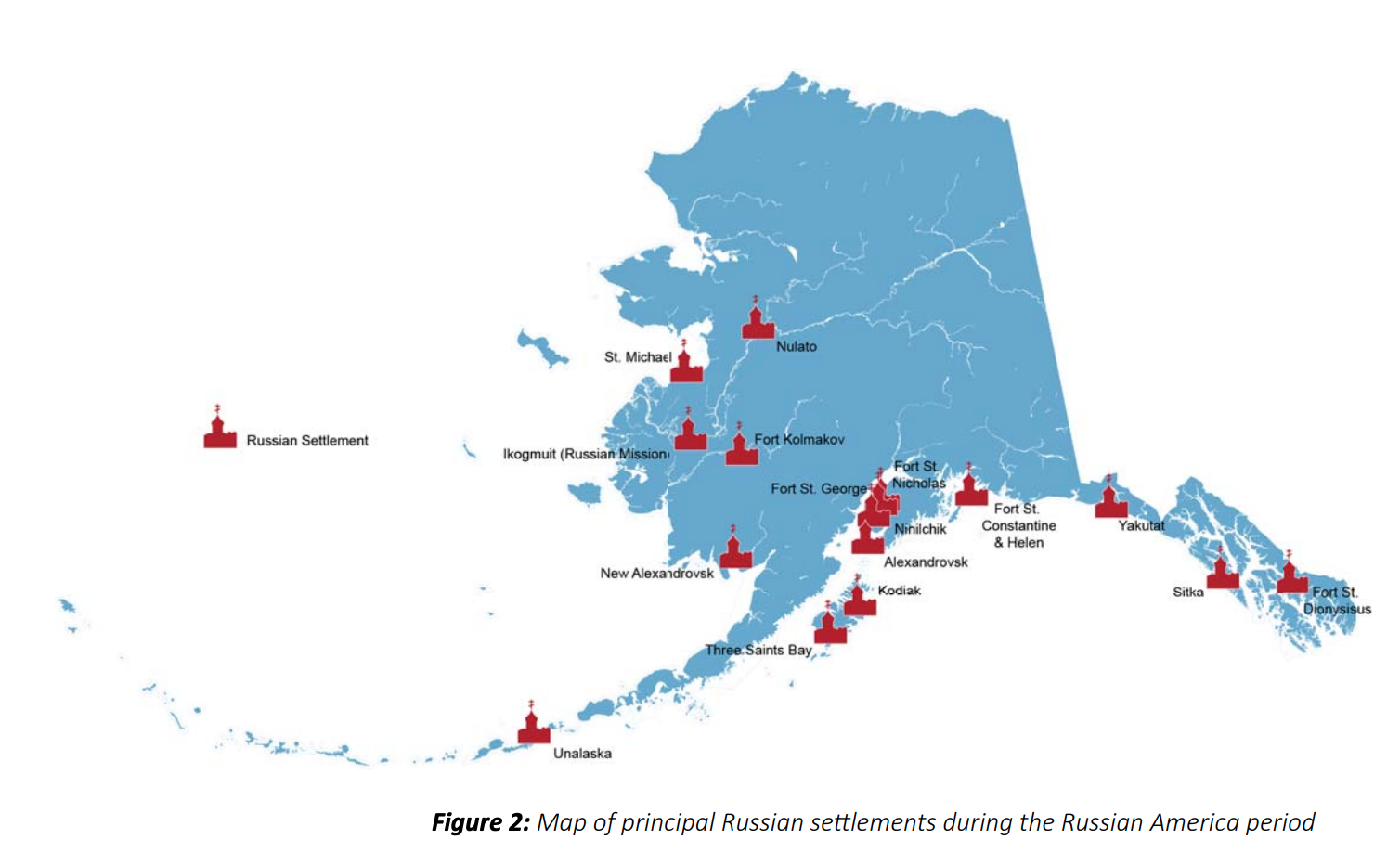
Russia made the first attested European contact with Alaska in 1741 and claimed the territory as its own in 1799. But, this claim didn't really correspond to the facts on the ground:
On maps of that time period, Russia was in control of the entire landmass that became Alaska, but in truth their direct control varied from heavy-handed to nonexistent. In the Aleutians, the Unangans were subjugated by force and made to hunt sea otters for the Russian fur trade. Other areas, including the Arctic region and inland rivers areas, saw little if any Russian presence. . . . 
During the entire period of Russian colonization . . . the Russian footprint remained minimal to nonexistent in several areas of Alaska, including much of the arctic and upriver areas of the Yukon Basin.

The first large scale enumeration ordered in 1819 counted 14,019 people in Russian America, 391 of whom were Russian. This count did not include anyone in interior, arctic, or western Alaska north of the Alaska Peninsula. . . . 

Father Ioann Veniaminov, a Russian Orthodox missionary and scholar who later became Bishop Innocent, produced an estimate of 39,813 people for Russian America in 1839. Noticeably higher than other Russian counts and estimates, Veniaminov surmised that beyond those areas known, 17,000 people had not been contacted yet. He estimated 7,000 people lived along the Kuskokwim River and 5,000 Tlingit lived in Southeast, the most populated areas in Alaska. He put the total number of Russians at 706, with 1,295 “Creoles,” or those born of Russian and Native parents. Before the sale of Alaska, Russian-American Company population numbers compiled from 1830 to 1863 show Alaska’s population ranged between 11,022 and 7,224. Though the estimates of Alaska Natives were low, the report also listed the peak Russian population in the territory at 823 in 1839. 
In the 1880 census, only 1.3% of people residing in Alaska (430) were white, of whom 68% (293) lived in Southeast Alaska, mostly in the capital of Sitka (157) and the old fortress town of Wrangell (105). 

In the 1890 census, 13.5% of people residing in Alaska were white, 53% of whom were only living in Alaska temporarily, mostly as canning workers in Southeast Alaska.

There wasn't a really significant population with European ancestry in what is now Alaska until well into the 1890s. This first large scale surge in Alaska's European ancestry population was a direct result of the 1896 gold strike in the Klondike region of the Yukon Territory.

From the 1900 census to the 1940 census, the percentage of the Alaska population that was white hovered just above and just below 50% (breaking 50% for the first time in 1910, dipping below 50% in 1930, and exceeding 50% in all subsequent years).

Alaska is currently about 60% non-Hispanic white, but only about 50% of children born in Alaska are non-Hispanic white. 

Non-Hispanic whites in Alaska are a plurality in the Southeastern part of the state from a little west of Anchorage to the east and a bit to the north up to the Canadian border and along the Pacific coast to the South (i.e. basically in places with higher population densities).

Other Races and Ethnicities In Alaska

About 18% of Alaskans are currently neither non-Hispanic white nor Alaska Native (solely or in connection with other ancestry). 

About 7% are Hispanic (5% of Alaskans are Hispanics who whom identify racially as white, and less than 2% of whom identify as something else racially including Asian or black), about 8% are Asian or Pacific Islander,  about 4% are black, and less than 0.5% have two or more races that are not Alaska Native. 

The subtotals add up to more than 18% due to rounding issues, due to the fact that some Alaska Natives are people with two more more races who are black, Asian, or Pacific Islanders (mostly Filipinos), and because some black, Asian, and Pacific Islander Alaskans are also Hispanic.

In 2010, two-thirds of Asians, Native Hawaiians, and Pacific Islanders in Alaska were Filipino, and as of 2020 at least half are Filipino. 30%-50% of the population (varying by region) of the Aleutian Island region of Alaska. are Asians, Native Hawaiians, and Pacific Islanders.

Fossil Fuel Economics

Alaska has the third highest revenues from fossil fuel production per capita in the United States at about twenty-thousand dollars per capita, behind only number one Wyoming and number two North Dakota. Alaska is heavily dependent upon the oil and gas industry for tax revenues.

Alaska pays every man, woman, and child who resides there full-time $1,114 per year, no strings attached, from the "Alaska Permanent Fund" of banked proceeds from its oil and gas revenues. It also has no personal income tax.

Alaska and Hawaii are the only U.S. states that generate a significant share of their electricity with petroleum.

More of Alaska is roadless than any other U.S. state.